Treadmill vs. Outdoor Walking: How to Choose What Actually Sticks
Compare treadmill and outdoor walking by friction points and logistics to build a sustainable, long-term habit.
https://primetempr.com/blog/treadmill-vs-outdoor-walking-how-to-choose-what-actually-sti
The "best" walking environment is not the one that promises the most efficient workout or the most scenic route; it is the one that removes the most friction from your daily routine. If you are debating between a treadmill and outdoor walking, you are likely looking for a way to make movement a reliable part of your life.
The reality is that consistency, rather than terrain, is the primary driver of long-term health benefits. According to the World Health Organization, any amount of physical activity is better than none, and all activity counts toward your health. Whether you are walking on a belt in your living room or navigating a local park, the physiological benefits of movement are cumulative.
The Case for Consistency
When we get caught up in debating the "optimal" way to walk, we often lose sight of the goal: showing up for ourselves regularly. Many people fall into the trap of focusing on calorie burn metrics or specific terrain advantages, which can lead to burnout if the chosen method doesn't fit their lifestyle.
If you find that outdoor walking is frequently interrupted by poor weather, or that a treadmill feels like a chore you constantly avoid, you have identified a friction point. The goal is to minimize these barriers. If your current routine feels like a chore, try switching environments for two weeks to test if a change in scenery or convenience improves your consistency.
Comparing the Environments
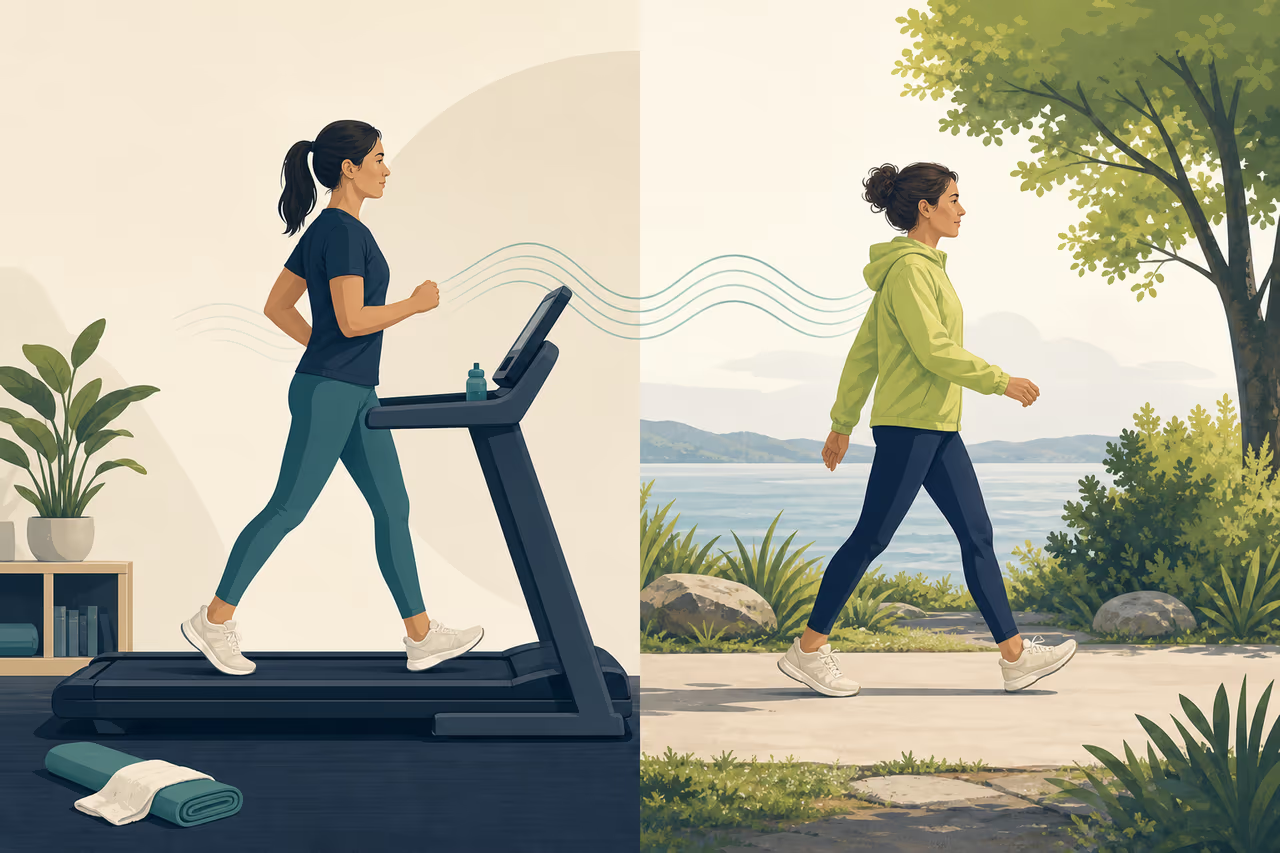
Both environments offer distinct trade-offs. Understanding these can help you decide which one aligns with your current needs.
| Feature | Treadmill Walking | Outdoor Walking |
|---|---|---|
| Control | High (speed, incline, temperature) | Low (terrain, weather, traffic) |
| Convenience | High (available 24/7) | Variable (requires preparation) |
| Mental Health | Limited sensory input | Exposure to nature/sunlight |
| Terrain | Flat or consistent incline | Varied surfaces and natural obstacles |
Treadmill Walking: The Controlled Environment Treadmills provide a predictable, safe surface that is unaffected by rain, ice, or darkness. This makes them an excellent tool for those who need to fit movement into tight windows, such as early mornings or late evenings. The primary trade-off is the lack of environmental variety. Walking on a belt can feel repetitive, and without the visual engagement of the outdoors, some people find it harder to maintain motivation over long periods.
Outdoor Walking: The Dynamic Environment Walking outside offers the benefit of changing terrain, which can engage different stabilizer muscles as you navigate uneven ground. Being outdoors can also offer natural light and a useful change of environment. The trade-off here is accessibility. If your local area lacks safe sidewalks, or if the weather is consistently prohibitive, your "outdoor habit" may quickly become an "outdoor chore," leading to missed sessions.
Building a Balanced Practice
Walking is one part of a broader movement routine. While walking is a fantastic aerobic activity, it does not replace the need for other types of movement.
Current Physical Activity Guidelines recommend that adults aim for 150 to 300 minutes of moderate aerobic activity weekly, supplemented by muscle-strengthening activities on at least two days. Walking, whether indoors or out, helps you meet the aerobic goal, but it is rarely enough on its own to maintain full-body strength and mobility.
This is where many people benefit from external support. Prime Tempr helps readers connect broad activity guidance with trainers and yoga businesses that can provide a balanced, repeatable programme and human accountability. A trainer can help you integrate your walking routine with specific muscle-strengthening exercises, ensuring that your body remains balanced and resilient.
Next Steps for Your Movement Journey
If you are still unsure which path to take, start by identifying your personal friction points. Are you skipping walks because you don't want to go out in the cold? Or are you bored by the treadmill?
Choosing Your Walking Environment: A Decision Guide
- Assess your local environment: Is your neighborhood safe and accessible for walking at the times you are most likely to exercise?
- Identify your friction points: Is it time, weather, or lack of motivation? If weather is the barrier, a treadmill may be the logical solution. If boredom is the barrier, the outdoors might be the remedy.
- Commit to a 15-minute trial: Regardless of the environment, commit to a 15-minute walk for one week. This low-stakes commitment helps establish the habit without the pressure of "optimal" duration.
- Seek professional guidance: If you find it difficult to stay consistent, consider scheduling a session with a trainer to integrate walking into a broader, balanced movement plan.
You do not have to navigate this alone. Whether you choose the treadmill or the trail, the most important step is finding a rhythm that you can sustain over the long term. If you are ready to build a more comprehensive routine, you can find a yoga teacher or explore resources to build a balanced practice that incorporates both aerobic movement and strength.
Sources
- Physical activity (opens in a new tab), World Health Organization.
- Top 10 Things to Know About the Physical Activity Guidelines (opens in a new tab), Office of Disease Prevention and Health Promotion.
Watch alongside this guide
Just walk
This short walking overview reinforces the guide's focus on accessible, repeatable movement rather than elaborate equipment. Source: American Heart Association. This optional video is context, not evidence or personal instruction.
The YouTube player stays unloaded until you choose to watch. Loading it connects to YouTube and may allow that service to process usage data.