Transitioning to Rest: A Scalable Approach for Real Workweeks
Use this scalable, low-stimulation buffer to help your nervous system shift from digital fatigue into restorative sleep.
https://primetempr.com/blog/transitioning-to-rest-a-scalable-approach-for-real-workweeks
Transitioning from a high-stimulation workday to rest is not about achieving a perfect state of calm, but about creating a consistent, low-effort buffer that signals to your nervous system that the workday is over. When you spend hours responding to messages and notifications, your brain remains in a state of high alert. Even when you are physically exhausted, this mental momentum can make it difficult to settle down.
The cost of constant connectivity is often a fragmented transition. You might finish your work, but your focus remains on the next task or the last email. This is why a transition buffer is necessary. It is not another task to complete perfectly; it is a boundary you set to protect your recovery time.
Designing your low-stimulation buffer
A realistic buffer must work within the constraints of your life, whether you live in a small apartment, share space with family, or deal with fluctuating time pressures. The goal is to choose a version of the routine that you can actually finish on your most tired days.
Prime Tempr helps readers compare trainers who respect recovery, offer scalable sessions and provide continuity when all-or-nothing routines stop fitting the workweek. If you find yourself struggling to maintain these habits, you may benefit from working with a professional who understands how to build a practice around real-world constraints.
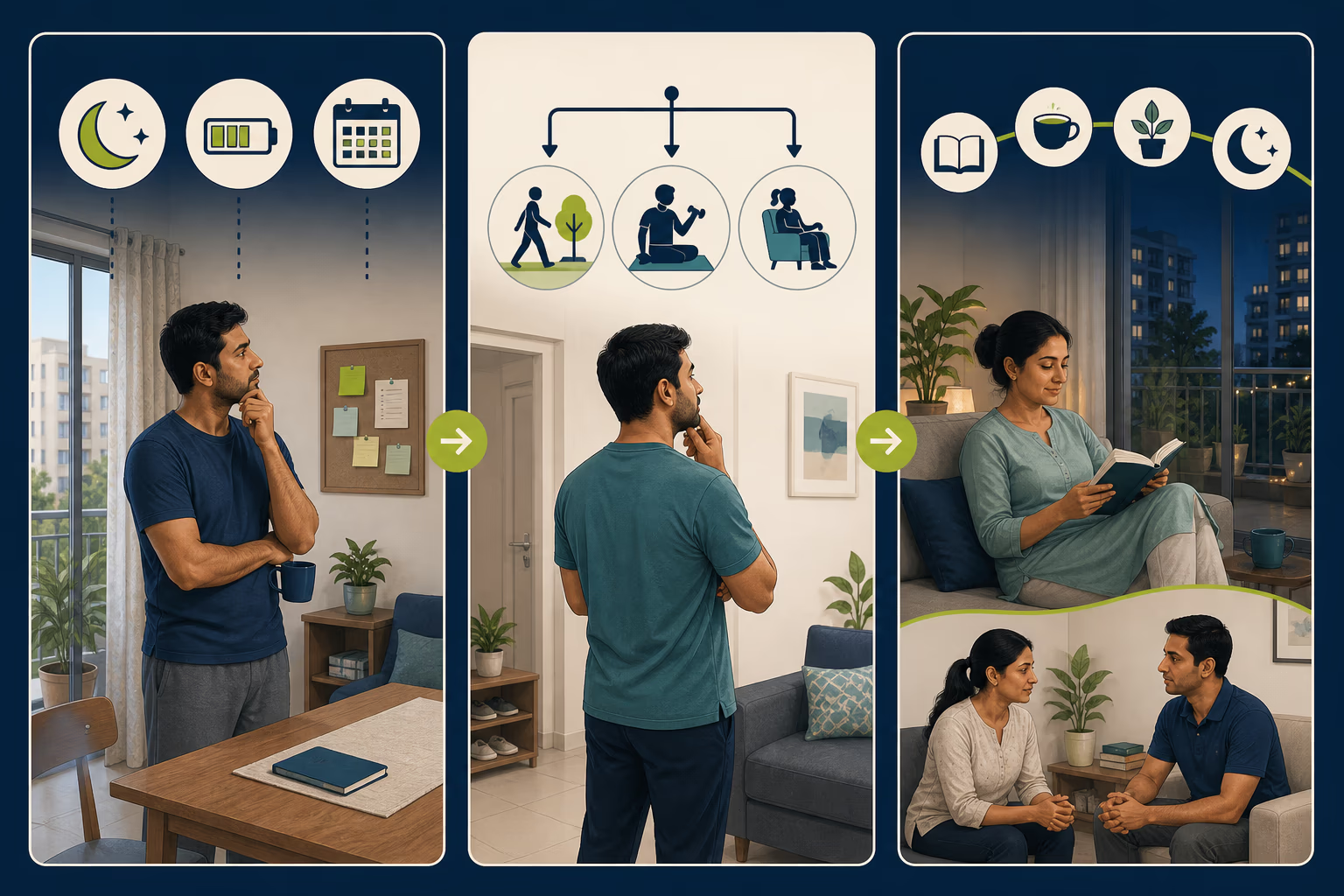
Your 3-Tier Transition Buffer
This practice plan is designed to be flexible. If you have ten minutes, use the standard version. If you have two minutes, use the minimum version.
- Minimum (2 mins): Sit in a quiet corner. Close your eyes and focus on slow, rhythmic exhales. Do not worry about clearing your mind; simply notice the sensation of your breath leaving your body.
- Standard (10 mins): Perform gentle, floor-based movement. Child’s pose or a seated forward fold can help release physical tension accumulated from sitting at a desk. Keep the movements slow and avoid pushing into discomfort.
- Next Step: Identify one recovery-aware trainer who can help you build a sustainable practice for your specific schedule. You can find recovery-aware support to guide you through sessions that prioritize your long-term energy over short-term intensity.
Remember that relaxation approaches include breathing, guided imagery and progressive relaxation; they should not replace conventional care.
The reality of the buffer
Be sure to recognize the trade-offs. A low-stimulation routine is a support tool, not a cure for chronic stress or sleep disorders. Prioritizing rest may mean sacrificing other evening activities, which requires setting boundaries with your time and your environment.
Failure modes often occur when we treat the routine as a performance. Trying to force a 30-minute meditation in a noisy household is likely to increase your frustration rather than calm your nervous system. If the routine feels overwhelming, scale back to the minimum version and focus on consistency over duration.
Consistent schedules, a quiet dark room, daytime activity and calmer pre-bed routines can support sleep. However, these are pieces of a larger puzzle. If you expect immediate sleep improvement without addressing your daytime habits or your overall workload, you may find the results disappointing.
When to seek professional support
These routines are intended to support general wellness and help you manage the daily fluctuations of a demanding workweek. They are not a substitute for medical care. If you experience persistent sleep disruption, chronic anxiety, or symptoms that interfere with your daily functioning, these routines should not replace conventional care from a healthcare provider.
If you find that your stress levels are consistently unmanageable, or if you feel that your "wired" feeling is persistent regardless of your evening habits, please consult a medical professional. For more information on how to balance your movement with your professional life, read our guide on Sleep, Stress and Real Workweeks.
By choosing a routine that respects your current capacity, you stop chasing an idealized version of wellness and start building a sustainable bridge to rest. Start small, stay consistent, and remember that progress is measured by your ability to return to this buffer, not by how perfectly you execute it.
Follow-along reflection
Use the prompts below to review the idea in context, without turning it into a diagnosis or a fixed rule.
Your 3-Tier transition buffer
- Minimum (2 mins): Sit in a quiet corner, close your eyes, and focus on slow, rhythmic exhales.
- Standard (10 mins): Gentle, floor-based movement (like child's pose or seated forward folds) to release physical tension.
- Next Step: Identify one recovery-aware trainer who can help you build a sustainable practice for your specific schedule.
Trade-offs to keep in view
- Prioritizing rest may mean sacrificing other evening activities, which requires setting boundaries.
If this approach does not fit
If the routine feels overwhelming, scale back to a 'minimum version' (e.g., 2 minutes of intentional breathing) and focus on consistency over duration.
Questions to carry forward
- Why does my brain feel 'wired' even when I am physically tired?
- What is a realistic low-stimulation routine for a small home or busy household?
- How do I choose between movement and stillness when I'm exhausted?
- When should I seek professional help instead of managing stress with routines?
Sources
Watch alongside this guide
Stress management
This short Mayo Clinic explainer gives the recovery discussion a practical health context. It does not promise sleep or replace care for persistent symptoms.
The YouTube player stays unloaded until you choose to watch. Loading it connects to YouTube and may allow that service to process usage data.