The Origins of Modern Yoga Classes
Explore how twentieth-century physical culture shaped modern yoga and find a teacher aligned with your specific needs.
https://primetempr.com/blog/the-origins-of-modern-yoga-classes
Modern yoga is not a single, unchanging ancient monolith. It is a dynamic synthesis that integrated Indian physical culture in the twentieth century to meet the needs of a changing society. If your local studio emphasizes specific poses while another focuses on breath or meditation, you are observing the result of this historical evolution.
Understanding this background helps you move past the idea that there is one "authentic" style. By recognizing yoga as a living tradition, you can stop searching for a mythical, static origin and start evaluating teachers based on their lineage, training, and how well their approach serves your current lifestyle.
The synthesis of tradition and modernity
Yoga is a diverse living Indian tradition transmitted through teachers, communities, institutions, texts, and modern media. While the roots of yoga extend back centuries, the physical practice many recognize today underwent a significant transformation during the twentieth century.
During this period, Indian physical culture,including gymnastics, wrestling, and indigenous exercise systems,merged with traditional yoga practices. This synthesis responded to the needs of a changing world. As society shifted toward sedentary, urban lifestyles, teachers adapted yoga to improve physical health, discipline, and vitality. This evolution created the variety of styles seen today, from rigorous movement to restorative breathwork.
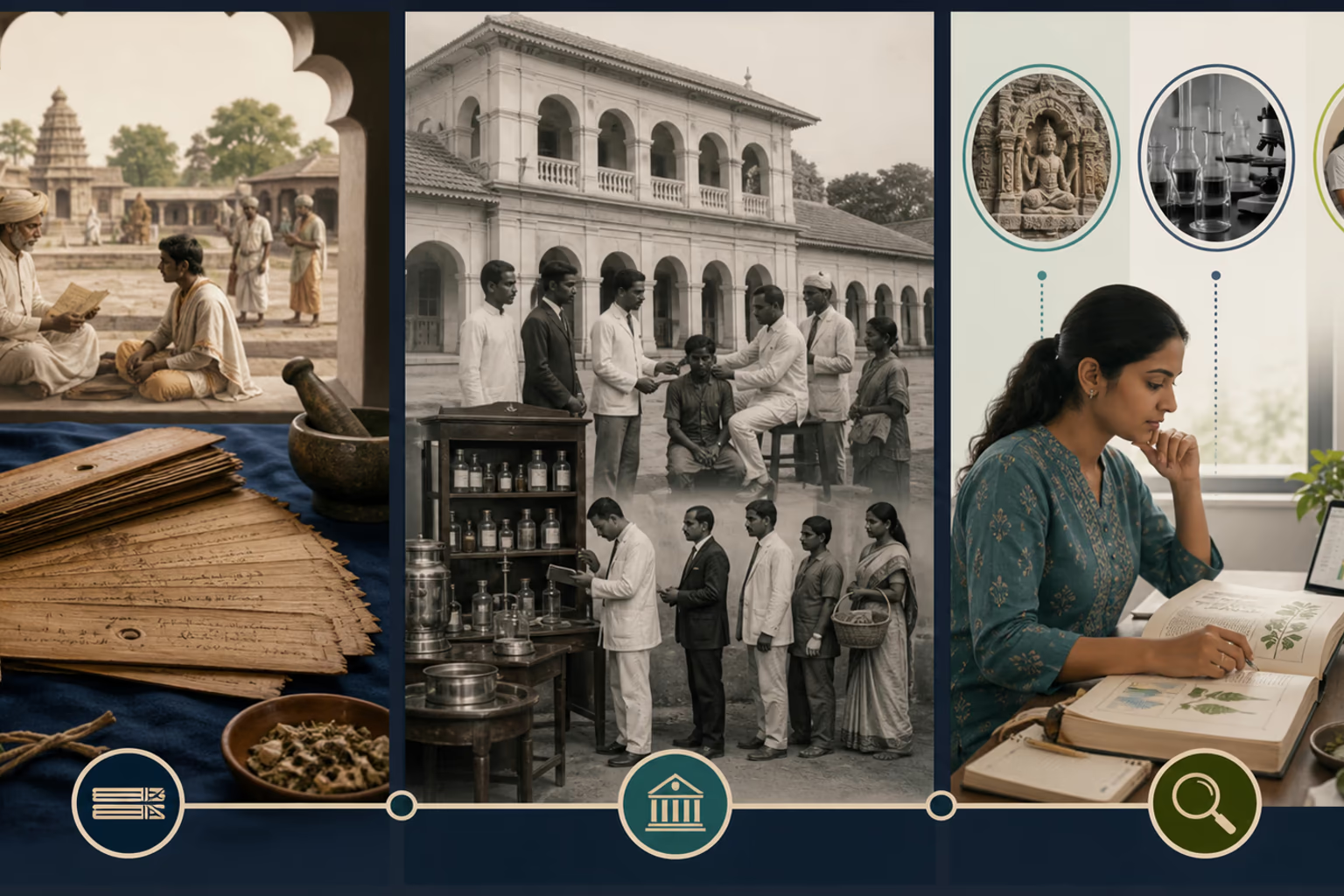
Why your yoga class looks the way it does
The diversity in modern yoga styles reflects this historical synthesis. When you attend a class, you participate in a specific lineage that prioritizes certain aspects of this broad tradition over others.
The Ministry of Ayush protocol presents one contemporary public-practice sequence, general guidelines, and a brief account of yoga traditions. It is a valuable reference for standardized practice, but it is not the only form of yoga. Other schools emphasize different sequences, philosophies, or physical goals.
This variation is a strength, as it allows yoga to adapt to different physical needs, time constraints, and personal goals. However, you cannot assume every class provides the same experience. What works for a high-intensity athlete may not suit someone seeking stress reduction or mobility work.
Navigating safety and variety
Because yoga styles and physical demands vary, qualified instruction and appropriate modification are essential to reduce avoidable risk. A common failure mode for students is assuming that because yoga is "ancient," it is inherently safe or universally applicable. In reality, the physical intensity of modern classes requires the same level of care as any other exercise program.
If a style feels disconnected from your needs or overly rigid, do not assume the fault lies with you or the entire concept of yoga. Yoga remains a diverse, living tradition. If a class does not feel right, the specific lineage or teacher's approach may not match your current requirements. Prime Tempr helps readers move from this history lesson to teacher and school profiles where lineage, training, and interpretation are examined.
Evaluating your yoga practice
Use this reflection tool to bridge the gap between historical context and your personal experience.
- Identify your goal: Define one physical or mental goal for your practice, such as improving mobility, managing stress, or building strength.
- Research the lineage: Ask your teacher or look at your studio website to understand the background of their practice. Where did their training originate?
- Compare and contrast: Review the Ministry of Ayush's Common Yoga Protocol. Note where your current routine aligns with these general guidelines and where it diverges.
When using this reflection, remember that there is no "perfect" streak or level of intensity that defines progress. Your practice is a personal journey, and the best teacher is one who provides clear, safe instruction that aligns with your specific, evolving needs. If you are unsure where to start, prioritize finding a teacher who emphasizes clear communication and allows for modifications based on your physical capacity.
Follow-along reflection
Use the following prompts to review these ideas in context, without treating them as a diagnosis or a fixed rule.
Evaluating your Yoga practice
- Identify one physical goal you have for your practice (e.g., mobility, stress reduction).
- Research the lineage or background of your current teacher or studio.
- Compare your current routine against the Ministry of Ayush's Common Yoga Protocol to see where your practice aligns or diverges.
Trade-offs to keep in view
- Historical accuracy often reveals that modern yoga is a hybrid, which may challenge the 'ancient and unchanging' narrative some students prefer.
- Understanding history does not replace the need for qualified, personalized instruction.
If this approach does not fit
Questions to carry forward
- How did 20th-century Indian physical culture shape the yoga we practice today?
- Why is there so much variation between different yoga styles?
- How can I distinguish between historical context and modern interpretation in my own practice?
- What does it mean for yoga to be a 'living tradition'?
- How do I choose a teacher or school that aligns with my personal needs?
Sources
Watch alongside this guide
What is yoga?
This Oxford Centre for Hindu Studies introduction offers historical and philosophical context that readers can compare with the article's specific period or question.
The YouTube player stays unloaded until you choose to watch. Loading it connects to YouTube and may allow that service to process usage data.