The Limits of Online Dosha Quizzes
Learn why online dosha quizzes are for cultural exploration, not medical diagnosis, and how to find qualified guidance.
https://primetempr.com/blog/the-limits-of-online-dosha-quizzes
An online dosha quiz is a tool for cultural exploration, not a diagnostic medical instrument. It cannot identify your specific health needs or guide treatment. If you use these quizzes to self-diagnose symptoms or justify restrictive lifestyle changes, you rely on a tool that lacks the nuance required for your personal health.
Ayurveda is a traditional Indian medical system, but evidence for many health uses is limited. When you take a quiz online, you interact with a static algorithm that cannot account for your unique environment, daily stresses, or underlying medical conditions.
The limitations of online quizzes
Online quizzes are limited because they reduce complex, ancient systems into multiple-choice questions. These tools are designed for engagement rather than clinical accuracy. They cannot observe your pulse, assess your physical state, or understand the context of your life, such as your job, your local climate, or your current stress levels.
Because these quizzes are static, they fail to account for the dynamic nature of health. A result that seems accurate on a Tuesday morning might not reflect your state by Friday evening. Relying on these results to dictate your diet or daily routine ignores the reality that health is fluid. Treating a quiz result as a medical fact risks missing the actual causes of your discomfort or fatigue.
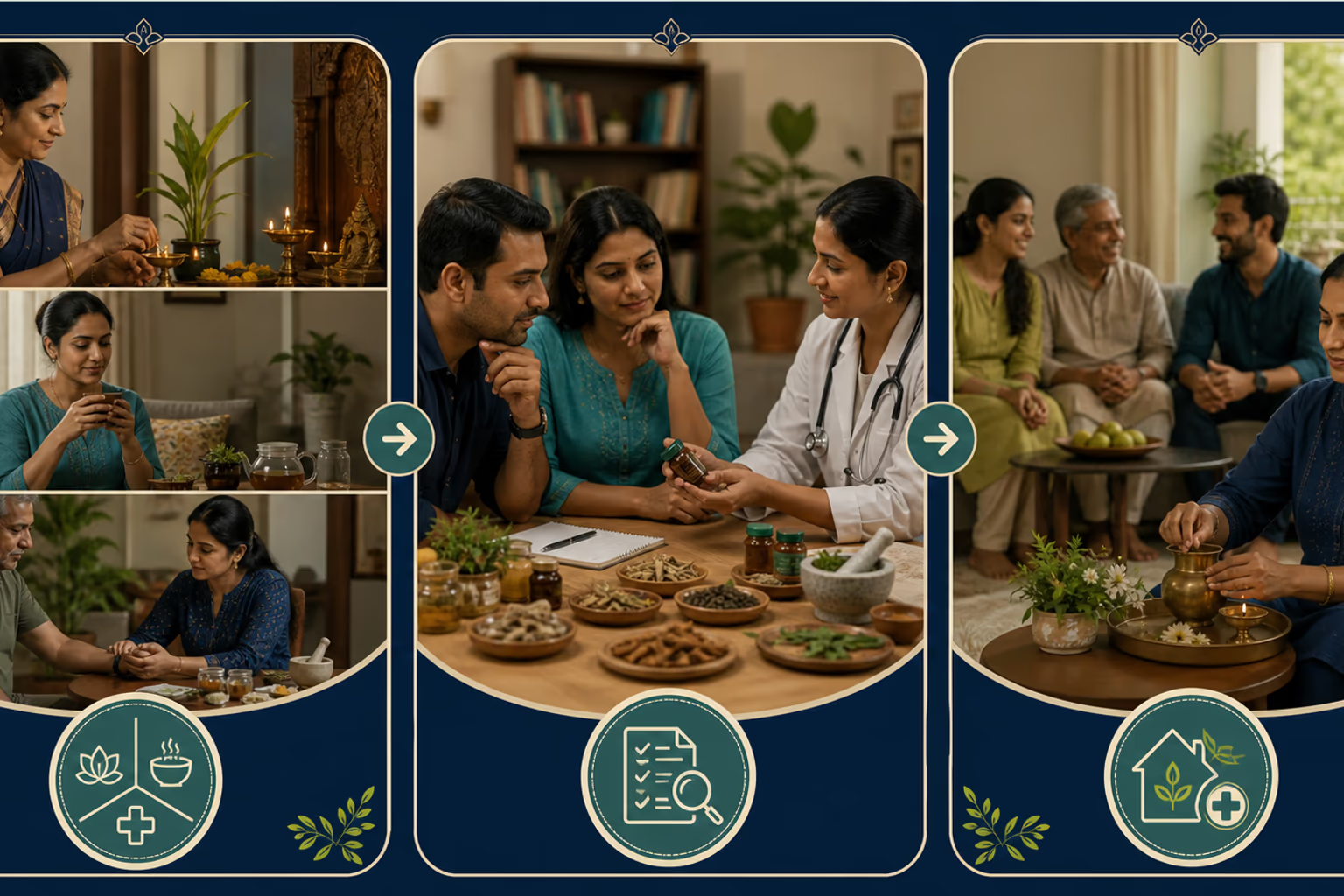
Why quizzes are not medical tools
The primary danger of using a dosha quiz as a health guide is the potential to delay professional care. If you feel unwell, it is essential to consult a healthcare professional rather than attempting to "balance" a dosha through unverified lifestyle changes. Self-care information should support informed choices and should not be used to delay appropriate professional care.
Many people use quiz results to justify self-prescribing herbs or supplements, which is a significant risk. Some Ayurvedic preparations may contain harmful metals, and care should be coordinated with a health professional. Without a qualified practitioner to oversee your intake, you have no way of knowing if a supplement is safe for your physiology or if it will interact with other medications.
If you find yourself ignoring persistent symptoms like chronic pain, digestive distress, or unexplained fatigue because you believe you are simply "out of balance," you are entering a dangerous failure mode. A quiz cannot tell you if your symptoms require medical intervention.
Moving from quizzes to qualified guidance
Separate cultural education from medical treatment. If you are interested in Ayurveda, look for a teacher who can explain the lineage and scope of their practice. Prime Tempr allows users to review teacher profiles to ask about training, lineage, and scope, keeping cultural education separate from treatment.
Instead of relying on an algorithm, find a practitioner who understands that your health is tied to your daily life,your desk job, your commute, and your family environment. A qualified teacher will not provide a "one-size-fits-all" prescription. Instead, they will help you understand the philosophy of Ayurveda in a way that respects its history without making unsupported medical claims.
Your next step: from quiz to conversation
If you have already taken a quiz, do not discard the curiosity it sparked, but change how you use that information. Use the following guide to transition from passive digital consumption to active, safe engagement.
Decision guide: how to proceed
- Treat your quiz result as a curiosity, not a medical fact. It is a starting point for a conversation, not a diagnosis.
- Check your symptoms with a healthcare professional before making any significant lifestyle or dietary changes.
- Find a qualified teacher to discuss the lineage and scope of Ayurvedic practices. You can find a teacher and ask better questions through our directory.
- Ask a teacher: "How does this practice fit into my daily life and current health?" A good teacher will be able to explain the context of their recommendations and respect the boundaries of their own expertise.
When you approach Ayurveda through a teacher rather than a quiz, you gain access to a person who can help you navigate the complexities of the tradition. You can learn about the history and the philosophy in a way that is grounded, safe, and tailored to your actual life. For more on how to navigate these choices at home, see our guide on Ayurveda at Home: Useful Questions.
No online tool can replace the judgment of a trained professional. If you are feeling unwell, prioritize your health by seeking medical advice first. Use cultural tools like dosha quizzes only for what they are: a way to begin a conversation about a rich, historical tradition.
Sources
Watch alongside this guide
Herbs at a glance: how to check safety
This NCCIH safety primer supports the article's practical questions about products, interactions and evidence without dismissing cultural traditions.
The YouTube player stays unloaded until you choose to watch. Loading it connects to YouTube and may allow that service to process usage data.