The Best Meditation Position Is the One You Can Sustain
Choose a comfortable, sustainable meditation posture that supports your practice without causing physical strain or distraction during sessions.
https://primetempr.com/blog/the-best-meditation-position-is-the-one-you-can-sustain
The "best" meditation position is simply the one that allows you to remain alert and comfortable for the duration of your practice. There is no requirement to sit in a full lotus or any other complex yoga pose to experience the benefits of mindfulness. In fact, the pressure to achieve a specific, "perfect" physical form often is a distraction, pulling your attention toward physical discomfort rather than the practice itself.
Meditation practices vary significantly, and there is no single "best" position for every person. The goal is to find a posture that supports both comfort and alertness, allowing you to settle into the practice without your body becoming a source of frustration.
The myth of the perfect posture
Many newcomers to meditation assume that sitting cross-legged on the floor is the only "correct" way to practice. This misconception often leads to unnecessary physical strain. If you lack the specific hip mobility required for deep floor sitting, forcing yourself into these positions can lead to discomfort, numbness, or even injury.
Physical perfection is not a prerequisite for mindfulness. If you are constantly shifting, adjusting, or dealing with sharp pain, your focus will naturally narrow to your physical discomfort. A sustainable seat is one that requires minimal effort to maintain, allowing your body to fade into the background so you can focus on your breath or mental state.
Prioritizing comfort and alertness
While comfort is essential, it is not the only factor. A good meditation seat balances two pillars:
- Comfort: You should be able to sit for the duration of your session without significant physical distraction.
- Alertness: Your posture should support an upright, stable spine. Slumping or reclining too far can lead to drowsiness, which may interfere with your ability to remain present.
If you find that you are falling asleep during your practice, it may be a sign that your posture is too relaxed. Conversely, if you are distracted by sharp pain, your posture may be too rigid or demanding for your current level of mobility.
Common sitting options
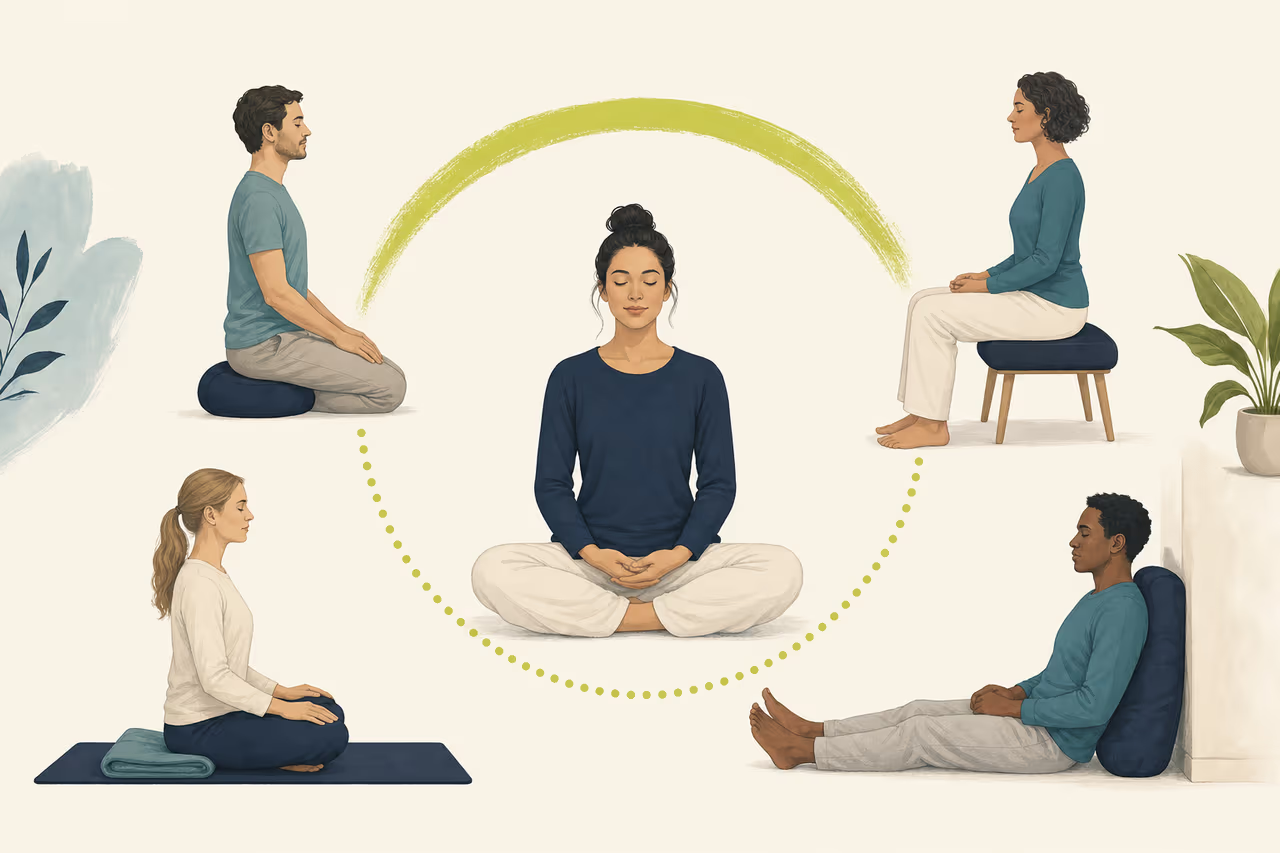
You have several ways to achieve a stable, upright seat. Do not feel obligated to choose one over another based on aesthetics; choose what works for your body today.
Sitting in a chair
Chair sitting is an excellent, accessible option for most people. It provides a stable base and allows you to keep your spine upright without requiring significant hip flexibility.
- How to do it: Sit toward the front edge of the chair so your feet can rest flat on the floor. If your feet don't reach the ground, place a book or a block under them. Keep your spine long, as if a string is gently pulling the crown of your head toward the ceiling. Avoid leaning back against the chair if it causes you to slump.
Sitting on the floor with props
If you prefer sitting on the floor, using props can make a significant difference in your comfort.
- Use a cushion or blanket: Sitting directly on the floor can cause your pelvis to tilt backward, which rounds the spine and creates tension. By placing a folded blanket or a meditation cushion under your sit-bones, you elevate your hips above your knees. This helps the pelvis tilt forward naturally, supporting a neutral, upright spine.
- Support your knees: If your knees are hovering far off the ground, place blocks or cushions underneath them for support. This reduces the strain on your hip joints.
Alternatives to sitting
If sitting is consistently uncomfortable, remember that meditation is not limited to a stationary seat. You might explore How to Practise Walking Meditation: A Clear, Practical Guide as a way to integrate mindfulness into movement.
Choosing Your Meditation Seat: A Decision Guide
Use this checklist to refine your posture before your next session:
- Assess your current comfort: Can you sit for 5 minutes without shifting? If not, identify the source of the distraction (e.g., tight hips, back fatigue).
- Try a chair: If floor sitting is difficult, move to a chair. Keep feet flat on the floor and spine supported by your own muscles rather than the chair back.
- Use props: If you remain on the floor, sit on a folded blanket or cushion to elevate your hips. This simple change often resolves lower back tension.
- Check in: If you feel sharp pain, stop and adjust immediately. Discomfort is a signal to change your position, not a sign of "deep" practice.
- Seek support: If you struggle to find a sustainable position, find a trainer to help with alignment.
When to seek professional guidance
While self-guided practice is valuable, it is not always easy to identify why a position feels "wrong" or how to adjust your alignment effectively. If you experience persistent pain or if you are unsure how to adapt your practice to your specific physical needs, working with a qualified trainer can provide the clarity you need.
Find guided breath and meditation support through Prime Tempr. We help readers find trainers who can explain breathing and meditation in context, so an introductory article becomes a starting point rather than a substitute for responsive guidance.
Finally, Remember that relaxation techniques, including meditation, should not replace conventional medical care. If you are managing chronic pain or other health conditions, consult with a healthcare professional to ensure your chosen practice is appropriate for your situation.
Sources
- Meditation and Mindfulness: Effectiveness and Safety (opens in a new tab), National Center for Complementary and Integrative Health.
- Relaxation Techniques: What You Need To Know (opens in a new tab), National Center for Complementary and Integrative Health.
Watch alongside this guide
Breathing meditation
This short guided meditation lets you follow the basic attention and breathing ideas described in the article. Source: UCLA Health. This optional video is context, not evidence or personal instruction.
The YouTube player stays unloaded until you choose to watch. Loading it connects to YouTube and may allow that service to process usage data.