The 10-Minute Work-to-Home Transition
Use this ten-minute ritual to create a physical and mental boundary between your workday and personal time.
https://primetempr.com/blog/the-10-minute-work-to-home-transition
A ten-minute transition is not about fixing your stress or erasing the demands of a difficult workday. It is about creating a physical and mental boundary that signals to your nervous system that the workday is complete. When the line between your desk and your personal life blurs, your brain remains in a state of high alert, which can disrupt your ability to settle down for the evening.
By carving out a small, consistent window of time, you provide yourself with a buffer. This is not a cure for chronic burnout, but it is a tool to help you reclaim your evening energy.
why the transition matters
The physiological need for a buffer exists because your body often carries the tension of the day into your home environment. If you move directly from a high-pressure meeting to household chores or family responsibilities, your heart rate and cortisol levels may remain elevated. Consistent schedules and calmer pre-bed routines can support better sleep quality, helping you start the next day from a more stable baseline.
Relaxation approaches like breathing and progressive relaxation can support well-being, but they should not replace conventional medical care. If you find that your stress is constant or interfering with your daily functioning, these techniques are not a substitute for speaking with a healthcare professional.
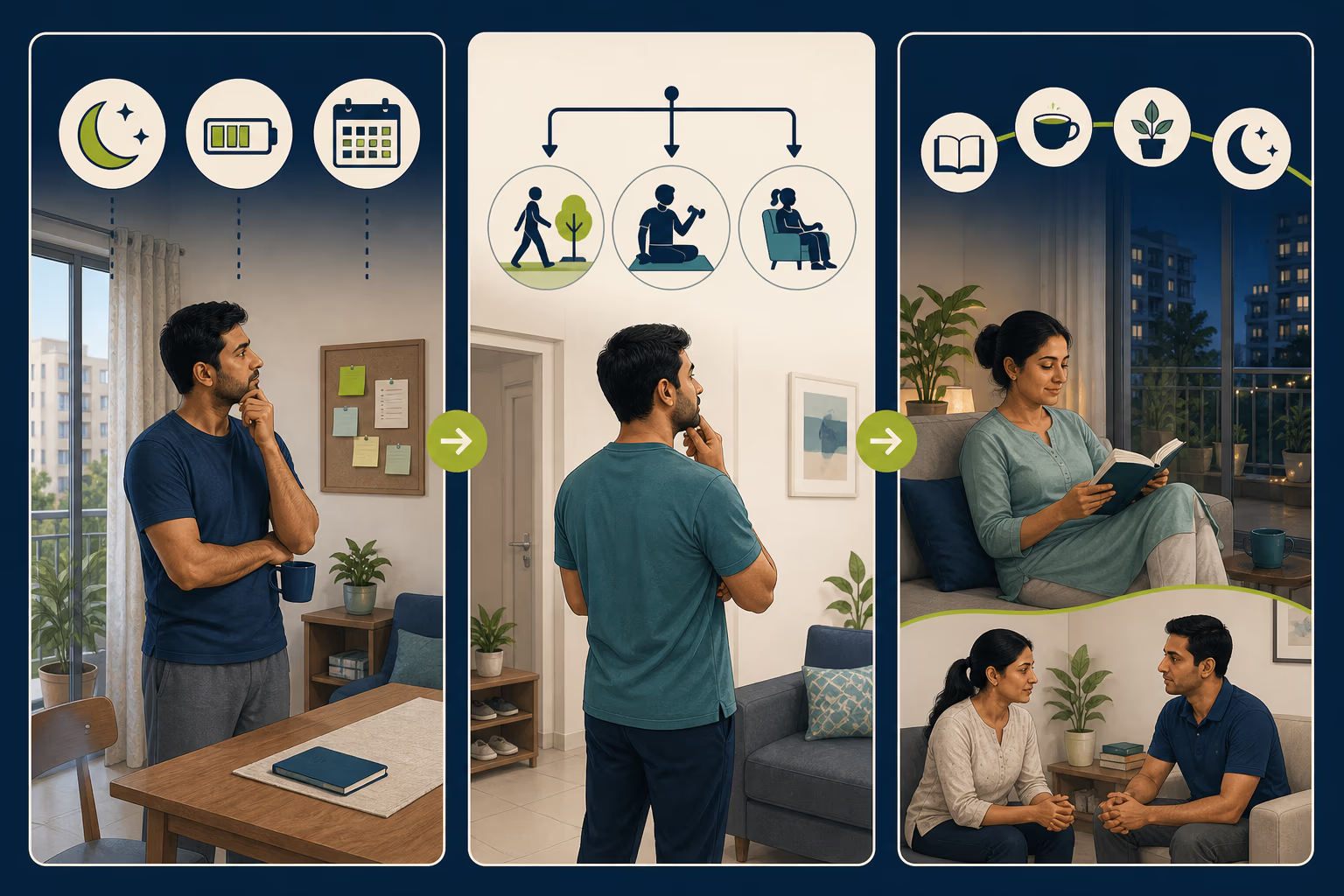
Choose a stopping point for work, tell anyone sharing your space that you are taking a brief pause, then try one quiet activity before the next task. If ten minutes is not available, use the shorter option below. This is a routine to try, not a promise about stress-hormone levels.
the minimum viable transition
In a busy household, finding ten minutes of silence can feel impossible. The goal here is not to create a perfect, quiet sanctuary, but to establish a ritual that works within your constraints. If you live in a small home or share space with family, you may need to negotiate this time. Let those around you know that you are taking ten minutes to reset so you can be more present for the rest of the evening.
If ten minutes feels overwhelming, start with two. The goal is consistency, not intensity. A simple, repeatable action is more effective than a complex routine you only perform once a week.
your 10-minute transition menu
Use this menu to structure your transition. You do not need to do all of these things; choose the combination that feels most accessible today.
- 2 minutes: Physical shedding. Change your clothes, wash your face, or simply take off your shoes. This physical act is a sensory cue that you are no longer in "work mode."
- 5 minutes: Movement or breathwork. Choose one gentle activity. This could be a few minutes of neck rolls, a child’s pose, or simple box breathing (inhale for four, hold for four, exhale for four, hold for four).
- 3 minutes: Disconnect. Put your phone in a drawer or another room. Do not check emails or messages. Use this time to sit quietly or perform a simple task like preparing a cup of tea.
Stop rule: If you feel lightheaded, anxious, or if the practice makes you feel more frustrated, stop immediately. You can try a shorter duration or a different technique tomorrow.
scaling your routine
A 10-minute routine is a starting point, not a permanent solution. As your schedule shifts or your needs change, you may find that you need more guidance to maintain these habits. This is where Prime Tempr helps readers compare trainers who respect recovery, offer scalable sessions and provide continuity when all-or-nothing routines stop fitting the workweek.
Working with a professional can help you refine your practice. A good trainer will not push you toward intensity when you need recovery; instead, they will help you identify which movements or breathing patterns actually serve your current energy levels.
If you are struggling to maintain a consistent routine, consider these trade-offs:
- Space vs. Time: If you lack a private room, focus on the "shedding" ritual,changing your clothes or washing your hands,which requires no extra space.
- Complexity vs. Consistency: A simple breathing exercise you do every day is far more valuable than a complex 30-minute yoga flow you only do when you have the perfect conditions.
- Self-led vs. Guided: If you find yourself overthinking your practice, find recovery-aware support to provide the structure you need.
when to seek professional help
While these transitions can help manage the daily ebb and flow of work stress, they are not a substitute for professional support. If you notice that your stress is persistent, that you are unable to sleep despite these routines, or that you feel a sense of dread about your work that never lifts, it is time to consult a doctor or a mental health professional.
For more on how to integrate these small habits into a busy life, read our guide on Sleep, Stress and Real Workweeks. Remember that progress in your recovery is measured by your ability to return to a calm state, not by your ability to endure more stress.
Sources
Watch alongside this guide
Stress management
This short Mayo Clinic explainer gives the recovery discussion a practical health context. It does not promise sleep or replace care for persistent symptoms.
The YouTube player stays unloaded until you choose to watch. Loading it connects to YouTube and may allow that service to process usage data.