Studio vs. Online Yoga: Choosing the Right Fit
Evaluate your home space, schedule, and need for personalized feedback to select the best yoga practice format.
https://primetempr.com/blog/studio-vs-online-yoga-choosing-the-right-fit
The choice between a local studio and a live online class depends on your specific constraints, including home space, commute time, and the level of personalized feedback you require. Prime Tempr organizes trainer profiles and local listings to help you compare your options before booking.
The practical trade-offs
When choosing where to practice, weigh the convenience of your living room against the structure of a studio.
Local studios offer community and hands-on adjustments. A shared space helps maintain focus, as the environment is designed for practice and free from household distractions. However, this requires travel time. If your schedule is tight, a commute can become a barrier that leads to missed sessions.
Online classes offer flexibility and privacy. You can join from anywhere, which is helpful if you have a busy job or limited transport. The trade-off is that you must manage your own space and discipline. You are responsible for your environment, as you lack the immediate physical presence of a teacher to correct posture. Because styles vary, teacher qualifications, suitable modifications, and honest class descriptions matter.
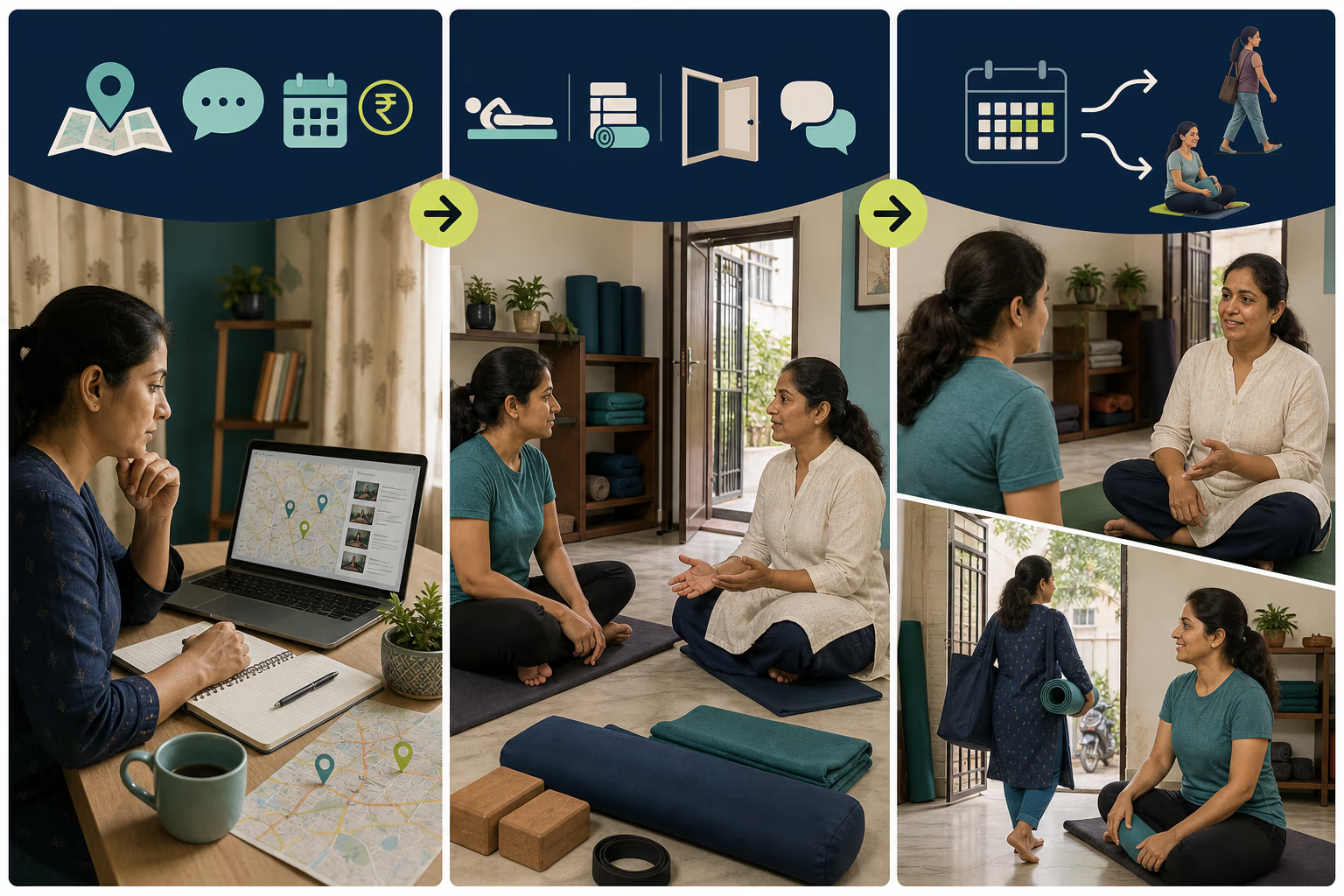
Assessing teacher qualifications
Regardless of the format, the teacher's ability to guide you safely is the most important factor. Yoga teachers should work within their education, training, and competence and refer needs outside that scope.
When evaluating a teacher, look for transparency in their credentials. A qualified instructor explains why they suggest a specific modification and how it serves your body. In a studio, you can observe this during a trial class. Online, look for profiles that detail the teacher's training and their approach to different experience levels.
If a teacher does not ask about your health history or physical limitations, they may not be prioritizing your safety. Use a trial session to observe the teacher's communication style and their ability to provide modifications before committing to a long-term membership.
Evaluating the environment
Your physical environment dictates the quality of your practice. Before signing up for an online class, ensure you have enough room to extend your limbs fully without hitting furniture. If your home is shared, consider whether you have the privacy needed to focus on your breathing without interruption.
For local studios, the assessment is different. Complete, accurate and verified local business information helps people assess a nearby service before visiting. Use tools like Compare local teachers and studios to check if a studio is realistically accessible given your daily routine. Consider the time of day you plan to attend; a studio that is convenient on a weekend morning might be impossible to reach during a weekday evening commute.
Your studio vs. Online checklist
Use this guide to assess your fit before you book your first session.
- Measure your available practice space at home: Ensure you have enough room to move freely without risk of injury.
- Check the teacher's profile: Look for relevant training and a clear scope of practice.
- Calculate the total time cost: Include the commute for local studios versus the setup time for online classes.
- Ask for a trial class: Test the teacher's ability to provide modifications and their communication style.
- Verify class size: Ensure the setting allows for the level of individual attention you need.
Making your choice
If you are unsure where to start, prioritize a trial session. This is the most effective way to see if the teacher's style matches your needs. You can also read 3 Questions to Ask During Your Next Yoga Trial Class to prepare for your first visit or login.
Your needs may change over time. You might start with online classes to build a habit and eventually move to a studio for community engagement, or vice versa. The goal is to find a sustainable rhythm that supports your well-being without adding stress to your daily life.
Follow-along reflection
Use the following prompts to review these considerations in context.
Your studio vs. Online checklist
- Measure your available practice space at home.
- Check the teacher's profile for relevant training and scope of practice.
- Calculate the total time cost, including commute for local studios.
- Ask for a trial class to test the teacher's ability to provide modifications.
- Verify if the class size allows for individual attention.
Trade-offs to keep in view
- Local studios offer community and hands-on adjustments but require travel time.
- Online classes offer convenience and privacy but require self-discipline and adequate home space.
- Teacher qualifications are essential in both settings, but harder to verify online without a clear profile.
If this approach does not fit
If a class does not fit, prioritize a trial session to observe the teacher's communication style and ability to offer modifications before committing to a long-term membership.
Questions to carry forward
- How do I verify a teacher's scope of practice?
- What physical space do I need for a home-based live class?
- How does a local studio's schedule impact my daily routine?
- What should I look for in a class description to ensure it's safe for me?
- How can I assess if a teacher is qualified to offer modifications?
Sources
Watch alongside this guide
Accessible yoga for every body
This Vancouver Coastal Health class makes choice, support and accessibility visible, giving readers concrete features to look for when comparing local or online teaching.
The YouTube player stays unloaded until you choose to watch. Loading it connects to YouTube and may allow that service to process usage data.