Stress vs. Relaxation: Understanding Your Body's Natural Shifts
Learn how to support your body's natural transitions between stress and relaxation instead of trying to eliminate stress.
https://primetempr.com/blog/stress-vs-relaxation-understanding-your-body-s-natural-shift
You do not need to fix your stress response, nor should you view it as an enemy. The stress response and the relaxation response are both essential, natural functions of your body. The goal of a sustainable practice is not to eliminate stress entirely, which is impossible, but to learn how to support your body’s transition between these two states.
When you feel overwhelmed, it is easy to view the stress response as a failure or a "bad" state. In reality, your body is simply responding to perceived demands. The challenge arises when we get "stuck" in a high-alert state, making it difficult to shift back into a state of recovery and rest. Understanding this rhythm is the first step toward building a more balanced approach to your daily wellbeing.
The body's natural rhythm
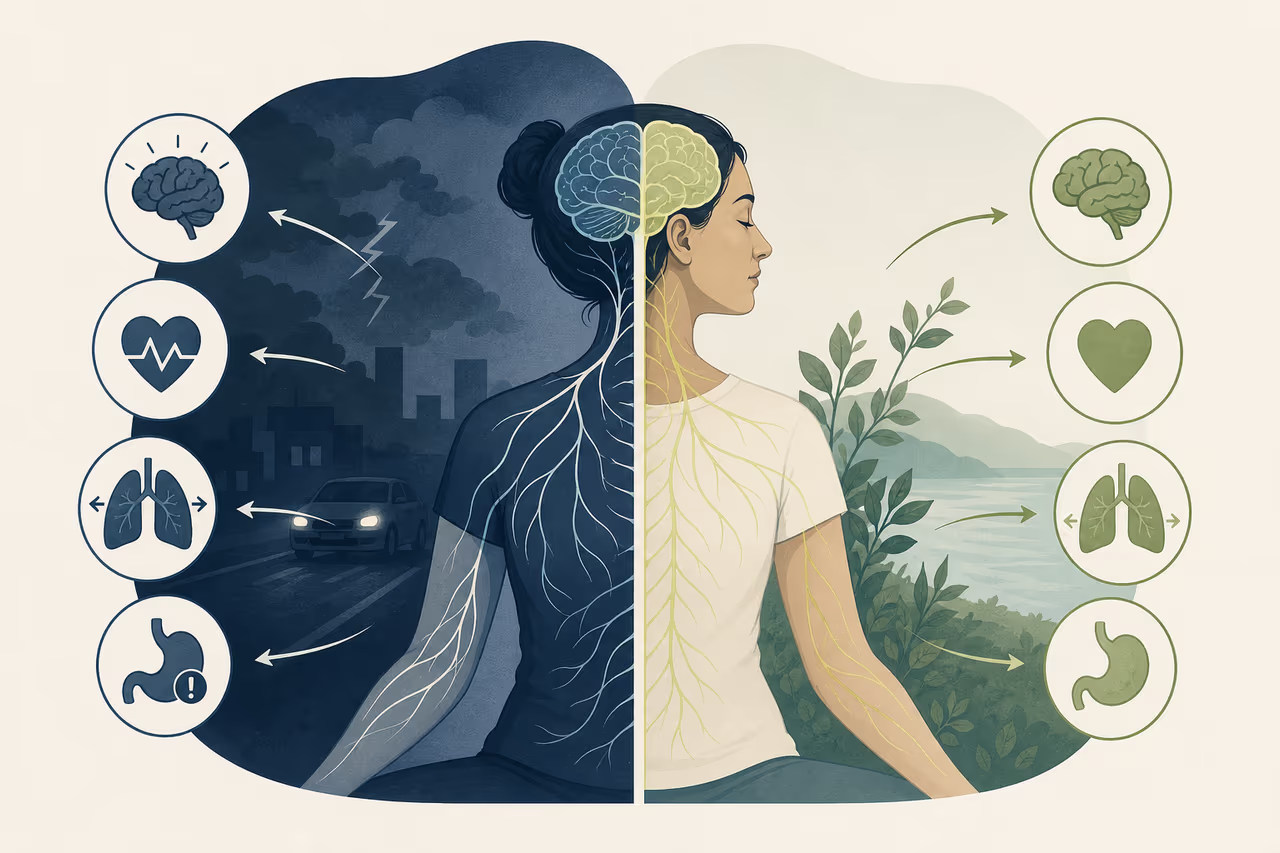
The stress response is your body’s way of preparing for action. Historically, this served to protect us from immediate physical threats. In modern life, however, the "threats" are often psychological or environmental, yet the physiological response remains similar: your heart rate may increase, your breath may become shallow, and your muscles may tense.
The relaxation response is the physiological counterpart. It is the state in which your body focuses on maintenance, digestion, and repair. Crucially, the relaxation response is not the same as merely being "tired." Being tired is a state of depletion, whereas the relaxation response is an active, restorative physiological state that you can encourage through specific practices.
Neither state is inherently "good" or "bad." You need the stress response to meet deadlines, exercise, or navigate a busy day. You need the relaxation response to recover, sleep, and integrate the experiences of your day. The friction occurs when your body loses the flexibility to transition smoothly from one to the other.
Tools for support
You can encourage your body to shift into a relaxation response using accessible, low-stakes tools. These techniques are not "cures" for stress, but they are effective ways to signal to your nervous system that it is safe to downshift.
Common approaches include:
- Breathing techniques: Slow, intentional breaths can help modulate your heart rate.
- Guided imagery: Focusing the mind on calming mental scenarios can reduce the intensity of racing thoughts.
- Progressive relaxation: Systematically tensing and releasing muscle groups helps you identify and let go of physical holding patterns.
- Gentle movement: Practices like restorative yoga or mindful walking can bridge the gap between high-energy activity and complete stillness.
Consistency in these practices is generally more effective than intensity. You do not need to spend hours in a studio to see a shift; even five minutes of dedicated, mindful breathing can provide a helpful reset. However, it requires patience to notice shifts in your baseline regulation. You may not feel a dramatic "switch" immediately, but over time, you may find that your body returns to a state of calm more readily.
Knowing your limits
While these techniques are supportive, they have clear limits. Relaxation approaches, including breathing, guided imagery, and progressive relaxation, should not replace conventional medical or psychological care.
A common failure mode is expecting these techniques to act as a "quick fix" for chronic stress. If you are experiencing persistent symptoms such as chronic insomnia, severe anxiety, or physical pain, these are signals that require professional medical intervention. Trying to "force" a relaxation response when you are in a state of clinical distress can sometimes create additional performance-based stress, as you may feel frustrated that the techniques are not "working."
If self-guided techniques like breathing or gentle movement do not provide relief, prioritize your basic recovery needs. This includes evaluating your sleep hygiene. Adult sleep needs vary, but consistent schedules, a quiet dark room, daytime activity, and calmer pre-bed routines can support sleep. If you find your stress levels are consistently impacting your daily function, it is time to consult a professional.
Next steps for your practice
While self-guided practice is a wonderful starting point, working with a trainer can help you tailor these tools to your specific needs, ensuring you are practicing in a way that is safe and sustainable for your body.
If you are ready to explore how movement and breath can support your recovery, you can explore restorative guidance to find a trainer or studio that aligns with your goals. For a deeper look at how these systems interact, you may also want to read Beyond the Buzzword: Understanding Nervous System Regulation.
Check-in: Your Current State
Use this reflection to assess your needs today. Remember, the goal is to observe, not to judge.
- Identify one physical sign of stress you notice today: (e.g., tight shoulders, clenched jaw, or shallow breath).
- Note one low-stakes activity that helps you feel grounded: (e.g., a 5-minute walk, slow breathing, or stretching).
- Assess your current stress levels: Are they manageable, or are they impacting your daily function?
- Decide on your next step: Do you need a restorative practice today, or is it time to reach out for a conversation with a professional?
Sources
- Heart-Healthy Living: Get Enough Good-Quality Sleep (opens in a new tab), National Heart, Lung, and Blood Institute.
- Relaxation Techniques: What You Need To Know (opens in a new tab), National Center for Complementary and Integrative Health.
Watch alongside this guide
Stress management
Use this concise Mayo Clinic explainer alongside the article's practical steps for stress, sleep, and recovery. Source: Mayo Clinic. This optional video is context, not evidence or personal instruction.
The YouTube player stays unloaded until you choose to watch. Loading it connects to YouTube and may allow that service to process usage data.