Strength Training for Women: A Realistic Beginner’s Guide
Start strength training without the overwhelm by learning core movement patterns, balancing intensity, and knowing when to seek professional guidance for your goals.
https://primetempr.com/blog/strength-training-for-women-a-realistic-beginner-s-guide
Strength training often feels like a high-stakes commitment requiring complex equipment and intense effort. Yet the most effective way to start is to simplify your approach. You do not need a flawless routine or an expensive gym membership to see results. According to the World Health Organization, any amount of physical activity is better than none, and muscle-strengthening activities provide benefits for every person.
As a beginner, your goal is not perfection within a single week, but rather a sustainable habit that supports your long-term health.
Why Strength Training Matters
Strength training is a foundational health practice that maintains your body's functional capabilities as you age. It is not about changing your appearance overnight; it is about building the physical resilience required for daily life.
Current physical activity guidelines suggest that adults should aim for 150 to 300 minutes of moderate aerobic activity per week, alongside muscle-strengthening activities on at least two of those days. These recommendations exist because regular movement and resistance training help maintain bone density, improve metabolic health, and support joint stability. Viewing strength training as self-care rather than a chore makes it much easier to integrate into your weekly routine.
The Reality of Starting
The most common failure mode for beginners is the "all-or-nothing" trap. Many people start by attempting to follow complex, high-frequency programs that lead to rapid burnout or injury. If a routine feels unsustainable, reduce the frequency or intensity immediately. Consistency is the only metric that truly matters in the early stages.
Another common pitfall is fixating on heavy barbells or specialized machines rather than the movement patterns themselves. Your body does not distinguish between a sophisticated gym machine and a simple bodyweight movement; it only responds to the resistance applied to your muscles. Start with what you have, whether that is your own body weight, resistance bands, or light dumbbells.
Fundamental Movement Patterns
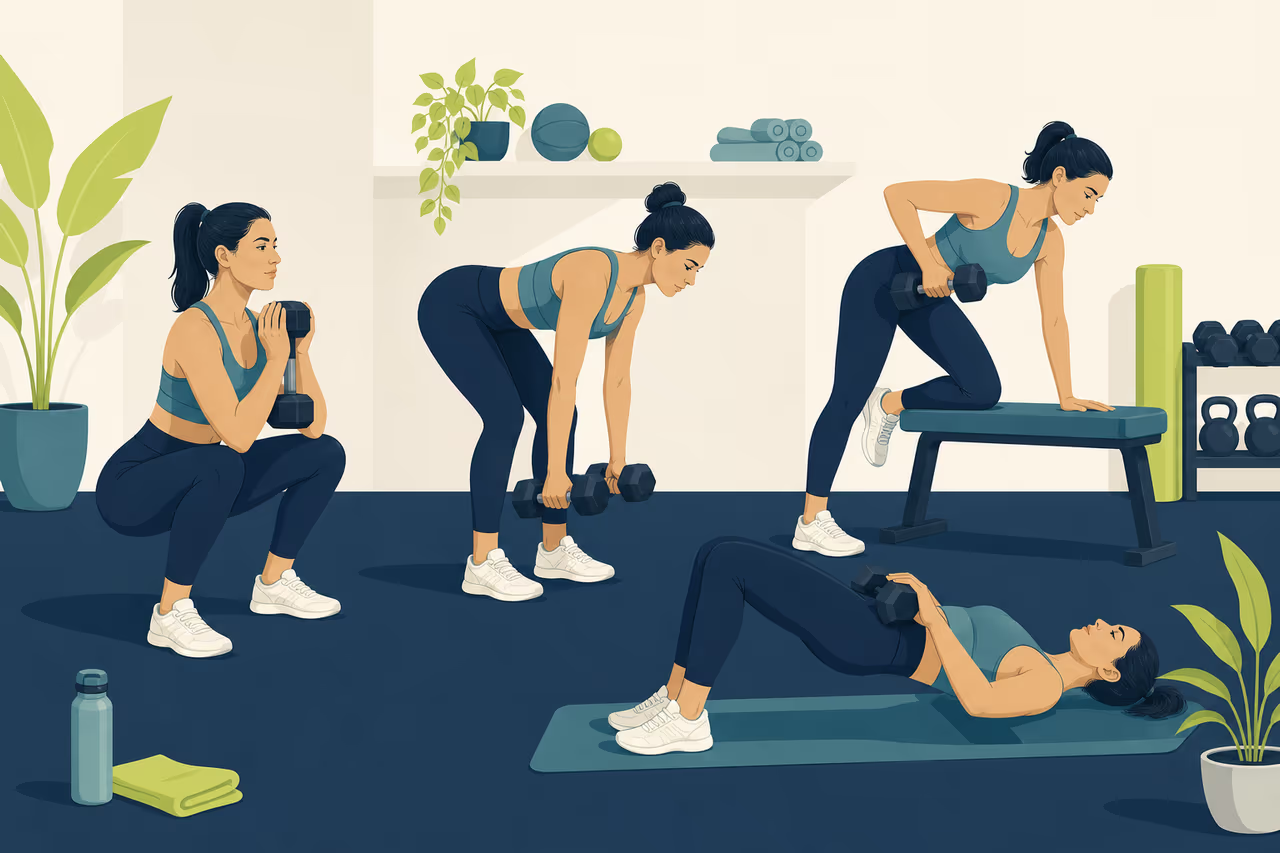
Instead of worrying about specific exercises, focus on four fundamental movement patterns to ensure you are working your body in a balanced way.
- Squat: Any movement where you sit back and down, such as sitting into a chair and standing back up.
- Hinge: Movements that involve bending at the hips while keeping your back straight, such as picking an object up from the floor.
- Push: Movements that involve pushing weight away from your body, like a wall push-up or an overhead press.
- Pull: Movements that involve pulling weight toward your body, like a seated row with a resistance band.
Focusing on these patterns builds a versatile foundation that translates directly into better movement during everyday tasks.
Your First Two Weeks of Strength
To begin without feeling overwhelmed, follow this simple plan designed to be manageable so you can establish a rhythm without overtaxing your system.
| Step | Action |
|---|---|
| 1 | Commit to two 20-minute sessions per week. |
| 2 | Focus on the four fundamental patterns: squat, hinge, push, and pull. |
| 3 | Prioritize form over the amount of weight lifted. |
| 4 | Track your sessions to identify when you are ready for more challenge. |
| 5 | Consult a trainer if you experience persistent discomfort or lack of progress. |
If you find yourself struggling with form or feeling unsure about how to advance, remember that general guides are only a starting point and cannot account for your personal injury history or specific lifestyle goals.
When to Seek Professional Guidance
Self-guided training is an excellent way to begin, but it lacks the real-time feedback of a professional. When you hit a plateau or feel unsure if your form is safe, look for support.
Prime Tempr helps readers compare trainer approaches and ongoing programmes, making it easier to add qualified progression when a general strength guide is no longer enough. Whether you are looking for a local studio or a trainer who understands how to combine yoga and strength training effectively, having a professional in your corner can help you refine your technique and adjust your program to meet your evolving needs.
If you are ready to take the next step, you can find a trainer for your goals to ensure your practice remains safe and effective.
Balancing Strength with Other Activities
Many beginners worry that strength training will conflict with activities like yoga or walking. In reality, these practices are complementary. Strength training provides the stability needed for yoga poses, while yoga offers the mobility and breathwork that aid recovery from strength sessions.
Do not view rest as a failure. Recovery is when your body adapts to the work you have done. If you feel tired or sore, listen to your body and adjust your schedule. The goal is to build a practice that supports your life, not one that consumes it.
Sources
- Physical activity (opens in a new tab), World Health Organization.
- Top 10 Things to Know About the Physical Activity Guidelines (opens in a new tab), Office of Disease Prevention and Health Promotion.
Watch alongside this guide
High-intensity functional training explained
This ACE overview shows how functional training is framed so you can compare it with the article's safer progression advice. Source: ACE Fitness. This optional video is context, not evidence or personal instruction.
The YouTube player stays unloaded until you choose to watch. Loading it connects to YouTube and may allow that service to process usage data.