Starting Yoga When Floor Sitting Is Uncomfortable
Build a sustainable yoga practice using chairs and standing variations that accommodate your body’s unique needs.
https://primetempr.com/blog/starting-yoga-when-floor-sitting-is-uncomfortable
If sitting on the floor causes pain, you are not alone. Many assume yoga requires sitting cross-legged on a mat, but this misconception prevents many from starting. Yoga is a diverse living Indian tradition transmitted through teachers, communities, institutions, texts, and modern media. It does not require floor sitting to be effective. You can build a sustainable practice using chairs, standing variations, and props to meet your body where it is today.
Yoga is for every body
The belief that yoga is only for those who can sit on the floor stems from popular media. In reality, the tradition is inclusive. Whether you deal with knee pain, back discomfort, or a lack of familiarity with floor-based postures, your physical limitations do not disqualify you from the practice.
Yoga styles and physical demands vary; qualified instruction and appropriate modification can reduce avoidable risk. By shifting your focus away from "traditional" floor poses and toward movements that respect your current range of motion, you create a practice that is sustainable rather than one that causes strain.
The comfort-first approach
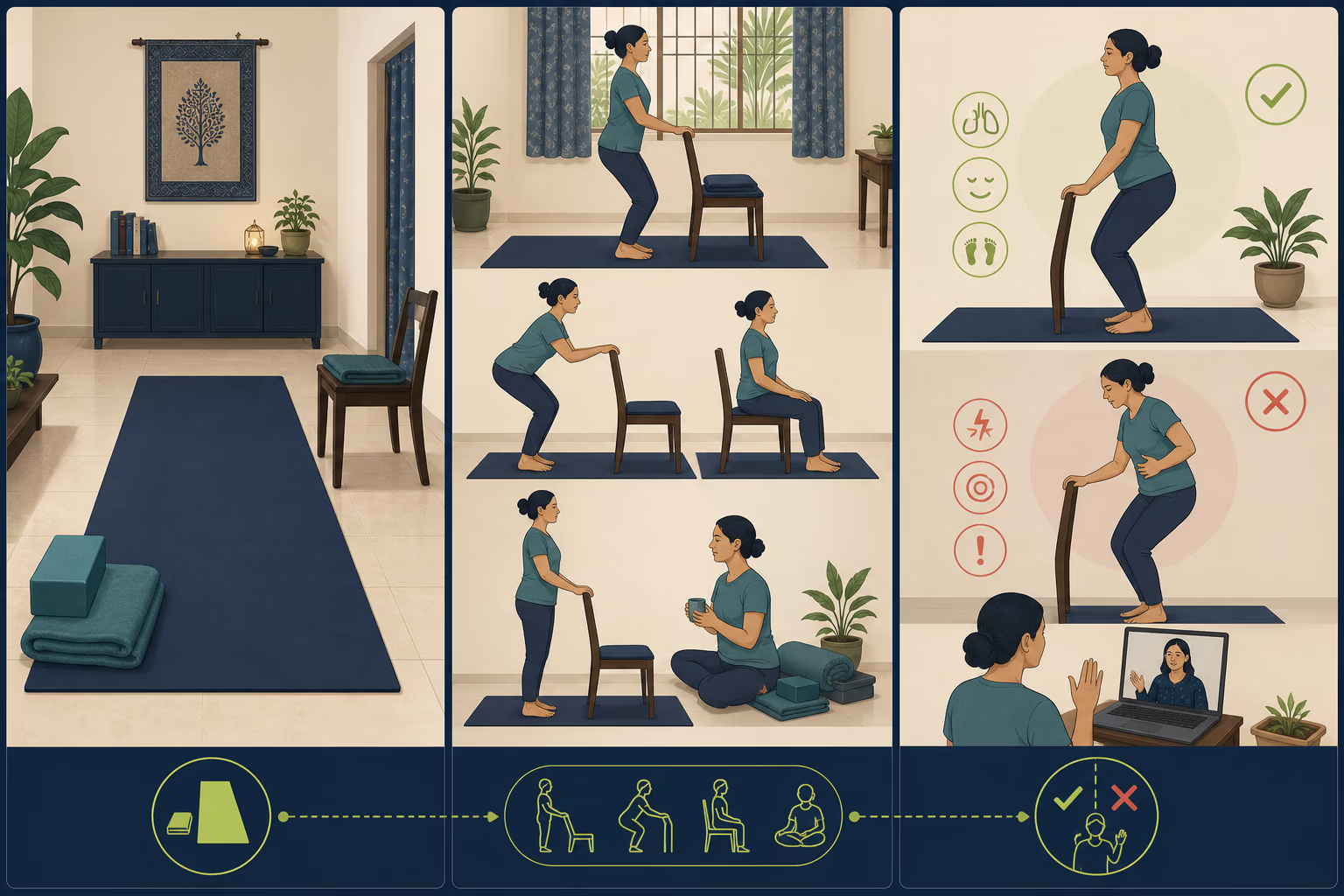
When starting a home practice, prioritize stability and ease. If floor sitting causes you to hunch or puts pressure on your joints, move to a chair. A sturdy, armless chair is an excellent tool. It helps you maintain a neutral spine, keeps your feet grounded, and provides support for movements that might otherwise feel unstable.
For example, perform a seated forward fold by sitting toward the edge of a chair with your feet flat on the floor. Instead of reaching for your toes, rest your hands on your knees or the seat. This modification allows you to stretch your back and hamstrings without the discomfort of floor-based positioning.
A seated forward fold using a chair provides support while allowing for a gentle stretch.
Your three-step comfort-first practice
This routine is designed for beginners who prefer to avoid the floor. It takes approximately 10 to 15 minutes.
- Standing neck and shoulder rolls (5 minutes): Stand with your feet hip-width apart. Slowly roll your shoulders back and down, then gently tilt your head from side to side. Keep your movements slow and deliberate.
- Seated twists and forward folds (5-7 minutes): Sit on a sturdy chair with your feet flat. For a twist, place your right hand on the back of the chair and gently rotate your torso to the right. Hold for a few breaths and switch sides. Follow this with a gentle forward fold, resting your hands on your knees.
- Breath-awareness exercise (3 minutes): Sit comfortably in your chair with your back supported. Close your eyes or soften your gaze. Focus entirely on the sensation of your breath entering and leaving your nostrils. If your mind wanders, gently bring your attention back to your breath.
Scaling and Safety:
- Scaling: If 15 minutes feels too long, reduce each section to two minutes. If you feel energized, you can repeat the sequence twice.
- Stop Rule: If any movement causes sharp pain, dizziness, or numbness, stop immediately. Discomfort is not a necessary part of yoga progress. If you feel strain, adjust your posture to be more upright or reduce your range of motion.
- When static guidance is not enough: If you find yourself frequently modifying poses or if you are unsure if your alignment is safe, it is time to seek professional guidance. Static guides cannot see your posture or provide real-time adjustments.
Safety and listening to your body
A common failure mode for beginners is the "no pain, no gain" mindset. In yoga, forcing your body into a position that causes pain is counterproductive and increases the risk of injury. Instead, view modifications as a sign of progress. Using a chair or a prop is not "cheating"; it is a sophisticated way of tailoring the practice to your unique anatomy.
If a movement causes discomfort, skip it. There are many ways to achieve the benefits of a pose. If you feel uncertain about your form, do not push through the sensation. Take a break, breathe, and consider whether a different variation or a different teacher might be more appropriate for your needs.
Finding your next step
While home practice is a starting point, seek personalized instruction for long-term safety and progression. A teacher can help you identify effective modifications and ensure you do not develop habits that lead to strain.
Prime Tempr helps beginners compare teacher profiles, nearby studios and online offerings so a general article can lead to responsive instruction when needed. Whether you seek a local class emphasizing accessibility or an online teacher specializing in chair-based sequences, a guide improves your consistency and confidence.
Yoga is a long-term journey. You do not need to master every pose or practice for an hour daily to see benefits. Start small, prioritize your comfort, and seek the support you need to keep going.
Keep learning
Ready for the next step? Yoga at Home: Using Blankets and Books for Support.
Sources
Watch alongside this guide
Yoga for complete beginners
This optional beginner session lets readers observe pacing and rest choices in a complete practice. Pause, adapt or stop rather than matching every shape.
The YouTube player stays unloaded until you choose to watch. Loading it connects to YouTube and may allow that service to process usage data.