Starting Yoga: Using the Common Yoga Protocol at Home
The Common Yoga Protocol provides a structured foundation for beginners, but you should adapt it to your needs.
https://primetempr.com/blog/starting-yoga-using-the-common-yoga-protocol-at-home
The Common Yoga Protocol (CYP) is a standardized sequence from the Ministry of Ayush that provides a consistent entry point for public practice. It includes movements, breathing exercises, and meditation techniques for a wide range of people. If you are starting or restarting your practice, the CYP provides a structured foundation, though it is a starting framework rather than a rigid requirement.
Yoga is a diverse living Indian tradition transmitted through teachers, communities, institutions, texts, and modern media. While the CYP offers a contemporary sequence for public practice, it is not the only form of yoga. Your practice should reflect your available space, time, and current physical comfort.
What is the common Yoga protocol?
The Ministry of Ayush protocol presents one contemporary public-practice sequence, general guidelines, and a brief account of yoga traditions. It introduces the basic pillars of yoga,including warm-ups, standing and sitting postures, breathing techniques (pranayama), and meditation,in an accessible format.
Standardization removes the guesswork for beginners who might feel overwhelmed by the variety of yoga styles. The official sequence in the Ministry of Ayush manual provides a clear, step-by-step path for your practice.
Understanding the scope of yoga
It is common to feel that you must perform every movement in a protocol perfectly to "do yoga." This is a misconception. Yoga encompasses many traditions, and the CYP is simply one example of how these traditions can be organized for public health and wellness.
If a movement does not feel right for your body, you are practicing self-awareness, not failing. Yoga styles and physical demands vary, and qualified instruction and appropriate modification can reduce avoidable risk. If a movement causes pain or feels unsafe, stop immediately. Your goal is a sustainable habit, not forcing your body into shapes that cause discomfort.
Adapting the protocol to your home
Practicing in a small home or a multigenerational household requires practical adjustments. You do not need a large, dedicated studio space to practice effectively.
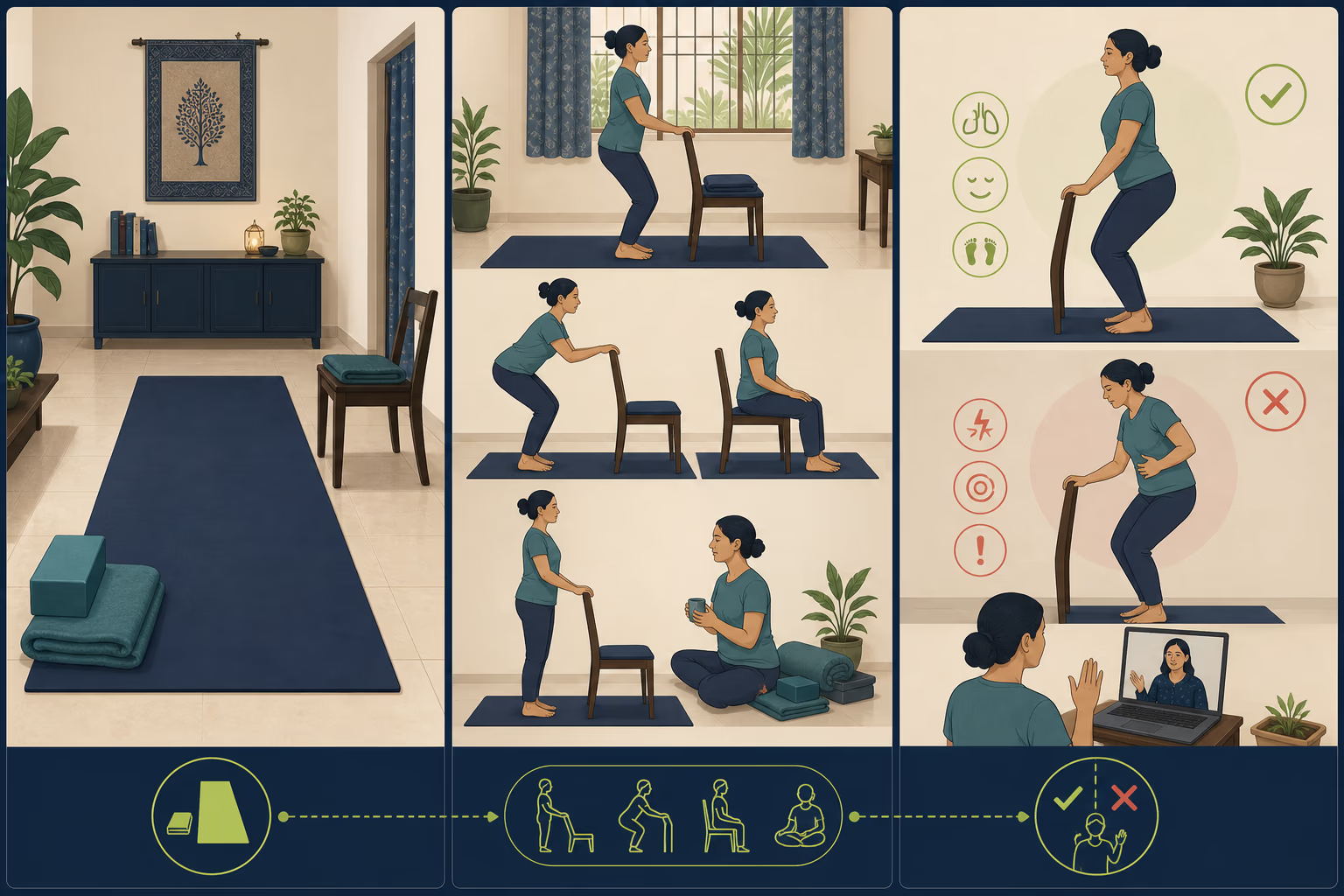
- Use your environment: If you have limited space, focus on the movements that fit your footprint. You can practice standing postures in a narrow hallway or seated postures on a chair if getting down to the floor is difficult.
- Use props: Household items are excellent tools. A sturdy chair can provide balance during standing poses, and a folded blanket can support your hips during seated work.
- Prioritize breathing: If you are short on time, you do not need to complete the full, long-form sequence. You can choose a few movements and focus on steady, calm breathing. A 10-minute session where you breathe well is more beneficial than a 45-minute session where you are distracted or in pain.
Your three-step protocol adaptation
Use this simple plan to customize the CYP for your daily life.
- Review the sequence: Read through the CYP manual to understand the overall flow of the practice. Do not worry about memorizing it; just get a sense of the progression.
- Identify your modifications: Find one movement that feels challenging for your body. If it is a balance pose, identify a wall or chair you can use for support. If it is a forward bend, use a block or a stack of books to bring the floor closer to your hands.
- Practice for 10 minutes: Start with a short, 10-minute session. Prioritize steady breathing over perfect form. If you feel tired or uncomfortable, stop.
When to seek personal guidance
The CYP lacks the personalized adjustments a private teacher can offer. A teacher can observe your movement in real-time and suggest modifications that account for your history, daily physical stressors,such as desk work or long commutes,and your unique body.
If you are unsure if you are performing a movement correctly or experience persistent discomfort, seek a teacher. Prime Tempr helps beginners compare teacher profiles, nearby studios, and online offerings to connect you with responsive instruction. Whether you need a local class or a trainer for a home-based routine, the right support helps you navigate the complexities of yoga safely.
Frequently asked questions
Is the Common Yoga Protocol the only way to practice? No. It is one contemporary sequence designed for public practice. Many other valid traditions and styles exist.
What if I cannot touch my toes? You do not need to touch your toes to practice yoga. Use props like blocks or straps, or bend your knees until you feel a comfortable stretch.
How do I know if a movement is unsafe? If you feel sharp pain, dizziness, or intense strain, stop immediately. Yoga should focus on breath and awareness, not endurance against pain.
Can I practice the CYP if I have a health condition? If you have a known health condition, consult a medical professional before starting any new exercise routine. A qualified yoga teacher can also help you identify appropriate modifications for your specific needs.
Keep learning
Ready for the next step? Using the Wall as a Partner.
Sources
Watch alongside this guide
Yoga for complete beginners
This optional beginner session lets readers observe pacing and rest choices in a complete practice. Pause, adapt or stop rather than matching every shape.
The YouTube player stays unloaded until you choose to watch. Loading it connects to YouTube and may allow that service to process usage data.