Starting Yoga at Home: A Practical Guide
Begin your yoga practice at home with this guide for managing small spaces and personal comfort.
https://primetempr.com/blog/starting-yoga-at-home-a-practical-guide
You do not need a studio, expensive equipment, or a large room to practice yoga. Yoga is a diverse, living Indian tradition transmitted through various teachers, communities, and media. Because it is adaptable, you can start a meaningful practice in a small room by prioritizing comfort and safety over perfect form.
The belief that you need a pristine, spacious environment often prevents people from starting. Your practice should fit your life. Whether you are working around furniture in a shared space or finding a quiet corner before the household wakes, your environment is sufficient if you can move safely.
Why your living room is enough
Yoga is not defined by the size of your room or the brand of your mat. It is a practice of awareness and movement passed down through generations in diverse settings. The Ministry of Ayush protocol provides a contemporary sequence for public practice, but it is one of many ways to practice yoga.
Home practice offers privacy and the ability to tailor sessions to your energy levels without the pressure of a class pace. However, you lose the real-time feedback of a teacher, which increases the risk of misalignment. To mitigate this, focus on slow, controlled movements and listen to your body rather than replicating complex poses you see online.
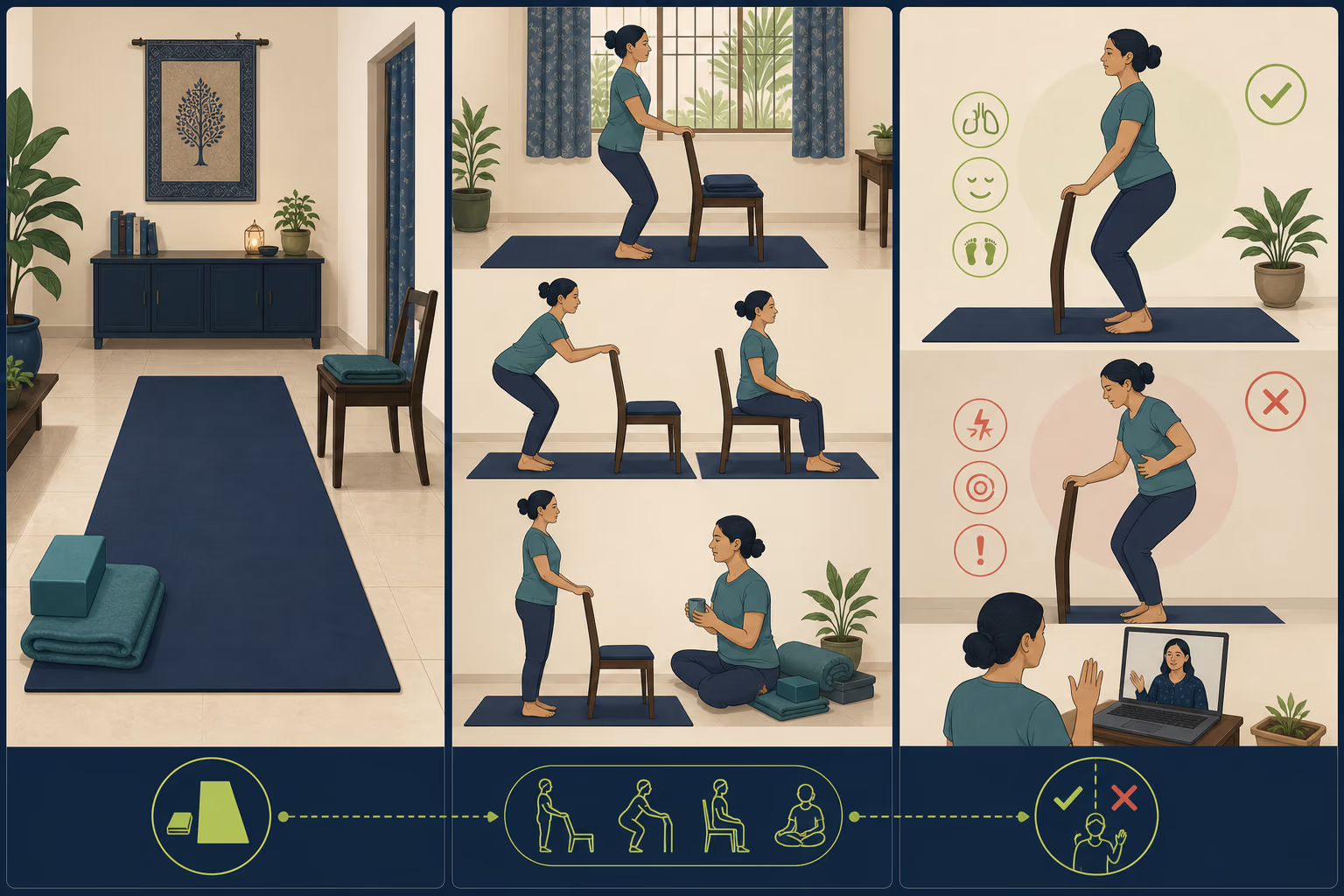
Safety first: the rules of solo practice
Yoga styles vary in intensity. Qualified instruction and appropriate modifications are essential to reduce the risk of injury. When practicing alone, follow these boundaries to ensure your session remains safe:
- Clear your space: Ensure you have enough room to extend your arms and legs fully without hitting furniture or walls. If your room is very small, prioritize poses that keep you close to the floor.
- Stop at discomfort: If a pose feels painful, causes sharp sensations, or makes you feel unstable, stop immediately. Rest in a comfortable seated position and reassess your alignment or skip the movement entirely.
- Avoid overexertion: Do not push into a pose just because you think you should. Flexibility is not the goal of a first session; consistency and safety are.
- Use props: You do not need professional gear. A folded blanket can support your knees or hips, and a sturdy chair can provide balance for standing poses.
A simple sequence for small spaces
This 15-minute routine is designed to be low-risk and manageable, even in a compact area.
Your first 15-minute home session
- Clear a space just large enough for your mat or a folded blanket.
- Start with 3 minutes of seated breathing to settle your mind. Sit in a comfortable cross-legged position, keeping your spine long but not strained.
- Perform 4 minutes of gentle neck and shoulder rolls to release tension, especially if you spend long hours at a desk.
- Practice 3 minutes of standing mountain pose and gentle side stretches. Keep your feet hip-width apart and focus on grounding your weight evenly.
- End with 5 minutes of quiet rest (Savasana) by lying flat on your back, allowing your body to relax completely.
Stop immediately if you feel sharp pain or dizziness. If you struggle with instructions or feel unsure about your posture, you need external guidance.
When to seek a teacher
Home practice is an excellent starting point, but it does not replace a qualified teacher. A teacher provides the adjustments and personalized feedback that help you progress safely and avoid habits that lead to injury.
If you are consistently unsure about your form or want to deepen your understanding of the tradition, seek professional support. Prime Tempr helps beginners compare teacher profiles, nearby studios, and online offerings to connect you with responsive instruction.
Starting at home builds the habit of showing up for yourself. Seeking a teacher ensures that your practice remains sustainable and safe for years to come.
Find a beginner-friendly teacher
Yoga for every person: Why You Don't Need to Touch Your Toes
Follow-along reflection
Use the prompts below to review these ideas in context, without treating them as a diagnosis or a fixed rule.
Your first 15-Minute home session
- Clear a space just large enough for your mat (or a folded blanket).
- Perform gentle neck and shoulder rolls to release desk-job tension.
- Practice 5 minutes of standing mountain pose and gentle side stretches.
- End with 5 minutes of quiet rest (Savasana) on the floor.
- Stop immediately if you feel sharp pain or dizziness.
Trade-offs to keep in view
- A small room limits the range of motion for certain poses, requiring creative modifications.
If this approach does not fit
If a pose feels painful or unstable, stop immediately, rest in a comfortable seated position, and reassess your alignment or skip the movement entirely.
Questions to carry forward
- How much space do I actually need for a basic yoga session?
- What are the essential safety rules for practicing alone?
- How do I adapt common poses for a small, shared living space?
- When should I stop or modify a movement?
- How can I transition from home practice to working with a teacher?
Sources
Watch alongside this guide
Yoga for complete beginners
This optional beginner session lets readers observe pacing and rest choices in a complete practice. Pause, adapt or stop rather than matching every shape.
The YouTube player stays unloaded until you choose to watch. Loading it connects to YouTube and may allow that service to process usage data.