Starting Strength: A Practical Guide to Choosing Dumbbell Training
Pick a beginner dumbbell routine that prioritizes consistent movement patterns and clear progression over an elusive ideal workout.
https://primetempr.com/blog/starting-strength-a-practical-guide-to-choosing-dumbbell-tra
Choosing a beginner dumbbell program is less about finding the "perfect" workout and more about selecting a structure that emphasizes consistent, manageable movement patterns and allows for clear progression. When you are just starting, the sheer volume of online programs can feel overwhelming. The goal is not to find the most intense routine, but to find one that fits your current schedule and teaches you how to move safely.
Why Strength Training Matters for every person
Strength training is not exclusive to athletes. The World Health Organization notes that any amount of physical activity beats doing nothing, and all activity counts. Muscle-strengthening activities deliver benefits for every person, no matter your starting point.
Current health guidelines suggest adults work toward 150 to 300 minutes of moderate aerobic activity weekly, alongside muscle-strengthening activities on at least two of those days. Dumbbells suit these goals well because they are versatile, accessible, and demand more stabilizer muscle engagement than fixed-path gym machines. Since they demand higher technical awareness, choosing the right entry-level program remains vital for building a sustainable habit.
What to Look for in a Beginner Program
A high-quality beginner program should prioritize movement quality over intensity. If a program promises rapid transformations or focuses exclusively on how "tired" you feel at the end of a session, it may be overlooking the importance of long-term consistency.
When evaluating potential programs, look for these core components:
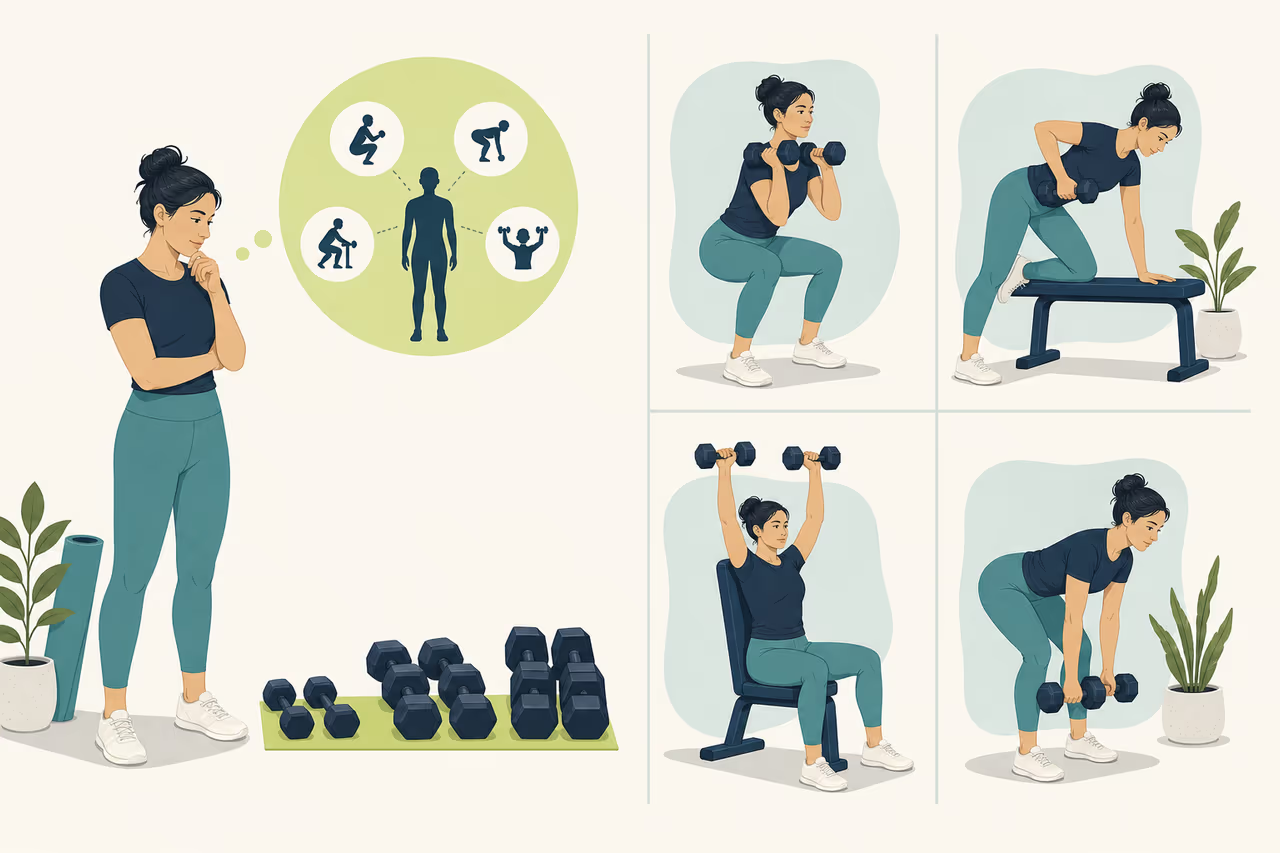
- Foundational Patterns: The program should focus on the four primary movement patterns: squat (knee-dominant), hinge (hip-dominant), push (upper body), and pull (upper body). These patterns mimic real-world movements and build functional strength.
- Clear Progression: A good program doesn't just list exercises; it tells you how to progress. This might involve increasing the weight, adding repetitions, or improving your control over the movement.
- Warm-up and Cool-down: Never skip these. A proper warm-up prepares your joints and nervous system for the load, while a cool-down helps you transition out of the high-intensity state of training.
- Realistic Frequency: If a program demands five days a week but your schedule only allows for two, you will likely feel discouraged. Start with a frequency you can maintain consistently.
Your Dumbbell Program Checklist
Use this checklist to evaluate any program you are considering. If a program fails to meet these criteria, it may not suit a beginner.
| Criteria | Why it Matters |
|---|---|
| Clear Warm-up/Cool-down | Reduces the risk of strain and prepares the body for movement. |
| Simple Movement Patterns | Ensures you learn the basics (squat, hinge, push, pull) safely. |
| Progress Tracking | Allows you to measure improvement beyond just "feeling tired." |
| Realistic Frequency | Supports long-term consistency rather than short-term burnout. |
| Scaling Instructions | Provides options to modify exercises if they feel too difficult. |
The Limits of Self-Guided Training
Self-guided programs offer a great deal of flexibility and are a fantastic way to begin your fitness journey. However, they have inherent trade-offs. The primary limitation is the lack of objective, personalized feedback. When you follow a video or a written guide, you are responsible for your own form. It is easy to develop "blind spots" where you unknowingly compensate for a lack of mobility or strength by using the wrong muscles.
If you frequently experience pain rather than muscle fatigue, or feel confused about performing a movement correctly, seek professional guidance. At Prime Tempr, we help readers compare trainer approaches and ongoing programmes, making it easier to add qualified progression when a general strength guide falls short. A trainer provides real-time adjustments static programs lack, keeping movement patterns safe as load increases.
Integrating Dumbbells with Your Current Routine
Many worry strength training will conflict with an existing yoga practice or other movement habits. In practice, these habits complement one another effectively. Strength training builds the stability required for challenging yoga poses, while yoga improves the mobility needed to execute dumbbell exercises through a full range of motion.
To balance these activities:
- Prioritize Recovery: If you are doing a heavy strength session, consider a lighter, restorative yoga practice the following day.
- Listen to Your Body: If you feel overly fatigued, scale back the weight or the number of sets. Consistency is more important than the intensity of a single session.
- Focus on Quality: If you are short on time, it is better to perform two sets of a movement with perfect form than four sets with poor form.
If you are currently feeling overwhelmed by your options, remember that the "best" program is the one you can actually stick to. Start small, focus on mastering the basic movement patterns, and do not be afraid to seek out a trainer when you are ready to take your training to the next level. You can find a trainer for your goals to help you bridge the gap between general guidance and a personalized plan. For more on how these two worlds interact, read our guide on how to combine yoga and strength training effectively.
Sources
- Physical activity (opens in a new tab), World Health Organization.
- Top 10 Things to Know About the Physical Activity Guidelines (opens in a new tab), Office of Disease Prevention and Health Promotion.
Watch alongside this guide
High-intensity functional training explained
This ACE overview shows how functional training is framed so you can compare it with the article's safer progression advice. Source: ACE Fitness. This optional video is context, not evidence or personal instruction.
The YouTube player stays unloaded until you choose to watch. Loading it connects to YouTube and may allow that service to process usage data.