Starting a Morning Meditation Practice: What to Know
Build a simple morning meditation routine, learn its practical limits, and know when to seek professional support for your well-being.
https://primetempr.com/blog/starting-a-morning-meditation-practice-what-to-know
If you are looking to start a morning meditation routine, the most important step is to stop treating it as a productivity hack. Many people approach meditation as a "must-do" task designed to optimize their focus or output for the day. When you view meditation through the lens of performance, you inadvertently add stress to your morning, turning a practice meant for awareness into just another item on your to-do list.
A morning meditation is best treated as a low-stakes experiment to observe your internal state without judgment, rather than a way to force artificial calm. Because meditation practices vary widely and evidence regarding outcomes is mixed, approach this as personal exploration instead of a guaranteed path to success.
The Reality of Morning Meditation
While common advice suggests meditation is a universal fix for stress or a chaotic morning, maintain realistic expectations. Meditation is not a replacement for conventional medical or mental health care. If you experience significant distress, do not use meditation as a substitute for professional treatment. Individual experiences with meditation vary significantly. While some find it grounding, a minority of participants report negative experiences, such as increased anxiety or discomfort. If you find that a particular technique makes you feel worse, it is not a sign that you are "doing it wrong",it is a sign that the technique may not be suitable for you at this time.
Designing Your Simple Routine
A sustainable, simple routine relies on consistency in effort rather than intensity. You do not need an hour of silence or a specialized environment to begin; the goal is simply to create a manageable container for awareness.
Your 5-Minute Morning Awareness Check-in
This framework is designed to be accessible and low-pressure. If you struggle with these steps, remember that the core goal is to observe, not to achieve a specific mental state.
- Set a timer for 5 minutes: Using a timer allows you to stop checking the clock, which often disrupts the process.
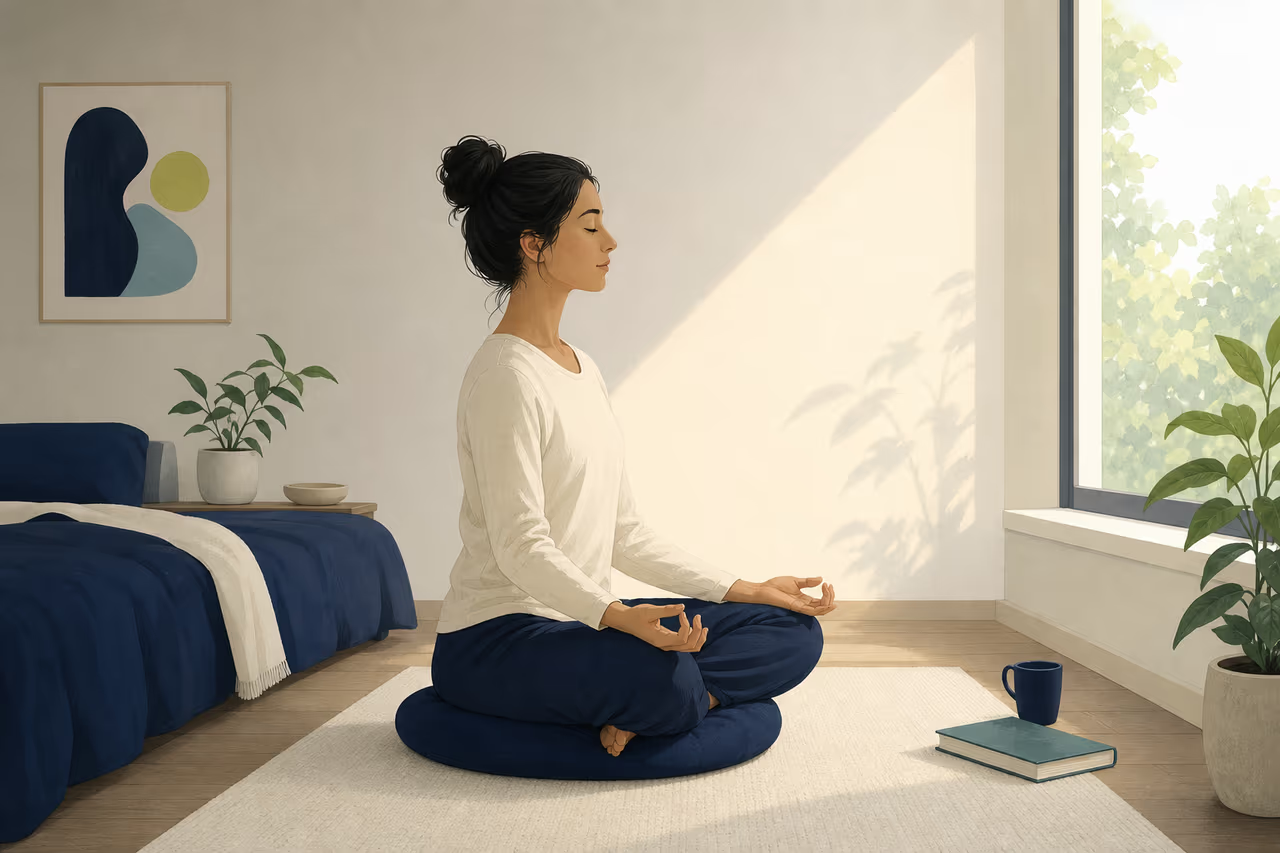
- Find a comfortable, stable seat: Sit in a position where you can remain upright without excessive strain. You do not need to sit on the floor; a chair works perfectly well.
- Focus on the natural rhythm of your breath: Do not attempt to change or control your breathing. Simply notice the sensation of air moving in and out of your body.
- Return to the breath: When your mind wanders,and it will,gently bring your attention back to the breath. This act of noticing and returning is the core of the practice.
- Honor your limits: If you feel agitation, physical discomfort, or emotional distress, stop the practice immediately. You can try again another day or consider whether a different approach is needed.
Recognizing Limits and When to Stop
One of the most common pitfalls for beginners is the "perfection trap." You may feel that if you aren't "clearing your mind" completely, you are failing. In reality, the mind is designed to think. The practice is not about stopping thoughts, but about changing your relationship to them.
If your morning routine consistently leaves you feeling frustrated, anxious, or physically uncomfortable, stop. Pushing through discomfort is not a virtue in meditation. If you wish to continue, pivot to a different relaxation style, such as guided imagery or progressive relaxation, which may feel more accessible. As always, these techniques should not replace conventional care if you are managing health concerns.
Why Personalized Guidance Matters
Self-guided practice is a useful starting point, but it lacks the nuance of working with a qualified teacher. When you practice alone, you have no external feedback to help you adjust your posture, refine breathing techniques, or navigate frustration.
We connect you with trainers who understand that meditation is not one-size-fits-all. A qualified trainer can help you:
- Contextualize your practice: They can explain why you are using a specific technique and how it fits into your broader wellbeing goals.
- Adjust for your needs: If a specific breathwork pattern feels restrictive, a trainer can offer alternatives that match your physiology and comfort level.
- Provide a safety net: By working with a professional, you have a responsive guide who can help you identify when to scale back or change your approach.
An introductory article is a starting point, not a substitute for responsive guidance. If you are ready to move beyond generic advice, find guided breath and meditation support through our platform.
For more foundational information on beginning your journey, you may also find these resources helpful:
Sources
- Meditation and Mindfulness: Effectiveness and Safety (opens in a new tab), National Center for Complementary and Integrative Health.
- Relaxation Techniques: What You Need To Know (opens in a new tab), National Center for Complementary and Integrative Health.
Watch alongside this guide
Breathing meditation
This short guided meditation lets you follow the basic attention and breathing ideas described in the article. Source: UCLA Health. This optional video is context, not evidence or personal instruction.
The YouTube player stays unloaded until you choose to watch. Loading it connects to YouTube and may allow that service to process usage data.