Somatic Yoga Explained: Focus, Feel, and Practical Trade-Offs
Learn how somatic yoga prioritizes internal awareness over physical aesthetics to help you evaluate if the practice fits your routine.
https://primetempr.com/blog/somatic-yoga-explained-focus-feel-and-practical-trade-offs
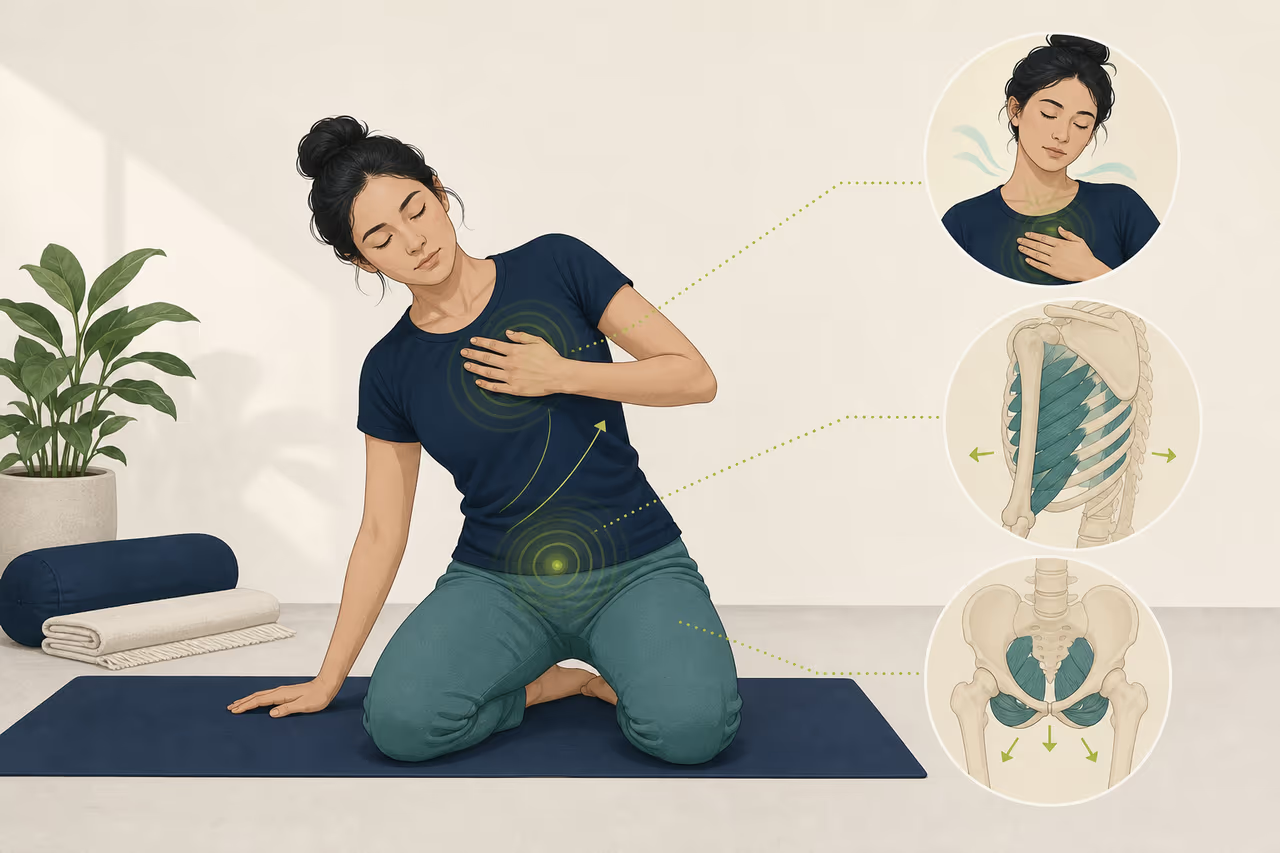
Somatic yoga is not a specific, standardized lineage of postures. Instead, it is an approach to movement that prioritizes the internal experience,how a pose feels to you,over the external aesthetic or "perfect" alignment of the pose. While traditional yoga styles often emphasize achieving a specific shape, somatic yoga uses slow, deliberate movement to foster awareness of how your body functions and feels in real-time.
Because "somatic" has become a popular marketing term, it is often misunderstood. It is not necessarily a "lazy" or "easy" practice, nor is it a therapeutic cure-all. It is a tool for those seeking to improve body awareness or manage movement-related fatigue. Like all yoga, it combines postures, breathing, and meditation, but the emphasis shifts from the destination (the pose) to the journey (the sensation).
Defining the Somatic Approach
the somatic approach asks you to move away from the "mirror-check" mentality. In many fitness-oriented yoga classes, students are encouraged to adjust their limbs to match a teacher’s demonstration. In a somatic-focused session, the teacher may encourage you to move within a range of motion that feels sustainable, focusing on the quality of the contraction and release of muscles.
This focus on internal feedback helps practitioners notice habitual tension patterns. By slowing down, you might identify where you are unnecessarily gripping or holding your breath, allowing for a more conscious adjustment. However, yoga styles vary significantly, and benefits should be described with uncertainty. While this approach is useful for some, it is not inherently safer than other styles; injuries can still occur if you move beyond your personal capacity or ignore pain signals.
Somatic vs. Traditional Yoga
To understand how somatic yoga differs from styles like Hatha or Vinyasa, examine the primary objective of the session:
| Feature | Traditional Styles (e.g., Vinyasa) | Somatic Approach |
|---|---|---|
| Primary Goal | Achieving specific alignment or flow | Cultivating internal sensation |
| Pace | Often dynamic, rhythmic, or steady | Usually slow, meditative, and repetitive |
| Focus | External form and visual cues | Internal feedback and proprioception |
| Intensity | Can be cardiovascularly demanding | Typically lower intensity; focus on recovery |
In a Vinyasa class, the focus is often on the sequence and the transition between postures. In a somatic class, you might spend the entire session exploring a single movement,such as a pelvic tilt or a gentle spinal rotation,to understand the nuance of that movement. This does not mean one is "better" than the other; they serve different purposes. If you are looking for cardiovascular intensity, a purely somatic class may feel underwhelming. If you are looking to recover from movement fatigue or improve your baseline body awareness, the slower pace may be exactly what you need.
Practical Trade-Offs and Expectations
Before committing to a class, it is useful to manage your expectations. Somatic yoga is not a universal experience; because there is no standardized definition, the "somatic" label can be applied to anything from gentle stretching to highly technical neuromuscular training.
The Trade-offs
- Lack of Cardiovascular Intensity: If your goal is to build peak athletic performance or burn calories, you may find somatic yoga lacking in intensity.
- Variable Quality: Because the term is not regulated, the experience can vary wildly between teachers. One teacher might focus on gentle, restorative movements, while another might focus on intense, micro-movements that are mentally taxing.
- Mental Demand: While the movements are slow, the high degree of internal focus required can be mentally exhausting for some. It requires you to stay present and observant, which can be more challenging than simply following a fast-paced, repetitive flow.
Despite these trade-offs, any amount of physical activity is better than none. All activity counts toward your overall health, and incorporating a variety of movement styles, including those focusing on slow, deliberate awareness, can help you limit sedentary time and improve your relationship with your body.
How to Find a Class That Fits
If you are curious about somatic yoga but are unsure where to start, avoid assuming that every class labeled "somatic" will provide the same experience. Instead, look for teachers who clearly articulate their approach.
Prime Tempr allows you to compare trainers and yoga businesses by profile, location, and offering, so your research leads to a better-fit real class rather than a generic recommendation.
When you contact a studio or trainer, ask them directly: "How do you define the somatic aspect of your class?" A good teacher will be able to explain their methodology, whether they focus on restorative recovery, mobility work, or mindful movement.
Is Somatic Yoga Right for Your Current Goals?
Use this reflection guide to determine if this approach aligns with your current needs:
- Are you currently prioritizing internal feedback over external alignment? If you are tired of trying to "look" like the person on the mat next to you, this approach may be a welcome shift.
- Do you have 30-60 minutes to focus on slow, deliberate movement? Somatic work requires patience; it is not a "quick fix" for tension.
- Are you looking to reduce movement-related tension rather than build peak athletic performance? If recovery and awareness are your goals, this is a strong candidate.
- Are you willing to ask a potential trainer how they define 'somatic' in their specific class? This is the best way to avoid disappointment and ensure you find a teacher who matches your expectations.
For more guidance on how to navigate the variety of styles available, read our guide on How to Choose a Yoga Style That Actually Fits Your Life.
Sources
- Yoga: Effectiveness and Safety (opens in a new tab), National Center for Complementary and Integrative Health.
- Physical activity (opens in a new tab), World Health Organization.
Watch alongside this guide
A beginner Yin yoga practice
This slower practice gives you a concrete style example to compare with the goals and class formats in the guide. Source: Yoga with Kassandra. This optional video is context, not evidence or personal instruction.
The YouTube player stays unloaded until you choose to watch. Loading it connects to YouTube and may allow that service to process usage data.