Should You Do Yoga Before or After Strength Training?
Learn whether yoga or lifting should come first based on your daily energy, mobility goals, and recovery needs.
https://primetempr.com/blog/should-you-do-yoga-before-or-after-strength-training
The short answer: It depends on your goal
If you are trying to decide whether to roll out your mat before or after you hit the weights, the most effective approach is to prioritize your primary goal. There is no universal "correct" order; instead, the best sequence is the one that allows you to perform your most important activity of the day with the highest quality of movement and focus.
Because any amount of physical activity is better than none, and muscle strengthening benefits everyone, integrating both modalities helps you meet recommended guidelines. Adults can work toward 150 to 300 weekly minutes of moderate aerobic activity and muscle strengthening on at least two days. Combining yoga and strength training builds a robust movement practice, but the order matters because each activity places different demands on your central nervous system and muscle tissues.
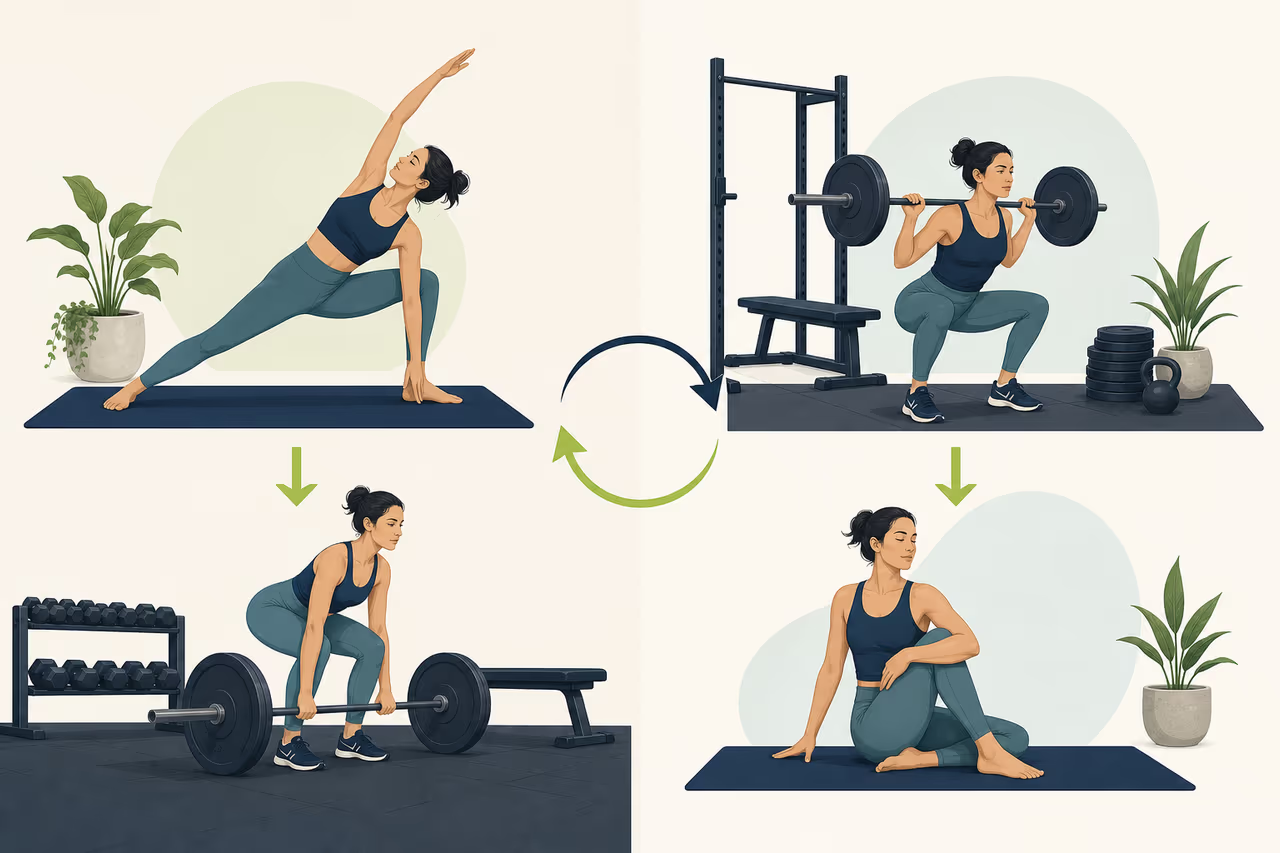
When to do yoga before strength training
Consider practicing yoga before strength training if your primary goal for the session is to improve mobility, prepare your joints for movement, or manage stress before lifting.
When used as a warm-up, yoga can help increase blood flow to the muscles and improve the range of motion in key areas like the hips, shoulders, and thoracic spine. This can be particularly helpful if you spend much of your day sitting and need to "wake up" your body before performing compound lifts like squats or overhead presses.
Potential trade-offs and risks
While yoga can serve as an excellent warm-up, there are failure modes to watch for:
- Muscle fatigue: If your yoga session is too intense or long, you may exhaust the very muscles you need for your lifting session. If you are doing a high-intensity vinyasa flow, you might find your stability compromised when you move to the squat rack.
- Reduced stability: Some studies suggest that prolonged static stretching,often found in certain styles of yoga,can temporarily reduce muscle force production. If you plan to lift heavy, keep your pre-workout yoga focused on dynamic movement rather than long-held, deep static stretches.
When to do yoga after strength training
If your primary goal is to maximize your lifting performance, save your yoga practice for after your strength session. This ensures your energy levels and muscle stability are at their peak when handling heavy loads.
Using yoga as a post-workout tool cools you down effectively. It transitions you from the high-intensity, sympathetic nervous system state of lifting into a parasympathetic, recovery-oriented state. Gentle, restorative yoga helps you focus on your breath, lower your heart rate, and move through ranges of motion that felt tight during your workout.
Practical considerations
- Energy management: If you find that you are too exhausted to maintain proper form during your post-workout yoga, you may be pushing the intensity of your strength training too hard or neglecting your recovery.
- The "punishment" trap: Avoid treating yoga as an afterthought or a "punishment" for a bad lifting session. View it instead as a deliberate recovery tool that supports your long-term consistency.
Practical tips for balancing both
Combining two demanding modalities requires careful energy management. If doing both in one session leaves you feeling drained or prone to injury, consider adjusting your strategy:
- Separate by time: If your schedule allows, try doing your strength training in the morning and a dedicated yoga session in the evening. This gives your body time to recover between sessions.
- Separate by day: Many people find success by alternating days. For example, you might do strength training on Monday, Wednesday, and Friday, and focus on yoga or mobility work on Tuesday and Thursday.
- Adjust the intensity: You don't always need to do a "power" yoga class. If you are lifting heavy, pair it with a restorative or yin yoga session later. If you are doing a high-intensity yoga class, treat that as your primary workout and keep the strength training light or skip it for that day.
Choosing Your Sequence: A Decision Guide
Use this guide to help you decide how to structure your movement for the day:
| Goal | Recommended Sequence |
|---|---|
| Maximize strength gains | Strength training first, yoga as a cool-down. |
| Improve mobility/flexibility | Yoga first (focus on dynamic movement). |
| Manage daily stress | Yoga first or as a standalone session. |
| Recovery | Low-intensity, restorative yoga after lifting. |
If you struggle to balance these two modalities, seek personalized guidance. Prime Tempr helps readers compare trainer approaches and ongoing programmes, making it easier to add qualified progression when a general strength guide is no longer enough. Working with a professional helps you identify whether your current fatigue signals overtraining or simply requires better programming.
When to adjust your plan
If you feel consistently fatigued, notice a decline in your lifting performance, or experience persistent soreness that doesn't resolve with rest, it is time to reassess. Combining modalities should enhance your wellbeing, not detract from it. If a combined session feels too taxing, separate the practices into different days or times of day, or reduce the intensity of the yoga portion to a restorative focus. Remember, consistency over the long term is far more important than fitting everything into a single, exhausting session.
For more information on integrating these practices, explore How to Combine Yoga and Strength Training Effectively or Find a trainer for your goals to get a program tailored to your specific needs.
Sources
- Physical activity (opens in a new tab), World Health Organization.
- Top 10 Things to Know About the Physical Activity Guidelines (opens in a new tab), Office of Disease Prevention and Health Promotion.
Watch alongside this guide
High-intensity functional training explained
This ACE overview shows how functional training is framed so you can compare it with the article's safer progression advice. Source: ACE Fitness. This optional video is context, not evidence or personal instruction.
The YouTube player stays unloaded until you choose to watch. Loading it connects to YouTube and may allow that service to process usage data.