Sets and Reps: A Beginner Guide
Master sets and reps to organize your movement practice, build consistency safely, and avoid overwhelm.
https://primetempr.com/blog/sets-and-reps-explained-a-simple-guide-for-beginners
Sets and reps provide a framework to organize your movement, track progress safely, and build consistency. If fitness jargon feels overwhelming, structure your activity with sustainable terms so your body moves safely.
What are sets and reps?
At their core, "sets" and "reps" are the basic vocabulary of exercise organization. Understanding them allows you to turn a vague desire to "get stronger" into a clear, actionable plan.
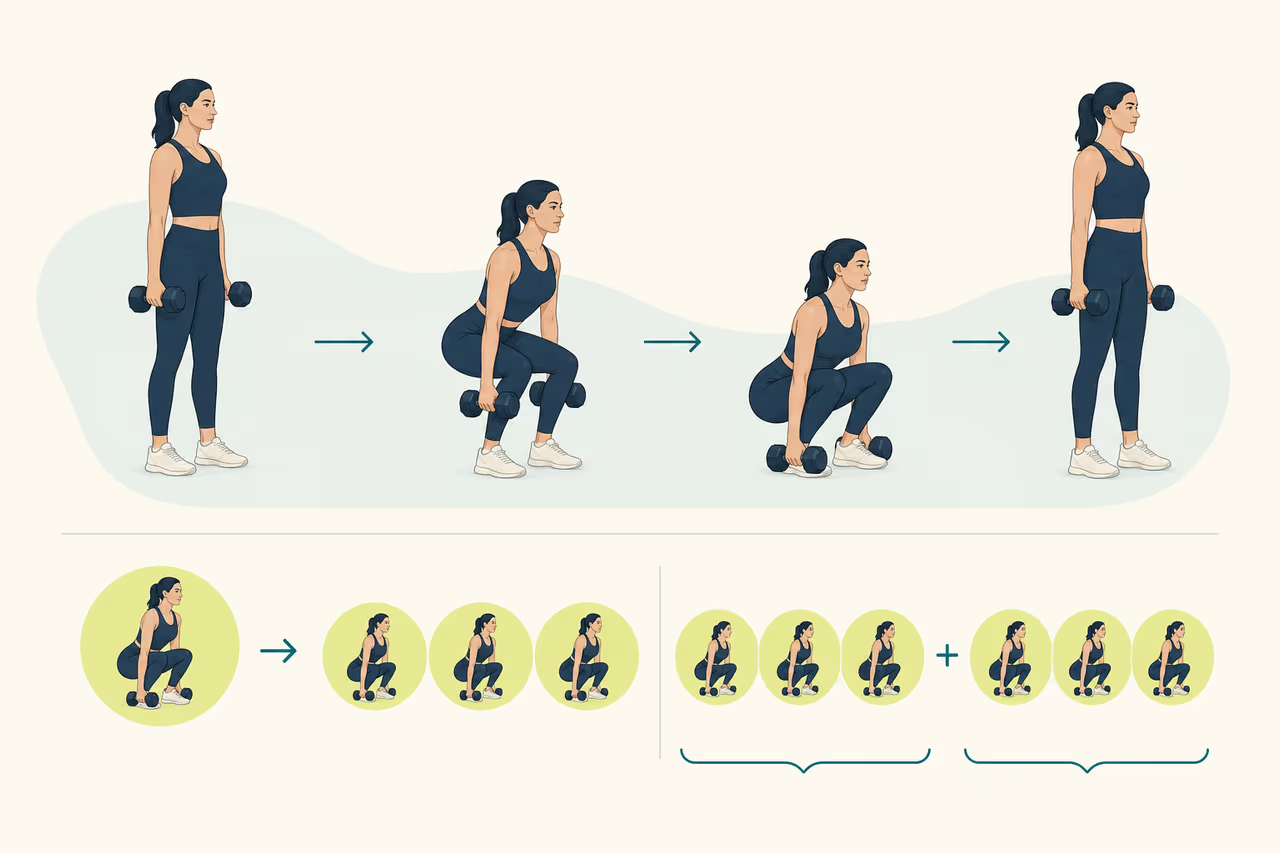
- A Rep (Repetition): This is the single performance of an exercise. If you perform one squat, you have completed one repetition.
- A Set: This is a group of repetitions performed consecutively without resting. For example, if you do 10 squats, rest for a minute, and then do another 10 squats, you have completed two sets of 10 repetitions.
Think of a "rep" as the individual brick and a "set" as the row of bricks you lay before taking a break. By grouping your movements into sets, you allow your muscles a brief period of recovery, which helps you maintain better form throughout the entire session.
Why these numbers matter (and when they don't)
The primary reason to use a set and rep scheme is to track your effort over time. When you know you performed 2 sets of 8 repetitions last week, you have a baseline. If you feel comfortable, you might try 2 sets of 9 or 10 repetitions the following week. This is a simple way to introduce "progressive overload," which is just a fancy term for gradually asking a little more of your body.
These numbers are not rigid laws. Muscle strengthening benefits everyone, and any amount of physical activity is better than none. Obsessing over 8 or 10 reps misses the bigger picture, because long-term health requires consistent movement.
Adults can work toward 150 to 300 weekly minutes of moderate aerobic activity and muscle strengthening on at least two days. Whether you achieve this through a gym routine or bodyweight yoga, the physiological benefits remain.
A simple starting point
If you are just beginning, do not feel pressured to follow complex "bodybuilding" templates. Start with a volume that feels manageable and allows you to prioritize your technique.
| Goal | Suggested Starting Point |
|---|---|
| Building Consistency | 2 sets of 8 to 10 repetitions |
| Focusing on Form | 2 sets of 5 to 8 repetitions (slower pace) |
| Adding Variety | 3 sets of 10 repetitions |
If a specific scheme feels too difficult or causes pain, scale back the volume immediately. Focus on the quality of the movement rather than hitting a specific number. If you find yourself in "analysis paralysis" or are unsure if your form is safe, it is a clear sign that you might benefit from external support.
When to seek professional guidance
General guidelines provide a starting point, but they cannot replace a qualified trainer. You may need more than a guide if you hit a plateau, recover from injury, or need efficient movement patterns.
Prime Tempr helps readers compare trainer approaches and programmes, making it easier to add qualified progression when a general strength guide falls short. A trainer adjusts sets and reps for your anatomy and goals, removing guesswork.
Your Movement Baseline
Use this reflection to turn theory into practice this week:
- Identify one movement pattern you want to practice (e.g., a squat, a push-up against a wall, or a lunge).
- Choose a volume that feels sustainable. Start with 2 sets of 8 to 10 repetitions.
- Note how your body feels after the session. Was it manageable, or did it feel overly taxing? If it was too hard, reduce the repetitions.
Common Questions
Does the number of reps change the goal of the exercise? Different rep ranges associate with adaptations like endurance or strength. For beginners, the primary goal remains building a habit and learning the movement while prioritizing consistency.
What happens if I don't follow a specific set/rep scheme? Nothing bad happens. Moving your body in a way that feels good and challenges you slightly delivers physical activity benefits. Sets and reps are tools rather than mandatory rules.
How do I know when to increase my sets or reps? Complete current sets and reps with perfect form while feeling capable of 2 or 3 more repetitions. When this happens, add a small amount of volume or intensity.
Continue with guidance
Use this article as orientation, then Browse yoga programmes when you want responsive guidance or a practice format matched to you.
Sources
- Physical activity (opens in a new tab) (World Health Organization)
- Top 10 Things to Know About the Physical Activity Guidelines (opens in a new tab) (Office of Disease Prevention and Health Promotion)
Watch alongside this guide
High-intensity functional training explained
This ACE overview shows how functional training is framed so you can compare it with the article's safer progression advice. Source: ACE Fitness. This optional video is context, not evidence or personal instruction.
The YouTube player stays unloaded until you choose to watch. Loading it connects to YouTube and may allow that service to process usage data.