Self-Guided Yoga vs Learning With a Teacher: A Practical Guide
Compare self-guided and teacher-led yoga to evaluate safety, schedule flexibility, and personalized feedback for your routine.
https://primetempr.com/blog/self-guided-yoga-vs-learning-with-a-teacher-a-practical-guid
Deciding whether to practice yoga independently at home using videos or apps or to learn under the direct guidance of a teacher comes down to a few practical trade-offs. Any amount of physical activity is better than none, all activity counts, and people should limit sedentary time. The method you choose affects your schedule, budget, and safety. Self-guided yoga and teacher-led learning meet different practical needs, as choosing between them depends on your need for personalized feedback versus schedule flexibility.
Understanding the Core Differences
Yoga combines postures, breathing and meditation; styles vary, benefits should be described with uncertainty, and injuries can occur. How you encounter these elements depends heavily on your instructional setting.
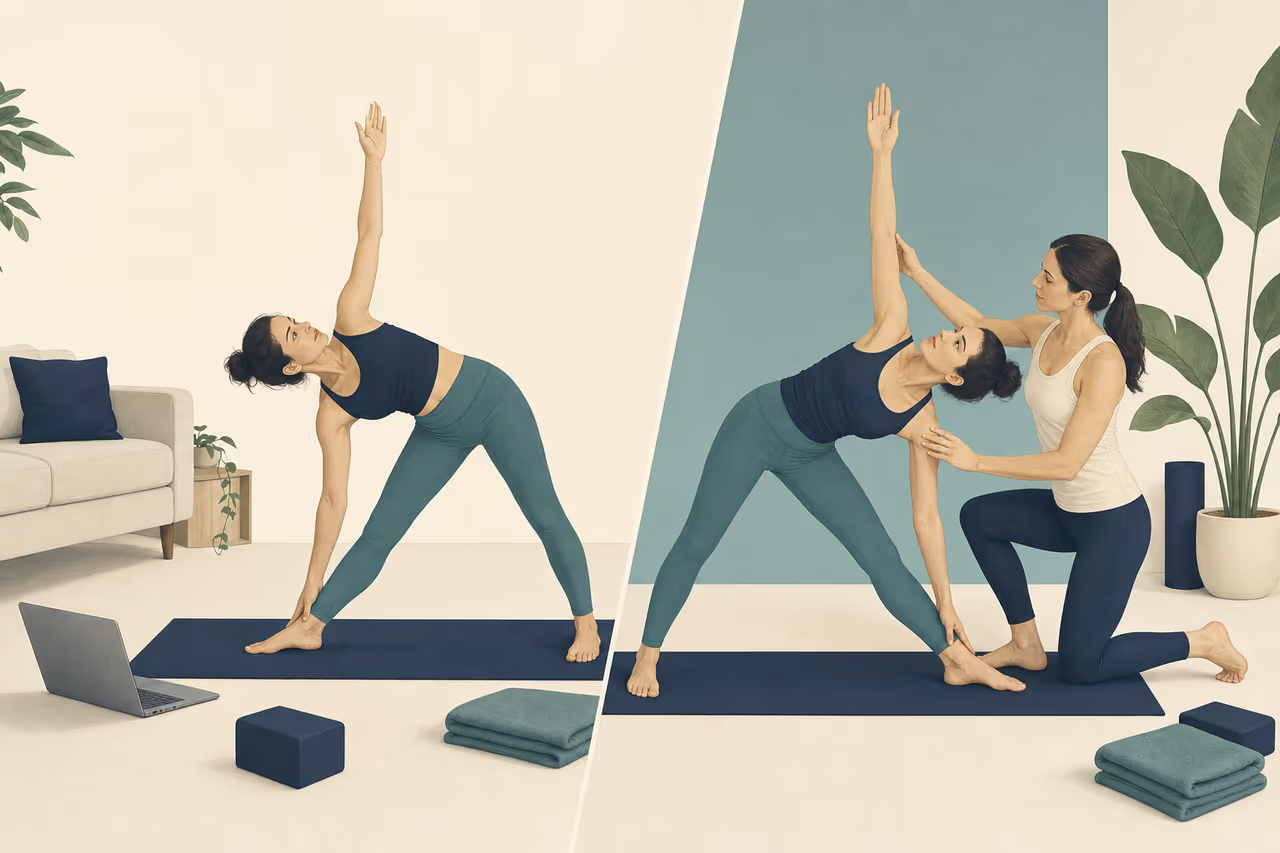
Self-guided practice relies on pre-recorded videos, mobile applications, or written sequences. You dictate the pace, choose the style, and pause whenever you need to rest. It requires no commute and fits easily into unpredictable daily routines.
Teacher-led learning, by contrast, takes place in physical studios or via live interactive streams. An instructor oversees the room, offering verbal cues, visual alignment adjustments, and real-time modifications for different body types and experience levels. Styles vary widely between classes, meaning a dynamic vinyasa session will feel very different from a slow restorative class.
| Feature | Self-Guided Practice | Teacher-Led Learning |
|---|---|---|
| Schedule | Fully flexible; practice anytime. | Fixed to class timetables or live streams. |
| Feedback | None in real time; requires self-assessment. | Direct adjustments and personalized cues. |
| Cost | Often free or low-cost subscription model. | Per-class drop-in fees, studio memberships, or packages. |
| Environment | Home, office, or travel-friendly. | Dedicated studio space with minimal distractions. |
The Practical Trade-Offs of Self-Guided Practice
Practicing on your own offers maximum flexibility and zero commute, but it lacks real-time alignment corrections. Without an instructor watching your form, it is easy to slip into movement habits that strain joints or overstretch vulnerable areas.
A common risk is assuming self-guided videos provide the same safety adjustments as a live instructor. Pre-recorded content cannot adapt to your specific lower-back tightness, wrist sensitivity, or shoulder mobility limits on any given day. Because yoga styles vary, benefits should be described with uncertainty, and injuries can occur, practicing without supervision means you must monitor your own physical limits carefully.
If self-guided practice feels confusing or causes discomfort, pause and book a beginner-friendly class or consult a qualified trainer for personal guidance. Limiting sedentary time matters, but pushing through joint pain or breathlessness in a solo session is counterproductive.
The Benefits of Learning With a Teacher
Studying under an experienced instructor introduces external accountability and expert observation. A teacher can spot subtle misalignments, such as locked knees in a standing posture or collapsed arches, that you might not notice on your own.
Teacher-led classes offer safety adjustments and structured community, but require fixed schedules and financial investment. Booking a class requires you to leave your home, arrive on time, and pay for studio overhead or instructor expertise. However, many students find that this financial and schedule commitment makes it easier to maintain a consistent routine compared to the hesitation that can happen with home videos.
Another benefit of live instruction is exposure to a variety of teaching styles and pacing. An instructor can suggest immediate modifications if a posture feels inaccessible, helping you build confidence safely over time.
How to Choose the Right Approach for You
You do not need to choose a single permanent path. Many practitioners blend both approaches depending on their weekly schedule and energy levels.
If you are stuck in analysis paralysis trying to pick the "perfect" method instead of starting small, remember that action beats perfection. Any amount of physical activity counts. To break the indecision, consider your current budget, schedule constraints, and comfort level with basic postures.
If you want to move from general education to guided practice, explore options that match your immediate needs. You can browse yoga programmes for structured home routines, find a beginner-friendly trainer for personalized support, or find yoga near you to experience a live studio environment. For more detailed tips on setting up a home routine, read our guide on How to Start Yoga at Home: A Beginner's Practical Guide.
Choosing Your Path: Self-Guided vs. Teacher-Led Yoga
- Assess your current experience level and comfort with basic postures.
- Check your weekly schedule flexibility and budget constraints.
- Identify whether you need physical alignment corrections or just gentle habit formation.
- Select one initial format (e.g., a short home video or one introductory studio class) for your first week.
- Explore local options or online trainer profiles to take your next step.
Sources
Watch alongside this guide
Yoga for complete beginners
Use this optional beginner session to see pacing, transitions, and rest choices in a complete home practice. Source: Yoga With Adriene. This optional video is context, not evidence or personal instruction.
The YouTube player stays unloaded until you choose to watch. Loading it connects to YouTube and may allow that service to process usage data.