Resistance Bands and Dumbbells: A Beginner Guide
Compare practical trade-offs between resistance bands and dumbbells to select the right strength tool for your home practice.
https://primetempr.com/blog/resistance-bands-vs-dumbbells-a-beginner-s-guide-to-choosing
The most effective strength training tool is the one you actually use. Whether you choose resistance bands or dumbbells, the primary objective for any beginner is to establish a consistent movement habit. According to the World Health Organization, any amount of physical activity is better than none, and muscle-strengthening activities provide health benefits for every person.
It is common to feel overwhelmed by available equipment, but neither resistance bands nor dumbbells are inherently superior. They are simply different tools for applying load to your muscles. Your choice should depend on your current living space, your personal preferences, and what makes you feel comfortable as you begin your practice.
The Goal: Consistent Movement
The Physical Activity Guidelines for Americans suggest that adults should work toward 150 to 300 minutes of moderate aerobic activity per week, complemented by muscle-strengthening activities on at least two days. When you are just starting, the "best" tool is the one that lowers the barrier to entry. If you have to spend ten minutes clearing a space or setting up complex equipment, you are less likely to maintain your routine.
Focus on movement quality rather than load intensity. If you struggle with form or feel unsure how to perform a movement safely, prioritize bodyweight exercises first. Prime Tempr helps readers compare trainer approaches and ongoing programmes, making it easier to add qualified progression when a general strength guide is no longer enough.
Dumbbells: Predictable and Steady
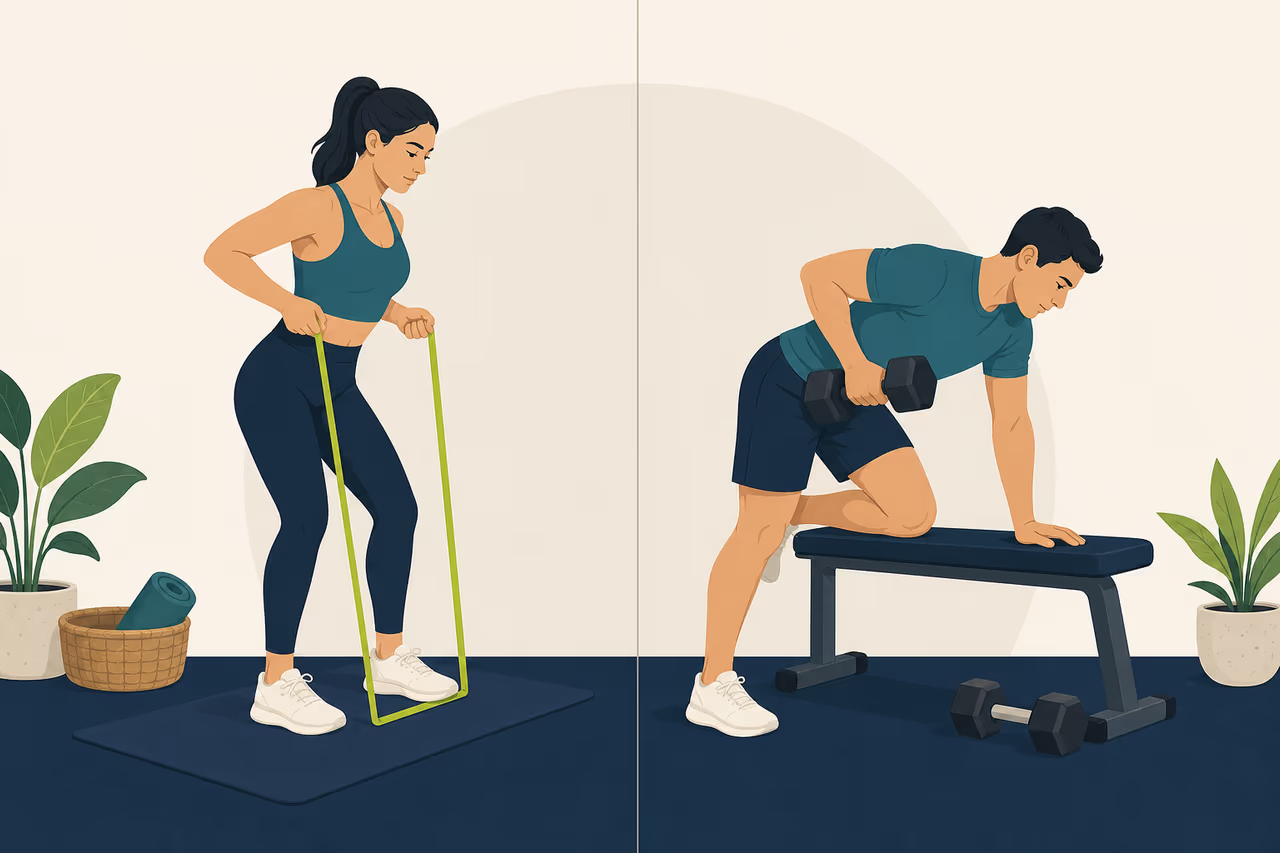
Dumbbells are a staple in strength training because they provide fixed, predictable resistance. When you lift a 5-pound or 10-pound weight, you know exactly how much load you are moving. This predictability makes it easier to track your progress over time.
Key Trade-offs:
- Pros: They offer a clear, measurable way to track strength gains. They are durable and straightforward to use.
- Cons: They require dedicated storage space and can be cumbersome to move if you travel frequently. They also have a higher initial cost compared to basic bands.
Dumbbells are useful if you appreciate structure and want to see clear, numerical milestones in your strength training. However, they do not offer the same versatility for mobility-based movements that bands might provide.
Resistance Bands: Versatile and Portable
Resistance bands provide variable resistance, meaning the tension increases as the band stretches. This creates a unique challenge for your muscles throughout the entire range of motion. Because they are lightweight and compact, they are ideal for people with limited space or those who travel often.
Key Trade-offs:
- Pros: They are highly portable, inexpensive, and easy to store in a drawer. They are versatile, allowing for a wide range of angles and movements that might be difficult with fixed weights.
- Cons: It can be harder to track progress because resistance changes based on how far you stretch the band. They can wear out over time and need replacement.
If your priority is convenience or if you want to integrate strength work into a smaller living space, bands are often the more practical choice.
Can You Use Both?
You do not have to choose just one. Many people find that combining tools keeps their practice interesting. For example, you might use dumbbells for foundational movements like goblet squats or overhead presses, while using resistance bands for warm-ups, mobility work, or accessory exercises.
Using both tools allows you to benefit from the stability of dumbbells and the versatility of bands. The key is to avoid overcomplicating your routine. Start with one, master the basic movements, and introduce the second tool only when you feel confident and ready for more variety.
Choosing Your Starting Tool
Use this guide to help you decide which tool aligns with your current lifestyle and goals:
- Choose dumbbells if you want clear, measurable resistance and have dedicated space in your home.
- Choose resistance bands if you prioritize portability, travel, or have limited storage space.
- Start with lighter weights or bands to prioritize movement quality over heavy load.
- Commit to two days of muscle-strengthening activity per week to build a consistent habit.
- When your current routine feels stagnant, search for a trainer to guide your next phase of progression.
When to Seek Professional Guidance
Equipment is a bridge to a more robust practice, but it cannot replace the value of personalized feedback. If you find yourself consistently unsure of your form, or if you feel that your progress has plateaued despite your best efforts, it is time to look for support.
A qualified trainer can help you refine your technique, introduce new challenges, and ensure that you are moving in a way that supports your long-term health. You can find a trainer for your goals to take the guesswork out of your next steps.
For more insights on how to structure your home sessions, read our guide on Building Strength at Home: A Realistic Approach. If you feel you have mastered the basics and are ready to move beyond your current routine, our article on Beyond the Plateau: Understanding Progressive Overload provides a clear path for your next phase of development.
Sources
- Physical activity (opens in a new tab), World Health Organization.
- Top 10 Things to Know About the Physical Activity Guidelines (opens in a new tab), Office of Disease Prevention and Health Promotion.
Watch alongside this guide
High-intensity functional training explained
This ACE overview shows how functional training is framed so you can compare it with the article's safer progression advice. Source: ACE Fitness. This optional video is context, not evidence or personal instruction.
The YouTube player stays unloaded until you choose to watch. Loading it connects to YouTube and may allow that service to process usage data.