Recovery Without Gear: A Practical Guide for Busy Days
Build a sustainable, equipment-free recovery routine that fits your schedule and respects your daily energy levels.
https://primetempr.com/blog/recovery-without-gear-a-practical-guide-for-busy-days
True recovery comes from consistent, low-friction habits that signal to your nervous system that the workday is over. If you feel pressured by wellness advice requiring studios, equipment, or hours of free time, you are not failing. You are simply dealing with a model of self-care that does not fit the reality of a busy life.
Prime Tempr helps readers compare trainers who respect recovery, offer scalable sessions, and provide continuity when all-or-nothing routines fail. By focusing on small, intentional shifts, you can reclaim your evenings without adding another chore to your list.
Why recovery feels like another chore
Modern wellness culture often presents recovery as a high-barrier activity. We are told we need a quiet, minimalist studio, specific props, or a long, uninterrupted block of time to "reset." When you are balancing a desk job, a commute, and the demands of a multigenerational household, these requirements often feel impossible to meet.
The failure mode here is clear: trying to force a 30-minute, gear-heavy routine into a 5-minute window of actual availability. When the routine becomes a source of guilt rather than relief, it stops serving its purpose. True recovery is about finding the smallest, most accessible action that signals to your body that it is time to shift gears.
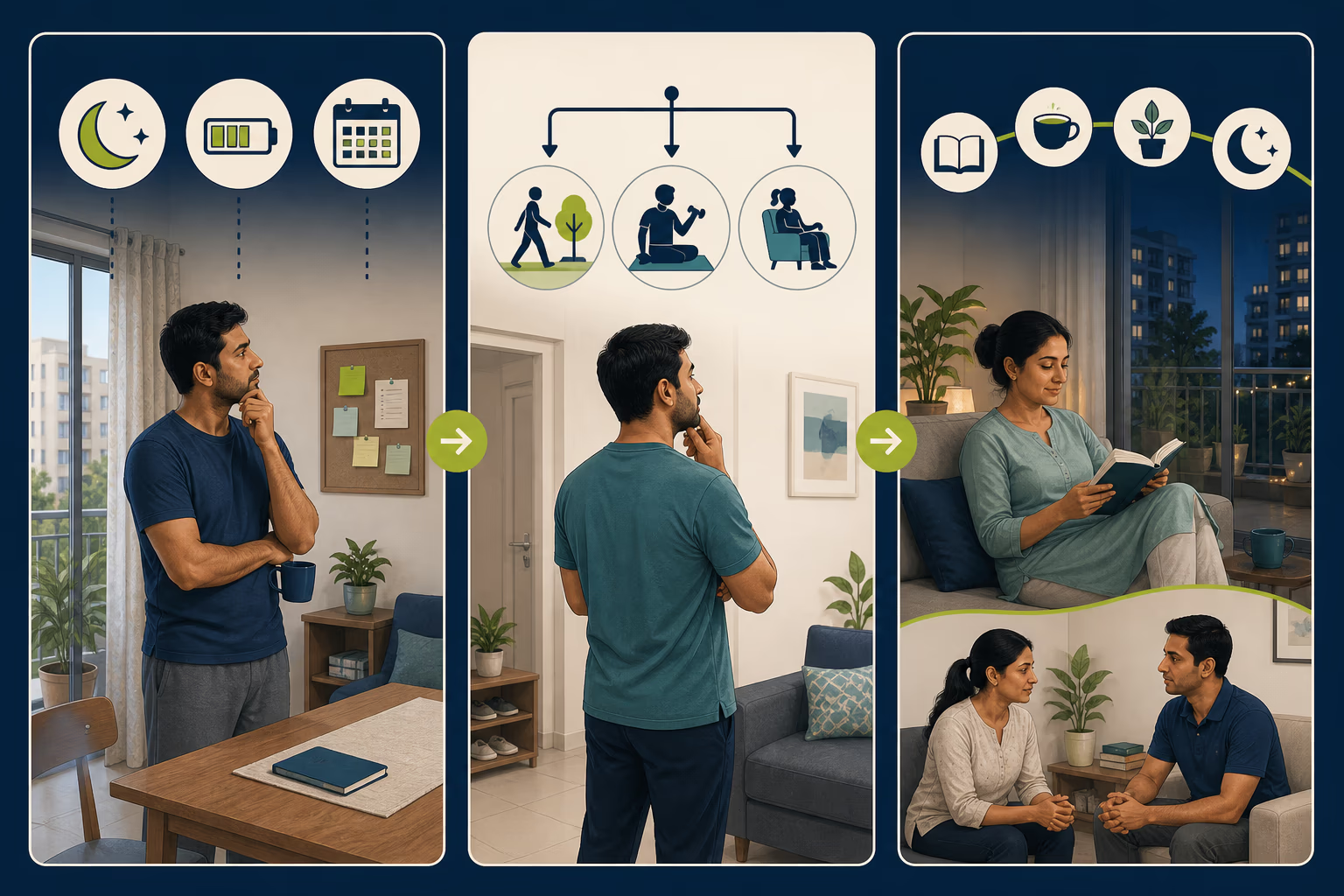
The minimum viable recovery
The most effective recovery habits are those you can perform when you are tired. If you have two minutes, you have enough time to begin.
The goal is to create a transition between the high-demand environment of your workday and the rest you need at home. Consistent schedules, a quiet dark room, and calmer pre-bed routines can support sleep, though adult sleep needs vary. You do not need a dedicated wellness space to achieve this; you only need to create a mental boundary.
Your 5-Minute recovery menu
This menu is modular. Choose one, two, or all four items depending on your capacity for the day.
- The 2-minute transition: Change clothes immediately upon arriving home. This simple physical act is a sensory signal to your brain that the professional "work" persona is being set aside.
- The 3-minute reset: Sit in a quiet corner and practice slow, rhythmic breathing. Relaxation approaches like breathing and progressive relaxation are tools for managing stress, though they should not replace conventional medical care.
- The 'No-Gear' stretch: Perform a simple forward fold or child's pose on the floor for 60 seconds. You do not need a mat; any stable floor surface will do.
- The digital boundary: Leave your phone in another room for the first 15 minutes of your evening. This removes the constant stream of incoming information, allowing your nervous system to settle.
Scaling your routine to your schedule
Your recovery needs will change daily based on your workload and your commute. On high-stress days, you might only have the energy for the 2-minute transition. On days with more flexibility, you can layer in the breathing exercises or a longer stretch.
If a routine fails, revert to the minimum viable version: two minutes of intentional breathing or changing into comfortable clothes. The goal is consistency in small, simple habits rather than occasional, intense recovery sessions that you cannot maintain.
When you find yourself needing more guidance or a more structured approach, Find recovery-aware support through our platform to connect with trainers who understand these constraints.
When to seek professional support
While these low-friction habits are excellent for managing daily stress, they are not a substitute for medical care. If you are experiencing persistent, unmanageable stress, chronic exhaustion, or physical pain that does not improve with rest, these techniques are not enough.
Be sure to distinguish between the fatigue of a long work week and deeper health concerns. For more on this, read our guide on Beyond the Grind: Identifying Normal Fatigue Versus Concerning Exhaustion.
Always prioritize your health by consulting a medical professional if your recovery efforts are not yielding the relief you need or if your symptoms feel beyond your control. Relaxation approaches like breathing and progressive relaxation are tools for managing stress but should not replace conventional medical care.
Follow-along reflection
Use the prompts below to review the idea in context, without turning it into a diagnosis or a fixed rule.
Your 5-Minute recovery menu
- The 2-minute transition: Change clothes immediately upon arriving home to signal the end of work.
- The 3-minute reset: Sit in a quiet corner and practice slow, rhythmic breathing.
- The 'No-Gear' stretch: Perform a simple forward fold or child's pose on the floor for 60 seconds.
- The digital boundary: Leave your phone in another room for the first 15 minutes of your evening.
Trade-offs to keep in view
- These methods are not a substitute for medical care if you are experiencing persistent, unmanageable stress or exhaustion.
- Consistency in small, simple habits is more effective than occasional, intense recovery sessions.
If this approach does not fit
If a routine fails, revert to the 'minimum viable' version: 2 minutes of intentional breathing or simply changing into comfortable clothes to mark the end of the work day.
Questions to carry forward
- How can I signal to my body that it's time to rest without a dedicated 'wellness' space?
- What are the most effective, zero-cost ways to manage stress after a long commute?
- How do I scale my recovery routine when my schedule changes daily?
- When should I prioritize rest over movement?
Sources
Watch alongside this guide
Stress management
This short Mayo Clinic explainer gives the recovery discussion a practical health context. It does not promise sleep or replace care for persistent symptoms.
The YouTube player stays unloaded until you choose to watch. Loading it connects to YouTube and may allow that service to process usage data.