Rate of Perceived Exertion Explained: A Practical Guide
Master the Rate of Perceived Exertion scale to gauge daily effort, tune into physical feedback, and navigate coaching decisions.
https://primetempr.com/blog/rate-of-perceived-exertion-explained-a-practical-guide
Rate of Perceived Exertion (RPE) is a subjective scale used to measure how hard you feel you are working during physical activity. Instead of relying on external data like heart rate monitors or smartwatches, RPE asks you to look inward and assign a number to your effort based on how your body feels in the moment.
For many, this is a more accessible way to stay consistent. Because any amount of physical activity is better than none, using a tool like RPE allows you to adjust your intensity based on your daily energy levels, stress, and recovery, rather than forcing yourself to hit rigid targets that may not suit how you feel on a given day.
What is the RPE Scale?
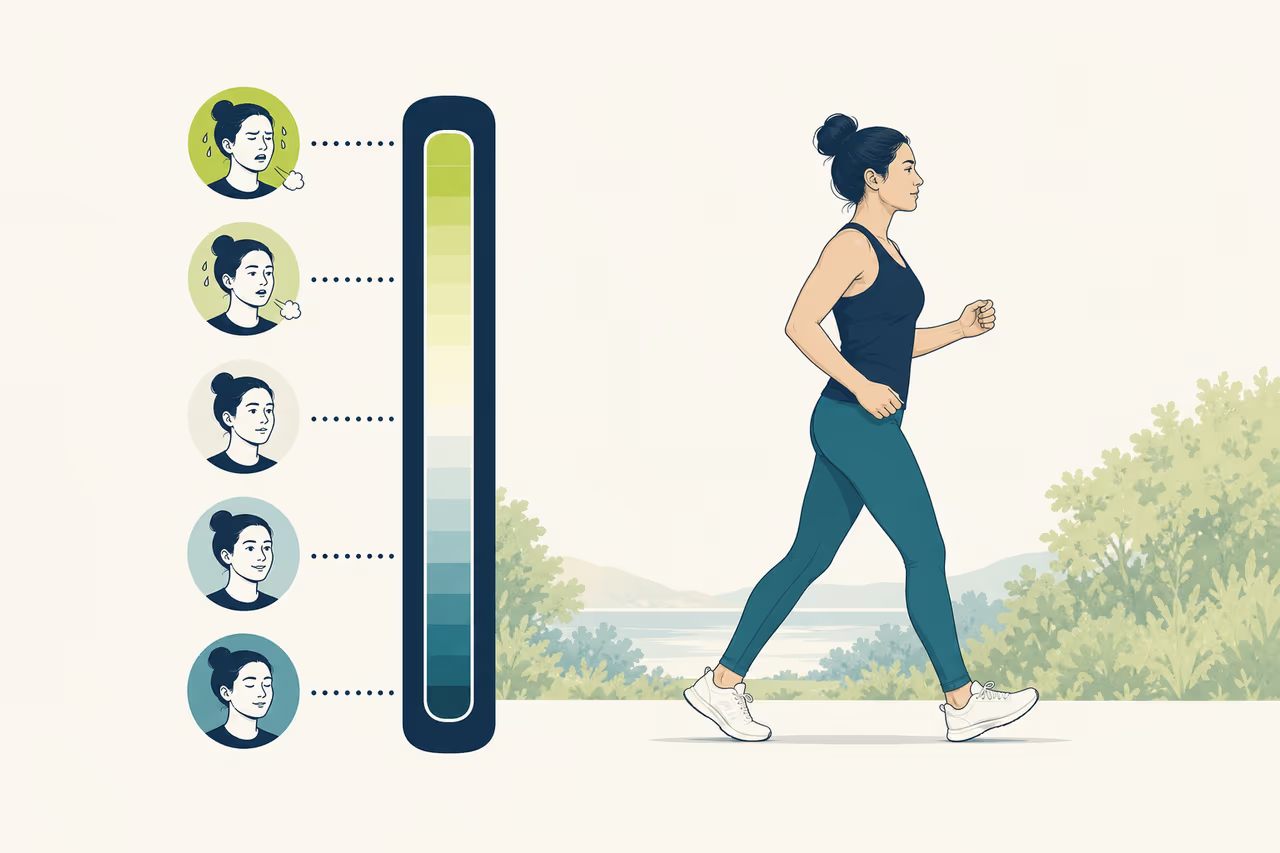
The RPE scale is typically represented on a range of 1 to 10. While different versions exist, the most practical application for general movement and yoga practice looks like this:
- 1 to 2 (Very Light): Minimal effort; you could sustain this indefinitely. Think of a gentle walk or a restorative stretch.
- 3 to 4 (Light): You are moving, but your breathing is steady and you could easily hold a conversation.
- 5 to 6 (Moderate): You are working hard enough to notice your breath, but you are not breathless. This is often the "sweet spot" for building consistency.
- 7 to 8 (Vigorous): It is becoming difficult to talk. You are focused on the movement and starting to feel fatigue.
- 9 to 10 (Maximal): You are at your limit. You cannot sustain this for more than a few seconds or repetitions.
Why Subjective Effort Matters
The primary strength of RPE is its focus on self-awareness. When you rely solely on gadgets, you may ignore the signals your body is sending you. For instance, you might push for a higher heart rate because a device tells you to, even if your joints feel stiff or your energy is low.
By using RPE, you learn to calibrate your effort based on reality. If you are tired, a "moderate" effort (level 5) might look very different today than it did yesterday. This flexibility helps prevent burnout and encourages a more sustainable relationship with movement. It turns exercise into a dialogue with your body rather than a performance to be tracked by a screen.
The Limits of RPE
While RPE is a practical tool for self-regulation, it is not a perfect metric. Because it is entirely subjective, it comes with specific trade-offs regarding accuracy and consistency over time.
- Influence of Mood and Stress: Your perception of effort can be skewed by external factors. If you are having a stressful day, a movement that usually feels like a 4 might feel like a 7.
- Lack of Precision: RPE does not provide the objective, physiological data that heart-rate monitoring offers. It cannot tell you if you are actually improving your cardiovascular capacity or if you are simply tired.
- The "Honesty" Requirement: RPE requires a high degree of self-honesty. It is easy to underestimate how hard you are working (or overestimate it) if you are not paying close attention to your breath and muscle fatigue.
Most importantly, RPE is not a replacement for professional guidance. It cannot tell you if your form is safe or if you are performing a movement efficiently. While RPE is a useful tool, it does not replace the need for professional guidance when learning new movements or managing specific health goals.
Your Daily RPE Check-in
To start using RPE, try a simple reflection after your next practice session to evaluate your effort level.
- Rate your effort: On a scale of 1 to 10, how hard did the session feel overall?
- Check your breath: How did your breathing change throughout the session? Did you feel controlled or gasping?
- Monitor your form: Identify one movement where you felt unsure about your technique or stability.
- Evaluate your needs: If you consistently feel unsure about your form or find that you aren't progressing, it may be time to seek external feedback.
When to Move Beyond Self-Guided Practice
Self-guided practice is an excellent starting point, but it has a ceiling. When general strength guides or online videos no longer provide the progression or technique feedback you need, working with a qualified trainer is the next logical step.
A trainer can help you calibrate your perception of effort, ensuring that your "7 out of 10" is actually challenging you in the right ways without compromising your safety. If you find that your RPE is consistently inconsistent, or if you feel like you are working hard but not seeing the results you expect, you may have outgrown your current routine.
Prime Tempr helps readers compare trainer approaches and ongoing programmes, making it easier to add qualified progression when a general strength guide is no longer enough. Whether you are looking to refine your form in Strength & Functional Fitness or need a more personalized approach to your recovery, finding a trainer for your goals can provide the structure that self-guided practice lacks.
Sources
- Physical activity (opens in a new tab) (World Health Organization)
- Top 10 Things to Know About the Physical Activity Guidelines (opens in a new tab) (Office of Disease Prevention and Health Promotion)
Watch alongside this guide
High-intensity functional training explained
This ACE overview shows how functional training is framed so you can compare it with the article's safer progression advice. Source: ACE Fitness. This optional video is context, not evidence or personal instruction.
The YouTube player stays unloaded until you choose to watch. Loading it connects to YouTube and may allow that service to process usage data.