Pushing Movement Patterns Explained: A Practical Guide
Master the mechanics of pushing movements, protect your daily independence, and integrate them safely into your routine.
https://primetempr.com/blog/pushing-movement-patterns-explained-a-practical-guide
A pushing movement pattern involves any action that moves an object away from your body or moves your body away from a surface. Often linked with gym equipment like barbells or heavy machines, pushing is actually a fundamental human movement occurring constantly in daily life. Whether you push a heavy door open, lift yourself out of a chair, or place a box on a high shelf, you actively engage the muscles of your chest, shoulders, and triceps.
Muscle strengthening activities benefit everyone and are a key component of physical activity guidelines. Understanding these patterns helps you move with more confidence and maintain physical independence as you age.
Why pushing matters for daily life
Functional fitness is not about how much weight you can lift in a single session; it measures how well your body performs the tasks required for your lifestyle. Pushing patterns remain essential for maintaining upper-body strength and joint stability.
When you practice these movements, you are not just "working out",you are training your body to handle the physical demands of your environment. For example:
- Horizontal pushing: Think of pushing a grocery cart or closing a heavy sliding door. These movements rely on your chest and front shoulder muscles.
- Vertical pushing: Think of reaching up to place an item on a high shelf or pushing yourself up from the floor. These movements engage your shoulders and triceps.
Consistency in foundational movement supports long-term health better than sporadic, high-intensity efforts. You do not need to target maximum effort to secure benefits; instead, aim for steady, controlled practice that leaves you feeling capable rather than depleted.
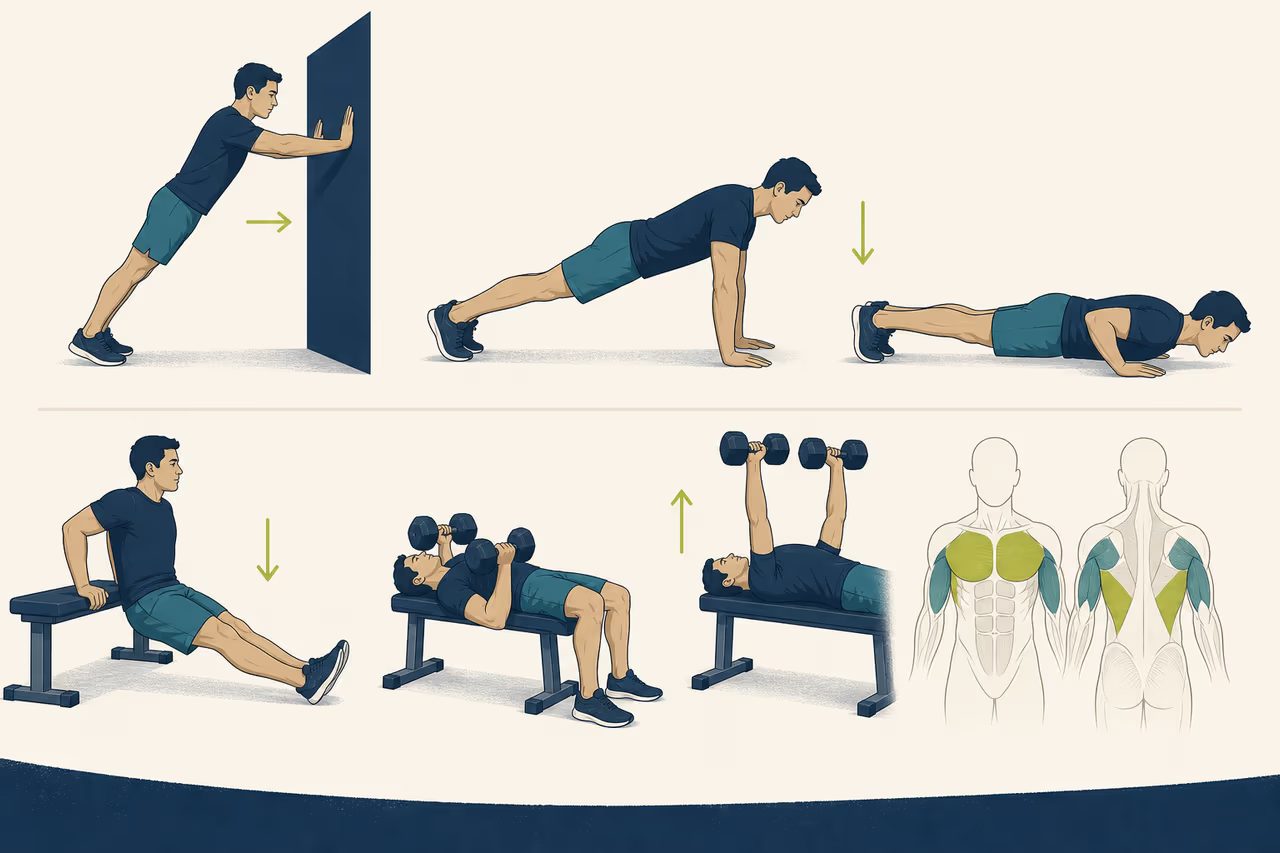
Foundational pushing: From wall to floor
You do not need heavy weights or a gym membership to practice pushing patterns. Starting with your own body weight offers a safe and effective method to build necessary stability and coordination. Adults should aim for muscle-strengthening activities on at least two days per week as part of their physical activity routine.
If you are new to this, begin with a progression that matches your current ability. The goal is to maintain a neutral spine and controlled movement throughout the entire range of motion.
A Simple Progression Path
- Wall Push-ups: Stand facing a wall, about an arm's length away. Place your palms on the wall at shoulder height. Slowly bend your elbows to bring your chest toward the wall, then push back to the starting position. This minimizes the amount of body weight you are moving, making it an excellent starting point.
- Incline Push-ups: Use a sturdy surface like a kitchen counter or a stable bench. Placing your hands on an elevated surface reduces the load compared to a floor push-up, allowing you to focus on your form.
- Floor Push-ups: Once you can perform the incline variation with ease and control, you may transition to the floor. If the full version feels too difficult, you can perform these on your knees to maintain the integrity of the movement.
Failure modes to avoid
- Ignoring discomfort: If a movement causes sharp pain or feels inherently unstable, stop immediately. Pushing through pain is not a badge of honor; it is a signal that your body is not ready for that specific variation.
- Over-relying on intensity: Many people assume that if they aren't sweating profusely or struggling, the exercise isn't working. In reality, slow, deliberate movement is often more effective for building the stability required to prevent injury.
- Neglecting the core: Pushing is not just an upper-body movement. Your core must remain engaged to keep your spine stable. If your lower back arches or your hips sag, you are likely moving too quickly or using a variation that is currently too difficult.
When to seek professional support
General guides provide a starting point, but they cannot replace personalized feedback from a qualified trainer. If you feel unsure about your form, or if you are ready to move beyond basic bodyweight exercises into more complex strength training, seek professional guidance.
Prime Tempr helps readers compare trainer approaches and ongoing programmes, making it easier to add qualified progression when a general strength guide is no longer enough. A trainer helps you identify subtle imbalances, adjust technique to fit your unique anatomy, and provide a roadmap for progression that keeps you safe and consistent.
Your Pushing Pattern Audit
Use this reflection to assess your current relationship with pushing movements:
- Identify one daily activity that involves pushing: (e.g., opening a heavy door, pushing a grocery cart, or getting out of a low chair).
- Assess your current comfort level: Try a basic wall push-up. Does it feel smooth and controlled, or does it feel shaky and difficult?
- Note any areas of tension: Do you feel strain in your wrists, shoulders, or lower back? If so, regress to a simpler variation or reduce your range of motion.
- Decide on your next step: If you feel confident, continue practicing twice a week.
For more information on building a balanced routine, you can also read our guide on Bodyweight Strength Basics: A Realistic Starting Point.
Sources
- Physical activity (opens in a new tab), World Health Organization.
- Top 10 Things to Know About the Physical Activity Guidelines (opens in a new tab), Office of Disease Prevention and Health Promotion.
Watch alongside this guide
High-intensity functional training explained
This ACE overview shows how functional training is framed so you can compare it with the article's safer progression advice. Source: ACE Fitness. This optional video is context, not evidence or personal instruction.
The YouTube player stays unloaded until you choose to watch. Loading it connects to YouTube and may allow that service to process usage data.