Pulling Movement Patterns Explained: A Practical Guide
Master the mechanics of pulling movements, their daily applications, and how to safely incorporate them to build functional strength.
https://primetempr.com/blog/pulling-movement-patterns-explained-a-practical-guide
A pulling movement is any action where you draw an object toward your body or pull your body toward an object. While the term is often associated with heavy gym equipment or complex cable machines, it is fundamentally a basic human movement pattern that you perform dozens of times every day. Whether you are opening a heavy door, pulling a suitcase off a rack, or simply adjusting your posture, you are engaging in a pulling pattern.
Understanding these mechanics is essential because it shifts the focus from "working out" to building functional strength,the kind that supports your body in real-world scenarios. By learning to perform these movements with stability and control, you create a foundation that makes daily tasks easier and helps prevent the strain that often comes from poor movement habits.
Why Pulling Matters for Functional Fitness
Pulling movements are a basis of a well-rounded physical practice. They primarily target the muscles of your back, shoulders, and arms, which are critical for maintaining an upright posture and managing the demands of daily life.
The World Health Organization emphasizes that any amount of physical activity is better than none, and all activity counts toward your health goals. Muscle-strengthening activities, which include well-executed pulling patterns, provide benefits to everyone, regardless of your starting point. According to the Physical Activity Guidelines for Americans, adults should work toward 150 to 300 minutes of moderate aerobic activity each week, supplemented by muscle-strengthening activities on at least two of those days.
Incorporating pulling movements into those two days of strength work helps you:
- Improve Posture: Strengthening the muscles between your shoulder blades helps counteract the "slumped" posture often caused by long hours at a desk.
- Enhance Stability: Controlled pulling requires core engagement, which stabilizes your spine.
- Increase Versatility: A body that is comfortable with pulling is better equipped to handle unexpected physical demands, such as lifting a heavy box or pulling yourself up from a seated position.
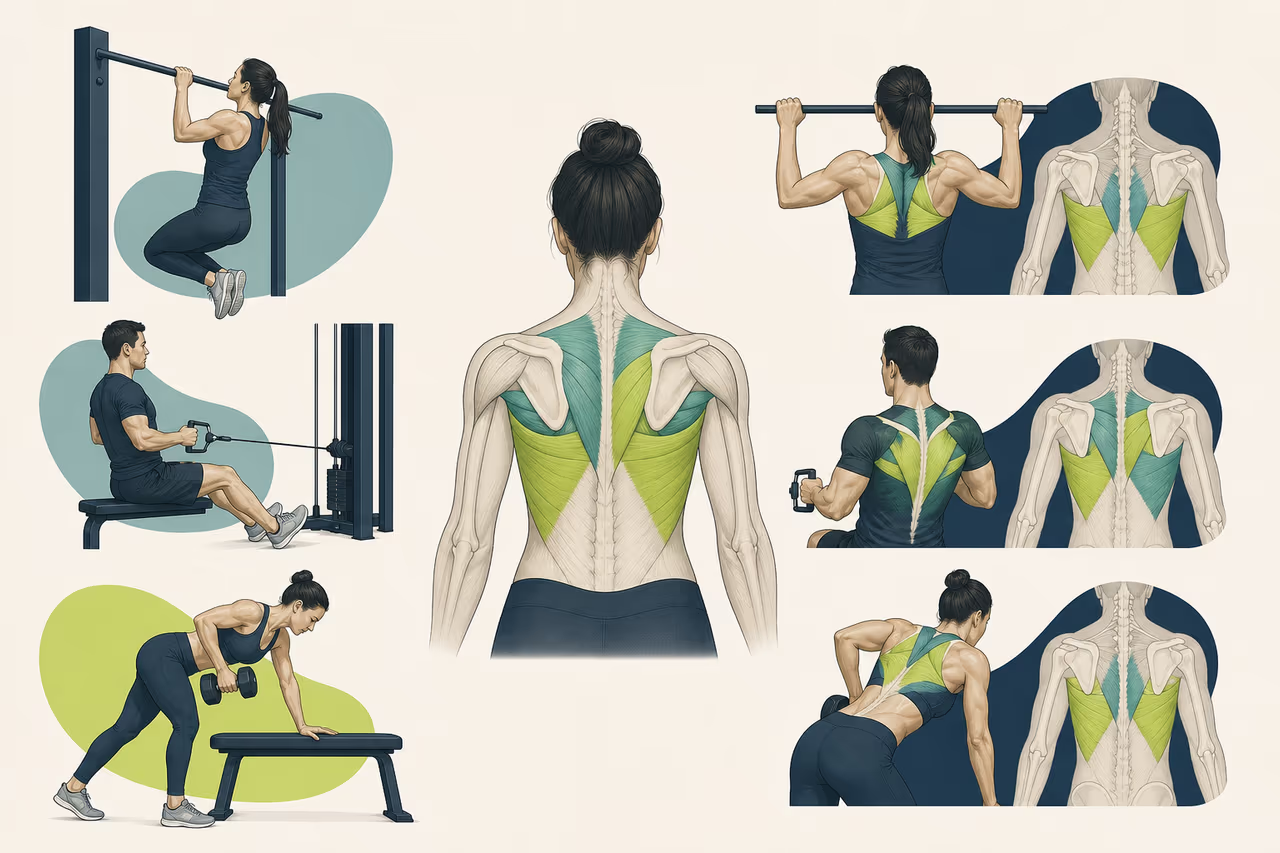
Incorporating Pulling into Your Routine
You do not need a gym membership or specialized equipment to begin practicing pulling patterns. The goal is to focus on the quality of the movement,feeling the muscles engage,rather than the intensity of the weight.
Start with Bodyweight and Resistance
If you are new to this, start by observing how you move in daily life. When you reach for a door handle, are you rounding your shoulders forward, or are you pulling from your back?
- The Row Pattern: You can practice this using a resistance band anchored to a door or a sturdy post. Focus on squeezing your shoulder blades together as you pull your elbows back.
- The Vertical Pull: This involves moving your body toward an object, such as using a low bar or a specialized suspension trainer to perform an assisted pull-up or row.
Failure Modes to Avoid
A common mistake is trying to replicate advanced movements seen on social media before establishing a stable foundation. If you feel pain, sharp tension, or a loss of control, you are likely pushing beyond your current capacity. Another failure mode is confusing "pulling" with specific equipment. You do not need a lat-pulldown machine to train your back; you need to understand the pattern of pulling your elbows toward your torso.
Always prioritize consistency over intensity. If a movement feels uncomfortable or confusing, scale back to a simpler variation. If you find yourself struggling to maintain form, it is a sign that you should consult a trainer to ensure your movement aligns with your current mobility.
Assessing Your Pulling Foundation
Use this reflection to gauge where you stand and how to move forward:
- Identify one daily activity that involves pulling: Think of opening a heavy door, picking up a grocery bag, or pulling a laundry basket.
- Observe your current movement habits: When you perform these tasks, do you feel stable and controlled, or do you feel a sudden strain in your neck or lower back?
- Check your weekly routine: Does your current schedule include at least two days of muscle-strengthening activity?
- Evaluate your progression: Are you ready to move beyond general guides? If you feel you have plateaued or are unsure if your form is safe, it may be time to seek professional guidance.
When to Seek Professional Support
General guides provide a valuable starting point, but they cannot replace the personalized feedback of a qualified trainer. There comes a point in every practice where you may feel that a general routine is no longer enough to help you reach your specific goals or to ensure you are moving safely as you increase the challenge.
Prime Tempr helps readers compare trainer approaches and ongoing programmes, making it easier to add qualified progression when a general strength guide is no longer enough. A trainer can provide the objective eye needed to correct subtle form errors that you might not notice yourself, helping you avoid the trade-offs of "self-teaching" where you might accidentally reinforce poor movement patterns.
If you are ready to move from general exploration to a structured, personalized approach, find a trainer for your goals to help you build a sustainable, long-term practice. For more on how these patterns fit into a broader lifestyle, explore our resources on Strength & Functional Fitness.
Sources
- Physical activity (opens in a new tab), World Health Organization.
- Top 10 Things to Know About the Physical Activity Guidelines (opens in a new tab), Office of Disease Prevention and Health Promotion.
Watch alongside this guide
High-intensity functional training explained
This ACE overview shows how functional training is framed so you can compare it with the article's safer progression advice. Source: ACE Fitness. This optional video is context, not evidence or personal instruction.
The YouTube player stays unloaded until you choose to watch. Loading it connects to YouTube and may allow that service to process usage data.