Progressive Muscle Relaxation: A Practical Beginner’s Guide
Learn to identify physical tension and build body awareness through progressive muscle relaxation to support your daily recovery.
https://primetempr.com/blog/progressive-muscle-relaxation-a-practical-guide-for-beginner
Progressive muscle relaxation (PMR) involves the systematic tensing and releasing of specific muscle groups. Its value lies in developing awareness of where you hold physical tension. By distinguishing between a contracted muscle and a relaxed one, you can identify the physical signals of stress before they accumulate.
While this method is a helpful addition to your daily routine, treat it as a self-regulation tool rather than a medical treatment.
What is progressive muscle relaxation?
Progressive muscle relaxation is a relaxation approach that involves tensing and releasing muscle groups, but it should not replace conventional medical care. The practice is grounded in the observation that physical tension is a subconscious response to stress. By intentionally creating and releasing tension, you provide your nervous system with a clear contrast that encourages relaxation.
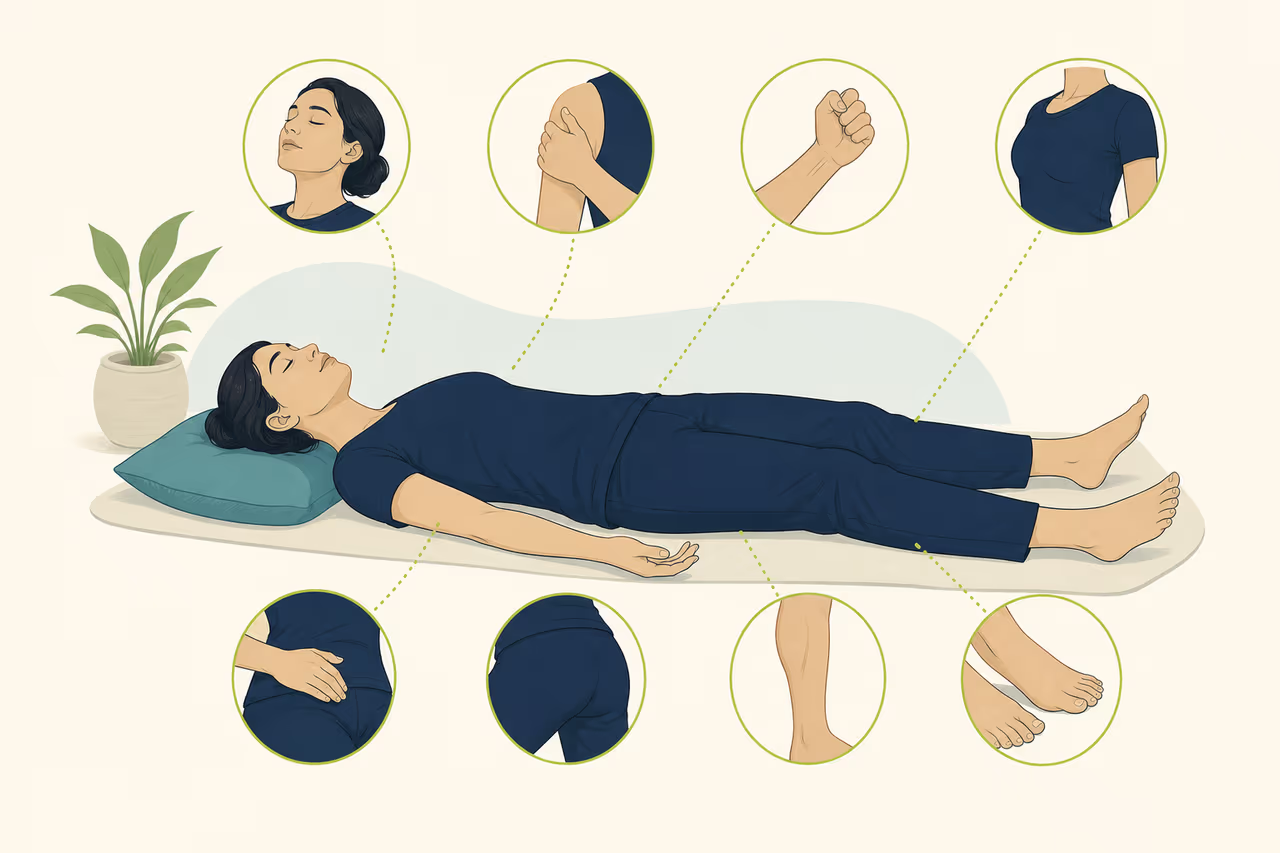
The process is methodical. Move through the body, focusing on one muscle group at a time. Tighten the muscles for a few seconds, hold the tension, and release it abruptly to focus on the sensation of the muscle softening. This repetition helps you become attuned to your body’s baseline, making it easier to notice when you are unconsciously clenching your jaw, hunching your shoulders, or tightening your core.
How it fits into your recovery routine
Integrating PMR into your life is most effective when it is part of a broader, sustainable recovery routine. It is not a "quick fix" for chronic stress, but rather a practice that supports your overall well-being. Consistent schedules and calmer pre-bed routines can support sleep, which is essential for heart-healthy living.
When you use PMR as a pre-bed routine, you are not attempting to "force" sleep. Instead, you are creating a transition period that signals to your body that the day’s activities are concluding. This can be a helpful way to move from the high-intensity demands of your day into a more restful state.
If you find that self-guided practice is not providing the support you need, or if you feel you require more personalized instruction, explore restorative guidance through our platform. Working with a qualified trainer can help you adapt these techniques to your specific mobility needs and recovery goals.
Important limitations and safety
PMR is a self-regulation tool, not a medical treatment for anxiety or sleep disorders. If you experience persistent distress, chronic pain, or significant sleep disruption, consult a healthcare professional rather than relying solely on self-guided techniques.
Failure modes to avoid
- Expecting immediate results: Do not expect permanent relief from chronic stress after a single session. Like any skill, it requires consistency.
- Practicing during a crisis: If you are in acute pain or a medical crisis, this technique is not a substitute for professional care.
- Ignoring discomfort: If the practice causes physical pain or emotional distress, stop immediately. You might find that simpler breath awareness or guided movement is a better fit for your current needs.
Your first 5-minute PMR trial
This plan helps you get started with the basics. The goal is awareness, not perfection.
- Find a quiet, comfortable space: Choose a spot where you can lie down or sit supported without interruption.
- Start at your toes: Curl your toes tightly for 5 seconds, then release for 10 seconds.
- Move systematically: Work your way up through your calves, thighs, stomach, chest, arms, and face.
- Notice the sensation: Focus entirely on the difference in sensation between the tension and the release.
- Adjust as needed: If you feel discomfort in any muscle group, skip it and move to the next.
Next steps for your practice
If you find that PMR helps you manage daily tension, you may want to incorporate it into a more comprehensive approach to Sleep, Stress & Recovery.
If the technique feels ineffective or you are unsure how to modify it for your body, consider these steps:
- Try simpler breathwork: Sometimes, focusing on the rhythm of your breath is more accessible than tensing muscles.
- Consult a professional: If your tension feels related to a physical injury or ongoing health concern, seek advice from a qualified trainer or healthcare provider.
- Seek trainer-led support: A trainer can provide personalized feedback and help you build a routine that is safe and sustainable for your specific situation.
Prime Tempr helps readers find restorative yoga, meditation, and trainer-led support while keeping educational content separate from medical care or personalized diagnosis. Using these tools as a starting point helps you build a more resilient and aware relationship with your body.
Sources
- Heart-Healthy Living: Get Enough Good-Quality Sleep (opens in a new tab), National Heart, Lung, and Blood Institute.
- Relaxation Techniques: What You Need To Know (opens in a new tab), National Center for Complementary and Integrative Health.
Watch alongside this guide
Stress management
Use this concise Mayo Clinic explainer alongside the article's practical steps for stress, sleep, and recovery. Source: Mayo Clinic. This optional video is context, not evidence or personal instruction.
The YouTube player stays unloaded until you choose to watch. Loading it connects to YouTube and may allow that service to process usage data.