Post-Workout Recovery with Everyday Indian Home Food
Use familiar staples like dal, rice, and curd to support your recovery without relying on expensive fitness supplements.
https://primetempr.com/blog/post-workout-recovery-with-everyday-indian-home-food
You do not need specialized powders or rigid meal plans to recover after a workout. The most effective post-workout meal is often already in your kitchen, prepared as part of your family’s daily routine. By combining the carbohydrates and proteins found in everyday Indian dishes, you support your body’s needs while maintaining sustainable household habits.
Prime Tempr connects food and hydration education to trainer-led practice, separate from individualized nutrition or medical care. This guide helps you navigate your kitchen with confidence, prioritizing variety and consistency over the pursuit of a calorie-counted diet.
Why your kitchen already has what you need
The pressure to consume specific "fitness foods" often creates an unnecessary barrier to consistent practice. According to the ICMR-NIN Dietary Guidelines for Indians 2024, the foundation of a healthy diet lies in variety across familiar food groups, safe food and water, and context-appropriate eating patterns.
Your body requires carbohydrates to replenish energy and protein to support recovery. In an Indian household, these components are standard. A bowl of dal, a serving of curd, or a handful of sprouts are accessible, familiar, and effective. Using what is already available removes the friction of shopping for specialized ingredients, making it easier to maintain your routine.
Healthy diets vary by culture and available foods. As the World Health Organization notes, adequacy, balance, moderation, and diversity matter more than adhering to one universal, restrictive menu. When you eat a meal that aligns with your household culture, you are more likely to sustain the habit, which is the most important factor in long-term wellness.
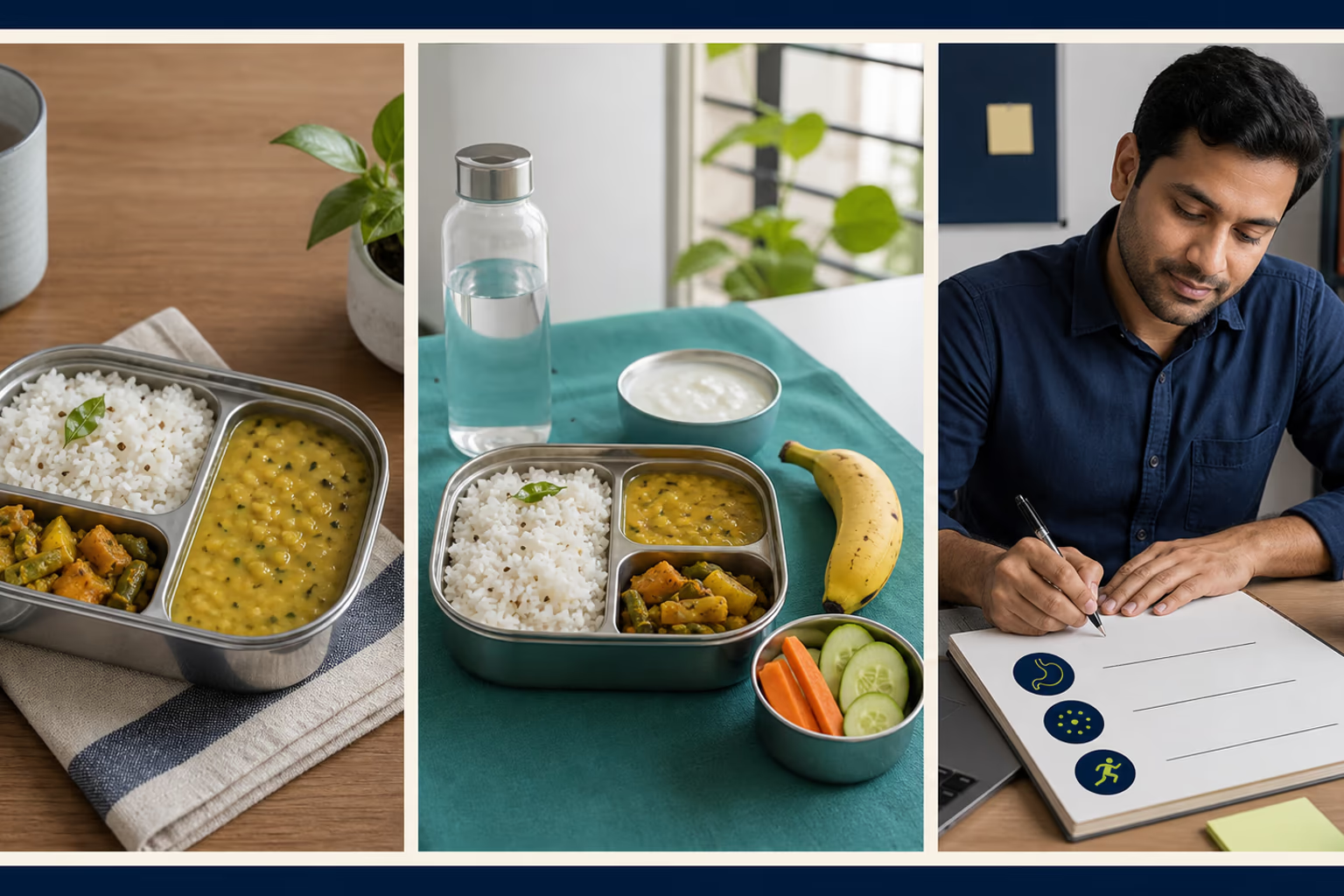
The minimum vs. The normal recovery meal
Recovery is not a one-size-fits-all process. Your needs change based on the intensity of your movement, the time of day, and your hunger levels.
The minimum version: the quick recovery
If you have limited time or are not ready for a full meal, focus on a simple, accessible snack. This is a bridge to your next main meal rather than a replacement.
- A glass of buttermilk (chaas) with a pinch of roasted cumin.
- A small bowl of sprouts or a handful of roasted chana.
- A banana or a seasonal fruit.
The normal version: the full recovery
When you are ready for a complete meal, aim for a combination of a carbohydrate source and a protein source. This provides a more substantial recovery foundation.
- Carbohydrate: Roti, rice, or oats.
- Protein: Dal, paneer, curd, or legumes.
- Variety: A side of seasonal vegetables or a fresh salad.
This approach is sustainable because it utilizes the ingredients your family already eats. If you over-complicate your meals with expensive or hard-to-find ingredients, you create a failure mode that makes your routine harder to maintain. Stick to the basics.
Hydration and context
Hydration is often the most overlooked part of recovery. While food provides fuel, fluids are essential for maintaining your body’s balance after physical activity.
Do not wait until you are severely thirsty to hydrate. Drink water throughout the day, and be mindful of your intake after your practice. If the weather is hot or your practice was vigorous, a glass of water or buttermilk is a practical way to rehydrate.
Your environment plays a role in your needs. Whether you are at a desk job, managing a household, or using public transport, your recovery plan should be flexible enough to adapt to your daily reality. If a full meal is not possible, prioritize hydration and a simple snack, then ensure your next main meal is balanced.
Your post-workout recovery checklist
Use this checklist to simplify your decision-making process after your next session.
- Hydrate: Drink a glass of water or buttermilk immediately after practice.
- Assess: Check what is already cooked in the kitchen (e.g., dal, sprouts, curd, rotis).
- Combine: Pair a carbohydrate source (roti, rice) with a protein source (dal, paneer, sprouts, curd).
- Adjust: Add a side of seasonal vegetables or salad for variety.
- Observe: Note how your energy levels feel 1-2 hours after eating.
When to seek professional guidance
This guidance is general and intended to help you make informed, everyday food decisions. It does not replace individualized medical or clinical nutrition advice.
If you have specific health conditions, such as diabetes, hypertension, or digestive issues, or if you are training for a high-intensity athletic event, standard advice may not be sufficient. In these cases, consult a registered dietitian or a medical professional who can provide a plan tailored to your specific clinical needs. You can explore practical wellness guidance to find professionals who can support your journey, and read more about balancing your plate to further refine your approach.
Watch alongside this guide
A healthy diet, a healthier world
This World Health Organization overview complements the Indian meal examples with broad principles of variety, balance and context rather than a rigid menu.
The YouTube player stays unloaded until you choose to watch. Loading it connects to YouTube and may allow that service to process usage data.