Planning Breakfast Around Your Morning Chai
Pair your morning chai with simple, nutrient-dense foods to build a balanced breakfast that fits your daily routine.
https://primetempr.com/blog/planning-breakfast-around-your-morning-chai
The morning chai ritual anchors many Indian households, offering a moment of calm before daily demands begin. This habit often creates a nutritional trade-off: chai becomes the entire breakfast, or it creates enough fullness that a balanced meal feels unnecessary. By mid-morning, this pattern frequently leads to energy dips or reliance on quick, less-nutritious snacks.
The goal is not to abandon your chai, but to "round it out." By pairing your existing ritual with a protein or fiber-rich addition, you can create a more stable start to your day that respects your cultural preferences and time constraints. Prime Tempr connects general food and hydration education to trainer-led practice while clearly separating it from individualized nutrition and medical care.
The reality of the morning chai
For many, chai is a transition point. When you are rushing to prepare for school or a long commute, the time required to cook a traditional breakfast feels prohibitive. If you skip food entirely, you miss the opportunity to provide your body with the fuel needed to sustain focus throughout the morning.
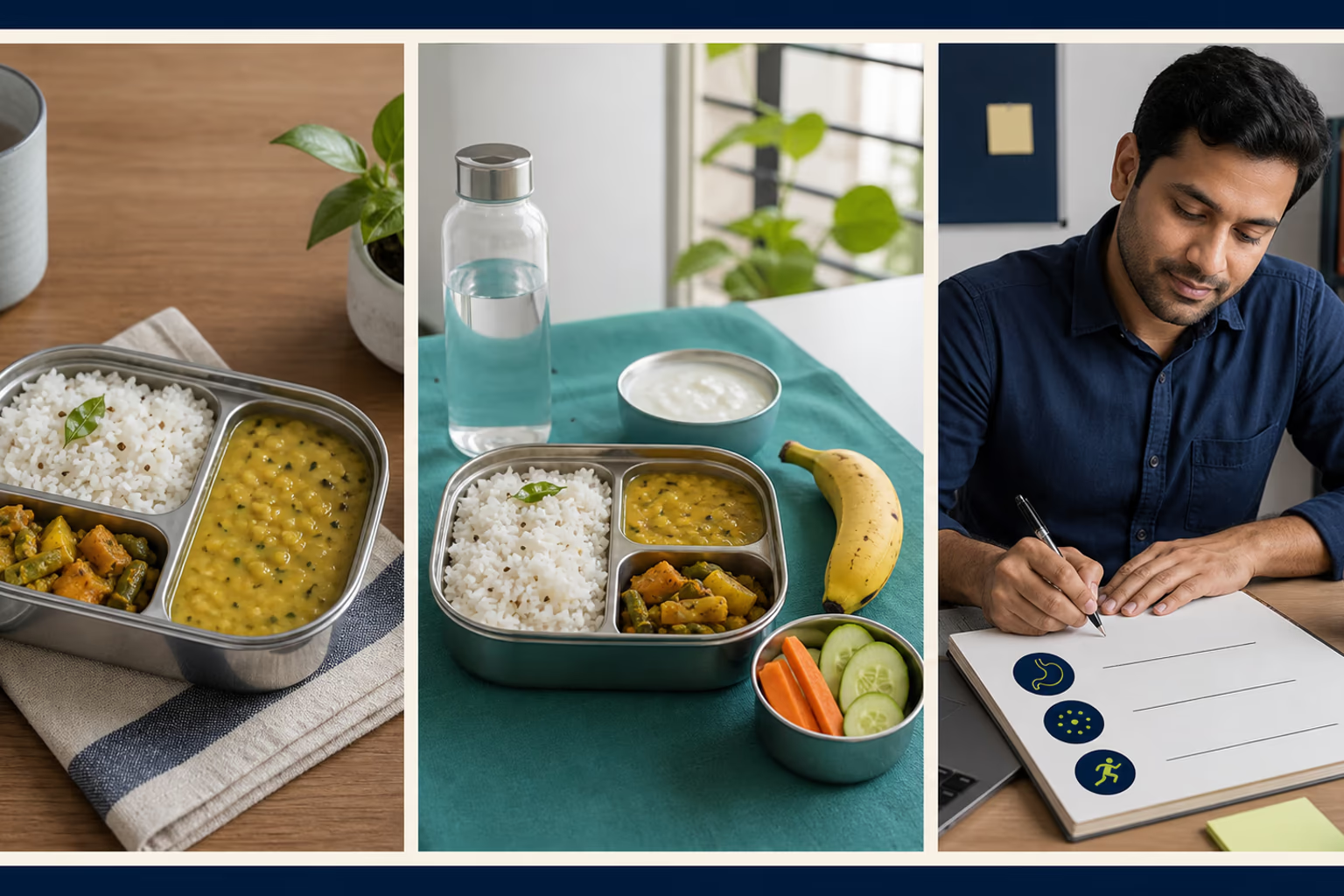
Healthy diets vary by culture and available foods. Adequacy, balance, moderation, and diversity matter more than following one universal menu or forcing a Western-style breakfast that does not fit your palate. Your morning routine is valid; the challenge is to integrate nutrition into the time you already have.
Why balance matters more than a perfect menu
The ICMR-NIN guidelines for Indians emphasize variety across familiar food groups, safe food and water, and context-appropriate eating patterns. This means that a "perfect" breakfast is not necessarily one that follows a rigid nutritional ratio, but one that incorporates different food groups,such as proteins, healthy fats, and fiber,into your daily rhythm.
When you focus on balance rather than perfection, you reduce the pressure to cook elaborate meals. Instead, you can look for ways to add "bridge" foods to your existing chai ritual. These are small, nutrient-dense items that require little to no preparation but help stabilize your energy levels until your next main meal.
Three ways to round out your chai-first morning
You do not need to overhaul your kitchen to improve your morning nutrition. Use these three practical approaches to add substance to your chai ritual.
- The shelf-stable approach: Keep a jar of roasted chana (chickpeas) or a mix of unsalted nuts on your counter. These are excellent sources of protein and fiber that require zero preparation. A small handful alongside your chai provides a crunch and a nutritional boost that complements the warmth of the tea.
- The fruit-first approach: If you prefer something lighter, pair your chai with a seasonal fruit. Whether it is an apple, a banana, or a handful of berries, the natural fiber and hydration help balance the caffeine and sugar intake from your tea.
- The leftover protein approach: If you have remnants of a previous night’s meal,such as a small portion of sprouts or a piece of paneer,these can be quickly incorporated into your morning. They provide a more substantial protein base that helps you stay satiated longer.
Keep these options visible and accessible. If you have to search for them, you are less likely to include them on a busy morning.
The chai-plus breakfast strategy
This practice plan helps you move from skipping breakfast to incorporating small, manageable additions.
- Identify your minimum morning: Choose one protein or fiber source you can keep on your counter, such as almonds, walnuts, or roasted chana. This is your "minimum viable" breakfast.
- Pair your chai: Make it a habit to consume your bridge food alongside your chai. Do not worry about the quantity; focus on the consistency of the addition.
- Assess your energy: At 11 AM, check in with your energy levels. If you feel a significant slump, consider slightly increasing the portion of your bridge food the next morning.
- Rotate for variety: Use the ICMR-NIN principle of variety by rotating your bridge food throughout the week. For example, use nuts on Monday, fruit on Tuesday, and roasted legumes on Wednesday.
Navigating the trade-offs
It is realistic to accept that some mornings will be busier than others. There will be days when a "minimum viable" breakfast is the best you can manage, and that is acceptable. The goal is progress, not a perfect streak. If a full breakfast feels impossible, focus entirely on your bridge food. This is a recovery path that prevents you from going into your day with an empty stomach, providing a buffer until your next meal.
If you find that your energy levels remain inconsistent despite these adjustments, consider that static guidance has limits. Everyone’s body responds differently to food, movement, and stress. If you are looking for more personalized support, you can explore practical wellness guidance to connect with professionals who can help you refine your routine further.
By integrating these small, intentional steps, you can honor your morning chai ritual while ensuring your body receives the support it needs to function well throughout the day. For more insights on building sustainable habits, you can also review our resources on Everyday Indian Food and Hydration.
Watch alongside this guide
A healthy diet, a healthier world
This World Health Organization overview complements the Indian meal examples with broad principles of variety, balance and context rather than a rigid menu.
The YouTube player stays unloaded until you choose to watch. Loading it connects to YouTube and may allow that service to process usage data.