Navigating the Gap Between Institutional Ayurveda and Living Tradition
Understand how to balance standardized health protocols with your unique regional traditions and personal daily needs.
https://primetempr.com/blog/navigating-the-gap-between-institutional-ayurveda-and-living
Ayurveda and yoga are not monolithic systems. You likely encounter a tension between the standardized protocols found in modern health books and the diverse, localized traditions practiced in your home or community. This gap exists because standardization was a response to public health needs, while regional practices remain rooted in the specific, lived realities of families and communities.
Understanding this distinction is the first step toward building a sustainable practice that respects historical context without sacrificing your personal health requirements. Prime Tempr helps readers continue from a concise history lesson to teacher and school profiles where lineage, training, and contemporary interpretation can be examined more closely.
The push for standardization
Standardization in Ayurveda and yoga emerged primarily as a mechanism for public health consistency. As these practices moved into the global spotlight and integrated with modern healthcare systems, there was a clear need to create accessible, safe, and reproducible guidelines.
The Ministry of Ayush protocol, for example, presents one contemporary public-practice sequence and general guidelines. These documents are invaluable for providing a baseline for safety and accessibility, especially for those new to these traditions. However, it is critical to recognize that this is not the only form of yoga or Ayurveda. Standardization provides a common language for institutions to communicate, but it was never intended to replace the vast, living network of regional and familial traditions that have existed for centuries.
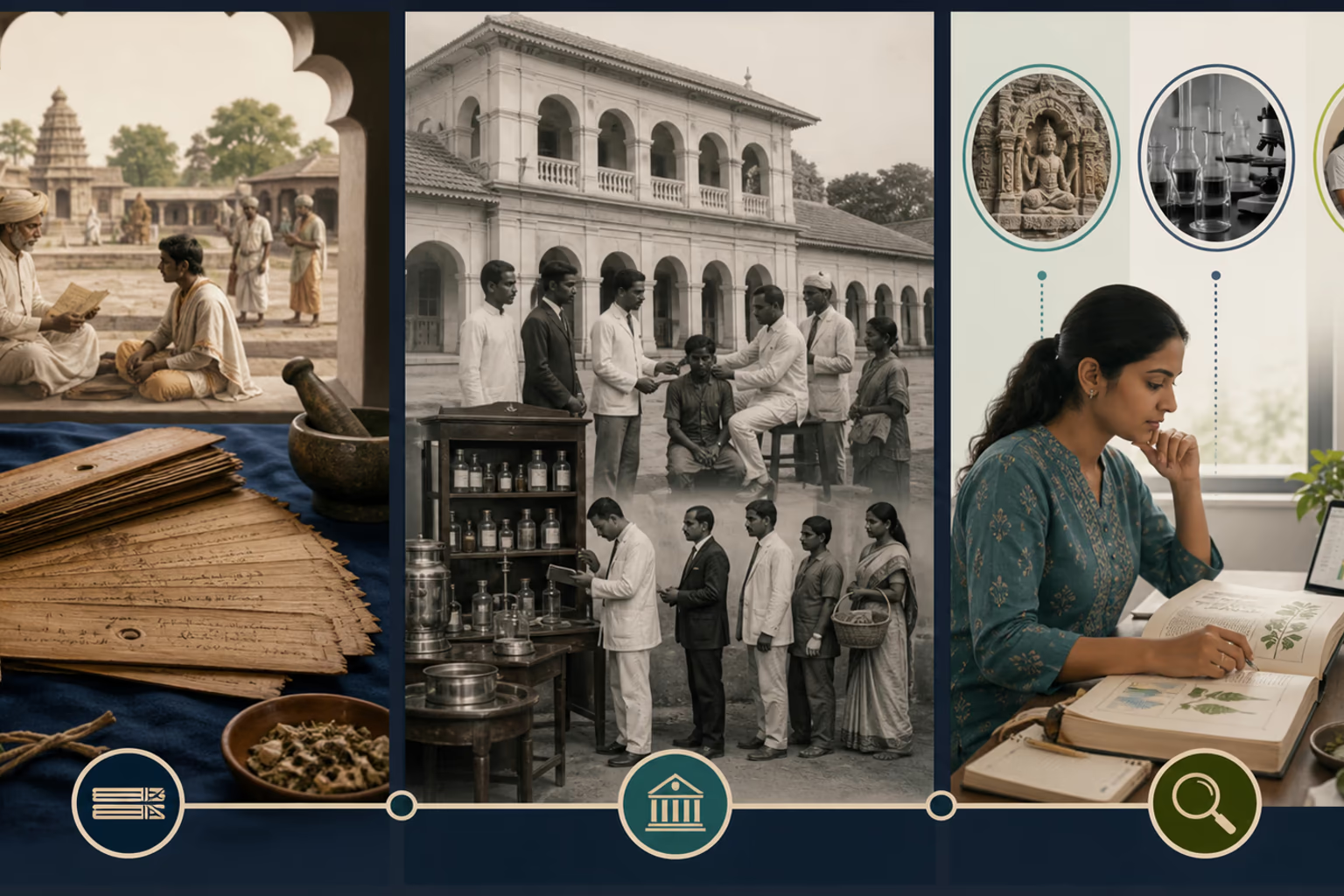
The reality of living traditions
While institutions provide a necessary framework, yoga and related traditions are fundamentally diverse, living practices. They are transmitted through a complex web of teachers, communities, institutions, texts, and modern media.
In your daily life, you might notice that your family’s approach to seasonal eating or morning movement looks different from the "standard" version you read about online. This is not a failure of the tradition; it is a feature of its resilience. Regional practices are often highly adaptive, responding to local weather, available ingredients, and the specific constraints of multigenerational households. These practices are not "unscientific" or "invalid",they are the result of generations of localized knowledge.
Managing the trade-offs
Relying solely on standardized institutional guidelines offers safety and accessibility, but it often lacks the nuance required for individual health needs. Conversely, relying exclusively on regional or familial knowledge without a broader context can sometimes lead to missing out on safety refinements developed through institutional study.
The primary trade-off is this: institutional protocols are easy to find but often lack the personalization required for your specific body and lifestyle. Qualified instruction and appropriate modification are essential to reduce avoidable risk, regardless of whether you are following a standardized sequence or a regional tradition. If a standardized protocol feels too rigid or disconnected from your daily life, look for teachers who explicitly discuss their lineage and how they adapt traditional principles to modern, local contexts.
Evaluating your practice context
To find a balance that works for you, use this reflection guide to map your current habits against the broader landscape of tradition.
- Identify one 'standard' health or yoga guideline you currently follow. This might be a specific breathing exercise or a dietary rule from a popular book or app.
- List one regional or familial practice you use that isn't in the standard books. Consider how your family handles seasonal changes, common ailments, or daily movement.
- Compare how each serves your daily routine. Does the standard guideline help you manage time or stress? Does the regional practice feel more accessible or comforting in your home environment?
- Search for a local teacher or school. Use this information to discuss how these two worlds might integrate for you. When you speak with a teacher, ask them about their lineage and how they modify their teachings for students with different backgrounds.
Finding your path
The goal is not to choose between "standard" and "traditional" but to find a teacher who can help you navigate both. A qualified instructor will respect the standardized safety guidelines while honoring the diverse, living nature of the practice.
When you are ready to take the next step, explore teachers and schools to see how different practitioners interpret these traditions. By looking at profiles where lineage, training, and contemporary interpretation are transparent, you can find a mentor who understands that your practice must fit your life,not the other way around. For more context on how these practices have evolved, read our guide on Yoga and Ayurveda as Living History.
Follow-along reflection
Use the prompts below to review the idea in context, without turning it into a diagnosis or a fixed rule.
Evaluating your practice context
- Compare how each serves your daily routine (e.g., time, energy, accessibility).
- Search for a local teacher or school to discuss how these two worlds might integrate for you.
Trade-offs to keep in view
- Standardization provides safety and accessibility but may lose the nuance of localized, ancestral knowledge.
- Institutional protocols are easy to find but often lack the personalization required for individual health needs.
Questions to carry forward
- Why was Ayurveda standardized in the first place?
- How does a 'standard' protocol differ from a regional practice?
- What are the trade-offs of relying on standardized institutional guidelines?
- How can I tell if a teacher's approach is rooted in a specific lineage or a general protocol?
- What is the best way to find a practice that fits my personal needs?
Sources
Watch alongside this guide
What is yoga?
This Oxford Centre for Hindu Studies introduction offers historical and philosophical context that readers can compare with the article's specific period or question.
The YouTube player stays unloaded until you choose to watch. Loading it connects to YouTube and may allow that service to process usage data.