Mindful Eating Without Rigid Food Rules: A Flexible Approach
Build sustainable food habits and mindful routines without diet culture, strict meal plans, or rigid dietary restrictions.
https://primetempr.com/blog/mindful-eating-without-rigid-food-rules-a-flexible-approach
Mindful eating without rigid food rules means focusing on adequacy, balance, moderation, and cultural diversity rather than following a single restrictive menu. Healthy diets vary by culture and available foods, meaning that sustainable habits are built on variety rather than perfection.
Feeling exhausted by strict diet culture is common. Many people swing between extreme restriction and a complete lack of awareness, often treating mindful eating as simply another set of dos and don'ts. When a rigid approach slips back in, the recovery path is simple. Pause, drop moral labels around food, and return to simple, diverse, and moderate choices that fit your day.
What Is Mindful Eating Without Rigid Rules?
Mindful eating is an approach to food that prioritizes awareness and nourishment over punishment or restriction. Instead of relying on a strict meal plan that ignores personal preferences, culture, or daily schedules, a flexible approach looks at the wider picture of what you eat. Healthy diets vary by culture and available foods; the shared foundation is adequacy, balance, moderation and diversity rather than one rigid menu.
When you remove strict rules, you create space to notice how different foods make you feel. This does not mean guessing what your body needs through intuition alone. It means combining general food education with practical observation. You might notice whether your meals provide enough energy for daily activities, walking, or your yoga practice without needing to count every calorie or categorize foods as good or bad.
The Limits and Trade-Offs of General Food Education
General wellbeing content and lifestyle habits support daily life, but they have distinct boundaries. Useful self-care can support health and well-being but does not replace an appropriate health system or professional care.
Stepping away from diet culture involves clear trade-offs. Flexible food habits do not offer rapid weight-loss guarantees or personalized clinical prescriptions. General education requires your own discernment and cannot replace a registered dietitian or medical professional when clinical care is needed. If you are managing a diagnosed health condition, general wellbeing tips cannot substitute for individualized medical advice. Prime Tempr helps readers connect general food and wellbeing education with qualified teachers and practice formats while keeping nutrition education separate from individualized clinical care. You can Find guidance that fits your practice to explore movement and mindfulness alongside your daily routine.
Practical Steps for Everyday Flexibility
Building sustainable food habits takes time and patience. To move away from rigid restrictions, you can start by observing your meals without judgment.
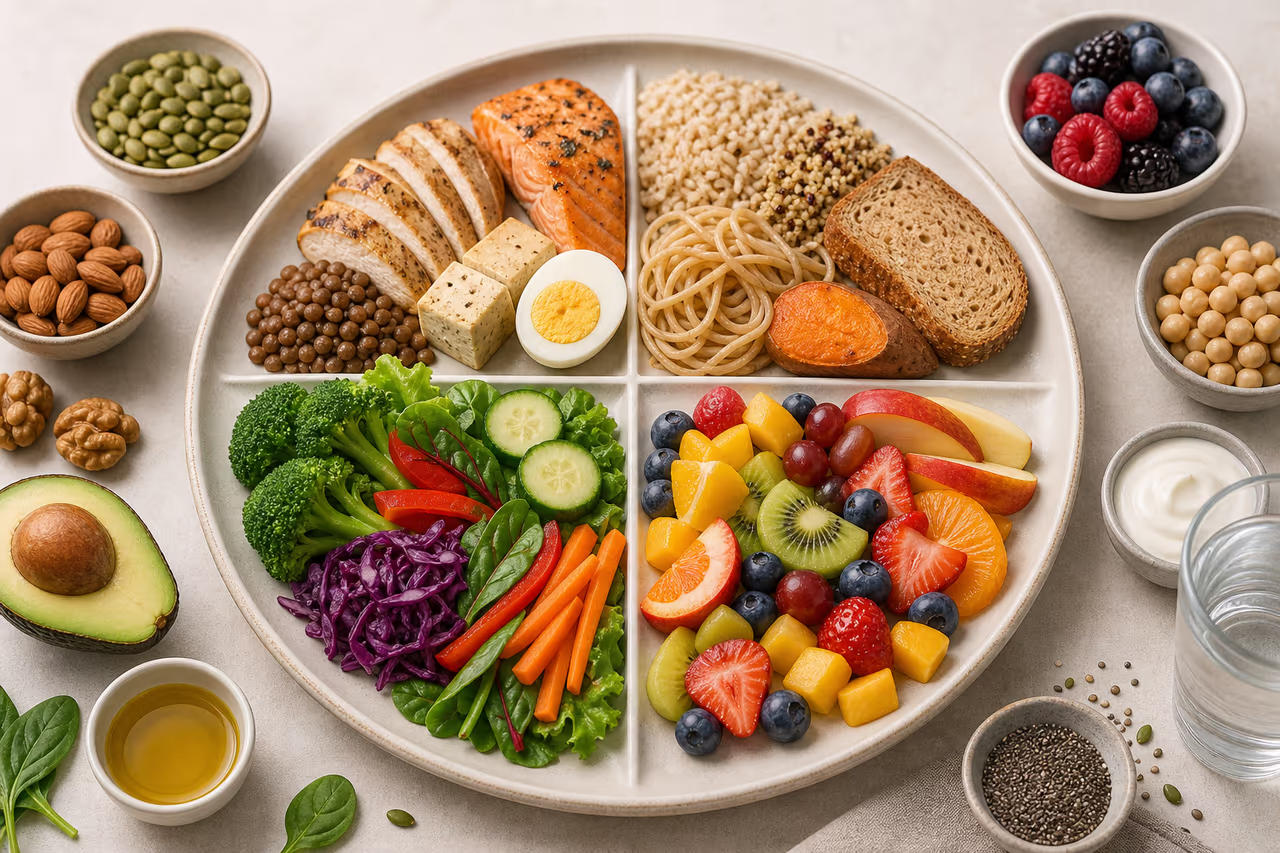
- Notice your plate's variety. Check if your meals include a mix of food groups that satisfy your hunger and cultural preferences.
- Remove moral labels. Food is not a reward or a punishment. View your meals as fuel and enjoyment for your day.
- Eat without major distractions. Taking a few moments to notice the flavors and textures of a meal can help you tune into your natural fullness cues.
- Explore supporting habits. Pair your food choices with other supportive lifestyle practices, such as walking, breathwork, or gentle movement.
You can learn more about building balanced routines by exploring Everyday Food Habits or reading about A Flexible, Balanced Plate for Daily Life.
Flexible Food Reflection Guide
This reflection guide helps you evaluate your approach to food without imposing new rules. Use these items as a gentle check-in during your week.
- Notice: Notice one meal today where you can focus on the flavors and textures without distraction.
- Check: Check whether your current choices include a balance of adequacy and variety rather than restriction.
- Identify: Identify one area where you can let go of a rigid rule this week.
- Connect: Explore professional guidance or connect with a qualified teacher if you need support aligned with your practice.
Sources
- Healthy diet (opens in a new tab), World Health Organization.
- Self-care for health and well-being (opens in a new tab), World Health Organization.
Watch alongside this guide
Building a balanced plate
This plate example offers a visual companion to the article's flexible, non-prescriptive food guidance. Source: Harvard T.H. Chan School of Public Health. This optional video is context, not evidence or personal instruction.
The YouTube player stays unloaded until you choose to watch. Loading it connects to YouTube and may allow that service to process usage data.