Meditation for Focus Without the Productivity Hype
Discover realistic trade-offs, mixed research findings, and simple starting points for meditation that focus on clarity without hustle pressure.
https://primetempr.com/blog/meditation-for-focus-without-the-productivity-hype
Meditation supports attention and clarity, but treating it as a performance hack or productivity multiplier misses its actual purpose and introduces unnecessary pressure.
When digital feeds and corporate wellness programs package mindfulness as the ultimate tool to squeeze more output from your day, the practice transforms from a restorative pause into another exhausting item on your to-do list. If you have ever felt guilty for having a wandering mind during a sit, or viewed meditation merely as a stepping stone to inbox zero, you are experiencing the friction of productivity-driven mindfulness.
Prime Tempr helps readers find trainers who can explain breathing and meditation in context, so an introductory article provides a starting point rather than a substitute for responsive guidance.
Why Productivity Culture Loves Meditation (And Why That's a Problem)
Modern hustle culture adopts contemplative practices to optimize human capital. By framing quiet reflection as a secret weapon for career advancement or relentless task completion, commercial wellness turns attention training into a metric for success.
This framing creates several predictable failure modes for beginners:
- The Hustle Trap: Treating meditation as a tool to engineer more billable hours or crush a daily task list.
- The Perfectionism Trap: Believing that a wandering mind or a disrupted streak equals personal failure.
- The Acceleration Trap: Expecting immediate mental transformation, flawless focus, and frictionless emotional control.
When meditation becomes about performance, it triggers the exact physiological stress responses it is meant to help regulate. The remedy is simple: drop the timer, release rigid outcome goals, and treat the practice as a straightforward chance to notice where your attention rests without grading yourself.
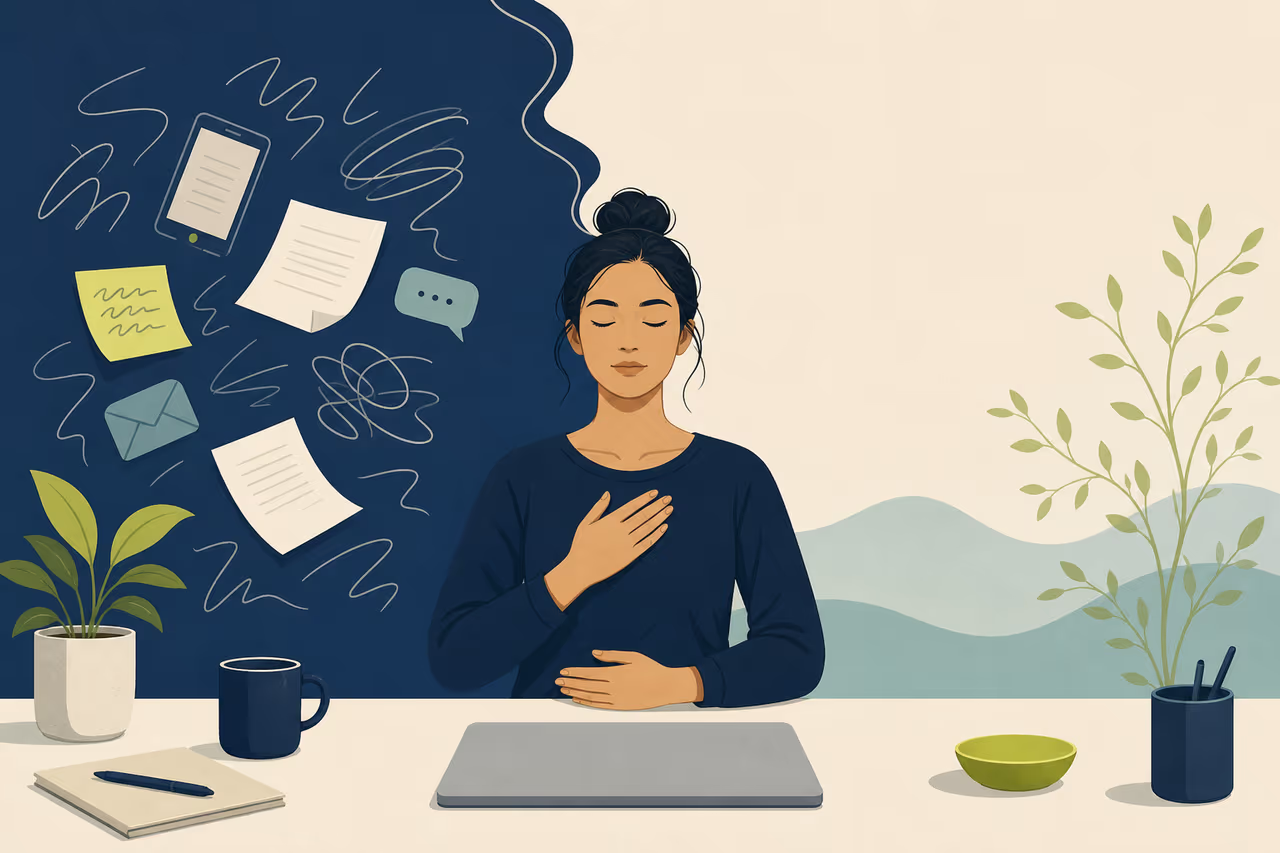
What Research Actually Shows About Meditation
Institutional reviews of contemplative practices provide a grounded counterweight to marketing hype. Meditation practices vary widely across traditions, styles, and individual temperaments, meaning outcomes are similarly diverse.
According to data from the National Center for Complementary and Integrative Health (NCCIH), scientific evidence regarding meditation and mindfulness is mixed by outcome. While many individuals report feeling calmer or more anchored, research indicates that responses span a broad spectrum. Relaxation approaches, which include breathing exercises, guided imagery, and progressive relaxation, are supportive lifestyle tools and should not replace conventional medical care or mental health treatment.
Understanding this variability helps remove the pressure. There is no single universal dosage or correct emotional state that proves you are "doing it right."
Realistic Trade-Offs and Limitations to Keep in Mind
Honest wellbeing education requires looking at the limitations and potential downsides of regular practice rather than painting a frictionless picture.
While popular culture often presents meditation as universally beneficial, institutional findings note that a minority of participants report negative experiences, such as heightened anxiety, uncomfortable emotional release, or distress during unguided introspective exercises.
| Approach / Tool | Intended Support | Realistic Limitations |
|---|---|---|
| Self-Guided Mindfulness | Daily pause, self-reflection, stress awareness | Can amplify internal anxiety if practiced without adequate context or grounding |
| Structured Relaxation | Breath pacing, muscle release, calming nervous system tension | Supportive practice only; cannot replace conventional clinical care or medical treatment |
| Trainer-Led Instruction | Real-time feedback, personalized pacing, safe container | Requires active search and logistical coordination to find qualified guidance |
If a practice consistently leaves you feeling unsettled or pressured, stepping back is a valid choice. Exploring supportive modalities through Breathwork & Meditation can help clarify which styles suit your nervous system. For deeper insights on pacing, you might also read How Long Should Beginners Meditate? A Practical Guide.
A Non-Hype Meditation Check-In
If you want to explore meditation without performance anxiety, use this brief reflection checklist to ground your approach:
- Notice your current intention: Are you exploring quiet awareness to rest, or are you secretly trying to squeeze more work out of yourself?
- Choose a short, manageable duration: Set aside just 3 to 5 minutes without tracking streaks or using gamified apps.
- Observe without judgment: Watch your breath or physical sensations, accepting a wandering mind as a normal human baseline rather than an error.
- Evaluate your support needs: Decide if self-guided practice fits your daily life or if speaking with an instructor would offer safer, more tailored context.
To connect with experienced professionals who can contextualize these practices safely, explore our directory to Find guided breath and meditation support.
Sources
Watch alongside this guide
Breathing meditation
This short guided meditation lets you follow the basic attention and breathing ideas described in the article. Source: UCLA Health. This optional video is context, not evidence or personal instruction.
The YouTube player stays unloaded until you choose to watch. Loading it connects to YouTube and may allow that service to process usage data.