Managing Fasting Traditions: A Practical Guide for Your Daily Routine
Maintain your fasting traditions by prioritizing consistent hydration, stable meal timing, and familiar, nutrient-dense foods for daily balance.
https://primetempr.com/blog/managing-fasting-traditions-a-practical-guide-for-your-daily
Managing fasting traditions within a busy routine requires consistency and comfort rather than rigid restriction. When you observe a fast, the goal is to honor the practice while maintaining energy for your work, family, and movement. Prime Tempr connects food and hydration education to trainer-led practice, separating it from individualized nutrition and medical care to provide a framework that fits your life.
Understanding the role of context
Fasting is personal and often rooted in cultural or religious traditions. It is not a one-size-fits-all medical protocol, nor is it a tool for weight loss or overriding your body’s signals. The ICMR-NIN recommends variety across familiar food groups, safe food and water, attention to labels, physical activity, and context-appropriate eating patterns.
Consider your specific environment when you approach a fast. If you work at a desk, commute, or manage a household, your energy needs will fluctuate. Healthy diets vary by culture and available foods; adequacy, balance, moderation, and diversity matter more than one universal menu. Focusing on sustainable habits prevents the failure of treating a cultural practice as a restrictive diet that leaves you depleted.
Prioritizing hydration and consistency
The most common challenge during a fast is managing energy dips caused by irregular meal timing. Rather than focusing on what you remove from your plate, focus on what you can maintain.
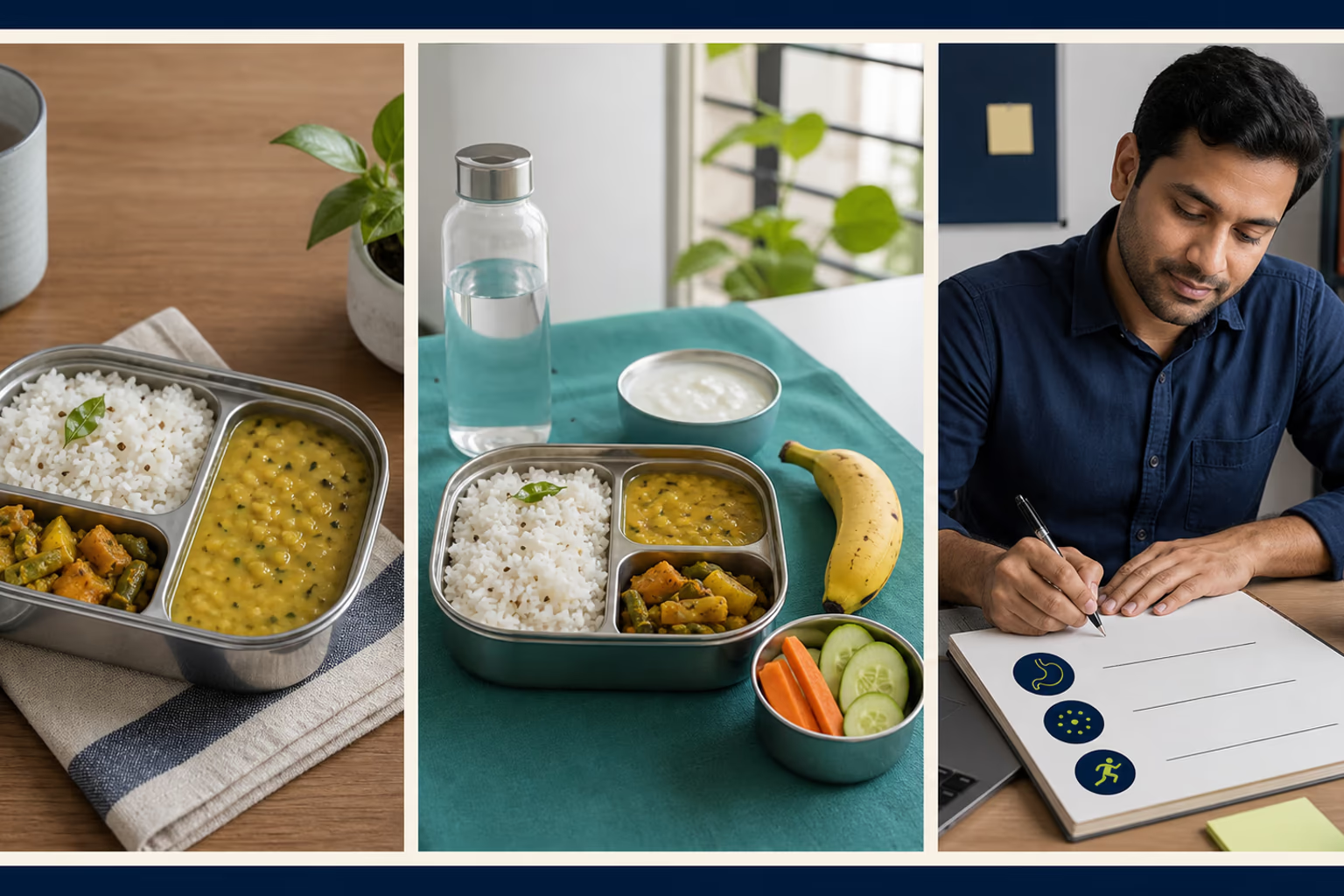
Hydration is your primary tool for stability. When your meal schedule changes, your body still requires consistent water intake. Keep a water bottle visible at your desk or in your kitchen as a reminder. If your energy wanes, do not assume you need a complex solution. Often, a simple, familiar snack or a glass of water helps bridge the gap between your planned anchor meals.
Consistency is also about your "anchor" meals. If you know you will be fasting for a portion of the day, plan your meal immediately before the fast begins and the meal that breaks it. These should be balanced, familiar home foods that you enjoy. Avoiding the urge to overeat after a fast is easier when you have a predictable, nourishing meal waiting for you.
Choosing familiar foods
There is often pressure to rely on processed "fasting-friendly" snacks that promise to keep you full. However, these are often high in refined ingredients and low in the sustained energy you get from whole foods. Instead, look to your own kitchen staples.
Traditional Indian meals,centered around lentils, seasonal vegetables, grains, and dairy,are naturally nutrient-dense. When planning your fasting day, prioritize these familiar items. They provide the variety and balance necessary to keep you feeling stable. If you are unsure where to start, Find a yoga teacher to learn how mindful movement can complement your dietary choices, or read more about Beyond Calorie Counting: A Practical Guide to the Indian Plate for a deeper look at building a sustainable, non-restrictive plate.
Your fasting day check-in
Use this plan to manage your energy and hydration. This is not a medical prescription, but a framework to help you stay grounded.
- Identify your fasting window: Plan one "anchor" meal before and after your fast to ensure you are not starting or ending the day in a state of depletion.
- Maintain visible hydration: Keep a water bottle within reach throughout the day.
- Choose familiar, whole-food snacks: If you feel an energy dip, reach for simple, traditional foods rather than processed alternatives.
- Monitor your energy levels: If you feel lightheaded, dizzy, or unusually fatigued, prioritize a balanced meal immediately.
If you consistently feel unwell or drained during your fasting days, pause the practice. Focus on regular, balanced meals until you feel stable.
When to seek professional guidance
This guide provides general principles for managing fasting within a daily routine, but it is not a substitute for medical advice. If you have underlying health conditions or find that fasting leads to physical discomfort, consult a healthcare provider.
A professional can help you understand how your specific health needs interact with your desire to observe fasting traditions. They provide individualized guidance that this general wellness article cannot. Your priority should be your long-term health and stability, not the perfection of a fasting streak.
Follow-along reflection
Use the prompts below to review these ideas in context, without turning them into a diagnosis or a fixed rule.
Your fasting day Check-in
- Identify your fasting window and plan one 'anchor' meal before and after.
- Keep a water bottle visible to maintain consistent hydration.
- Choose familiar, whole-food snacks if you feel a dip in energy.
- Monitor your energy levels; if you feel lightheaded, prioritize a balanced meal immediately.
Trade-offs to keep in view
- Cultural fasting may not align with standard 'optimal' nutrition timing; prioritize consistency and comfort over perfection.
- This guide provides general principles, not medical prescriptions for specific health conditions.
If this approach does not fit
If you feel consistently drained or unwell, pause the fasting practice and consult a healthcare provider; focus on regular, balanced meals until you feel stable.
Questions to carry forward
- How can I maintain energy levels during a fast without overeating afterward?
- What are simple ways to stay hydrated when my meal schedule changes?
- How do I balance traditional fasting foods with my daily nutritional needs?
- When should I consult a professional instead of managing this on my own?
Watch alongside this guide
A healthy diet, a healthier world
This World Health Organization overview complements the Indian meal examples with broad principles of variety, balance and context rather than a rigid menu.
The YouTube player stays unloaded until you choose to watch. Loading it connects to YouTube and may allow that service to process usage data.