Making Room for Yoga in a Shared Indian Home
You do not need a dedicated studio to practice; adapt your yoga to fit your home's rhythm.
https://primetempr.com/blog/making-room-for-yoga-in-a-shared-indian-home
You do not need a dedicated, empty room or a perfectly quiet environment to practice yoga. The most sustainable practice is one that fits your home's existing rhythm rather than one that forces you to rearrange your entire living space. By focusing on proportional practice,matching your session to the space and time you actually have,you can build a consistent routine that respects both your physical needs and your household's daily life.
Assess your space realistically
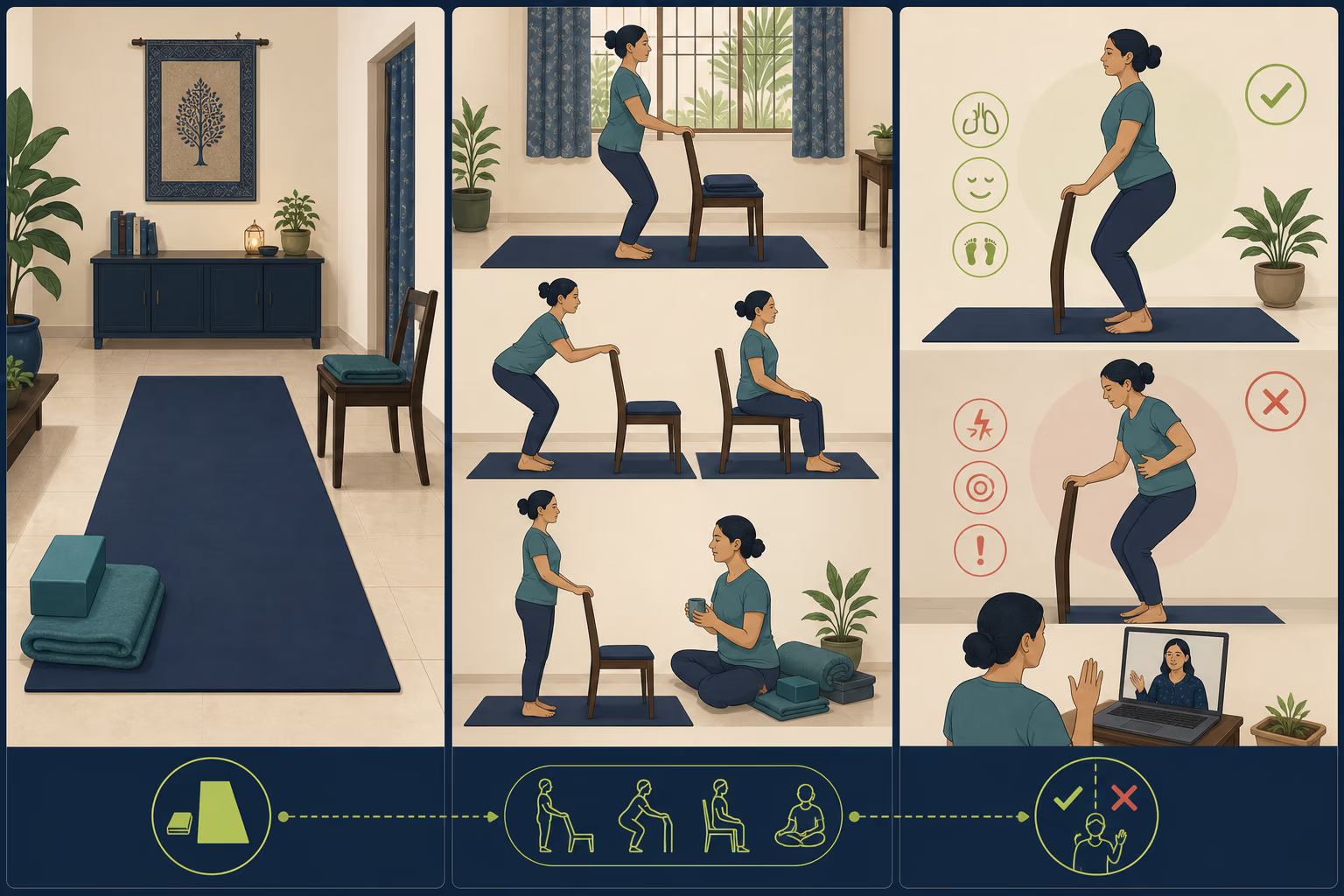
Many people stop practicing before they begin because they assume they need a large, clear floor area. In reality, you only need enough space to stand comfortably and extend your arms. If you cannot lay out a full mat, you can practice on a rug, a folded towel, or even just a firm patch of floor.
Start by identifying "micro-zones" in your home. This might be a corner of the living room, the space at the foot of your bed, or a balcony that is quiet during specific hours. Do not worry about moving heavy furniture or creating a social media aesthetic. If you can stand in a spot without hitting a wall or a table, you have enough room for a meaningful practice. If your floor space is limited, prioritize standing or seated poses that do not require horizontal movement.
Choose a practice that fits your environment
Yoga is a diverse living tradition, and sequences can be adapted to fit your individual environment. If you are short on space or time, you do not have to perform a full, complex sequence. You can choose a practice that fits the constraints of your day.
When floor space is restricted, focus on standing poses. These require minimal footprint and can be done in narrow corridors or small corners. If you are struggling with floor sitting, explore Starting Yoga When Floor Sitting Is Uncomfortable to find ways to modify your posture. Remember that the Common Yoga Protocol provides a contemporary sequence, but it is one of many ways to practice and should be modified for your individual comfort. If a pose feels unstable or cramped in your specific environment, skip it or find a variation that feels secure.
Managing household rhythms
In a multigenerational or busy shared household, interruptions are a natural part of life. Trying to enforce total silence or absolute privacy often leads to frustration. Instead, treat your practice as a flexible activity that can pause and resume.
If you are interrupted, do not view it as a failure of your practice. Simply pause, address the household need, and return to your mat when you can. If you find it difficult to find a quiet hour, try practicing early in the morning before the house wakes up or late in the evening. If that is not possible, accept that your practice might be shorter or more fragmented. Consistency in small, manageable doses is more effective than an occasional, perfect, uninterrupted hour.
When to seek professional guidance
Adapting poses for small, shared spaces requires patience and trial-and-error. If you feel unsure about how to modify a pose to stay safe in a tight space, or if you are experiencing discomfort, it is time to seek qualified instruction. Appropriate modification of yoga poses can help reduce the risk of injury, especially when adapting to home environments.
Prime Tempr helps beginners compare teacher profiles, nearby studios, and online offerings so a general article can lead to responsive instruction when needed. If you are ready to refine your home practice, Find a beginner-friendly teacher who can help you tailor your movements to your specific home layout.
Your 3-Tier home practice strategy
Use this tiered approach to match your practice to the time and space you have available today.
- The Micro (2-5 minutes): Standing or seated stretches in any corner. Use this when you are short on time or space. Focus on deep breathing and gentle neck or shoulder rolls.
- The Essential (10-15 minutes): A modified sequence using a single mat or towel. This is your standard practice. Focus on basic movements that do not require you to sprawl across the room.
- The Full (20+ minutes): A planned session during the quietest hour of your household's day. Use this when you have more space and time to explore longer holds or more varied movements.
Important safety notes
- Time range: Start with 5 to 10 minutes to build the habit.
- Scaling: If a pose feels tight or unsafe, reduce your range of motion or skip it entirely.
- Stop rule: If you feel sharp pain, dizziness, or significant discomfort, stop immediately and rest.
- Limits: If you have pre-existing health conditions or are new to physical activity, consult a professional before starting. Static guidance is not a substitute for personalized, in-person instruction.
Sources
Watch alongside this guide
Yoga for complete beginners
This optional beginner session lets readers observe pacing and rest choices in a complete practice. Pause, adapt or stop rather than matching every shape.
The YouTube player stays unloaded until you choose to watch. Loading it connects to YouTube and may allow that service to process usage data.