Making Movement Stick: A Practical Guide to Workday Walking
Discover how to build sustainable workday walking habits for better mental clarity and mobility without rigid exercise quotas.
https://primetempr.com/blog/making-movement-stick-a-practical-guide-to-workday-walking
The most effective way to use walking breaks during the workday is to treat them as a tool for mental clarity and physical mobility, rather than a rigid exercise quota. If you feel sedentary and stiff after hours at a desk, the solution isn't necessarily to force yourself into a high-intensity workout during your lunch break. Instead, focus on integrating short, manageable periods of movement that help you reset.
Any amount of physical activity is better than none, and all activity counts toward your wellbeing. By shifting your perspective away from "hitting a step count" and toward "reclaiming physical space," you can turn a stressful workday requirement into a sustainable habit.
The case for the workday walk
When we think of "exercise," we often imagine a gym session or a long, dedicated run. However, the physical activity guidelines suggest that adults should work toward 150 to 300 weekly minutes of moderate aerobic activity, supplemented by muscle-strengthening activities on at least two days. While walking is a fantastic component of this, it is rarely the only piece of the puzzle.
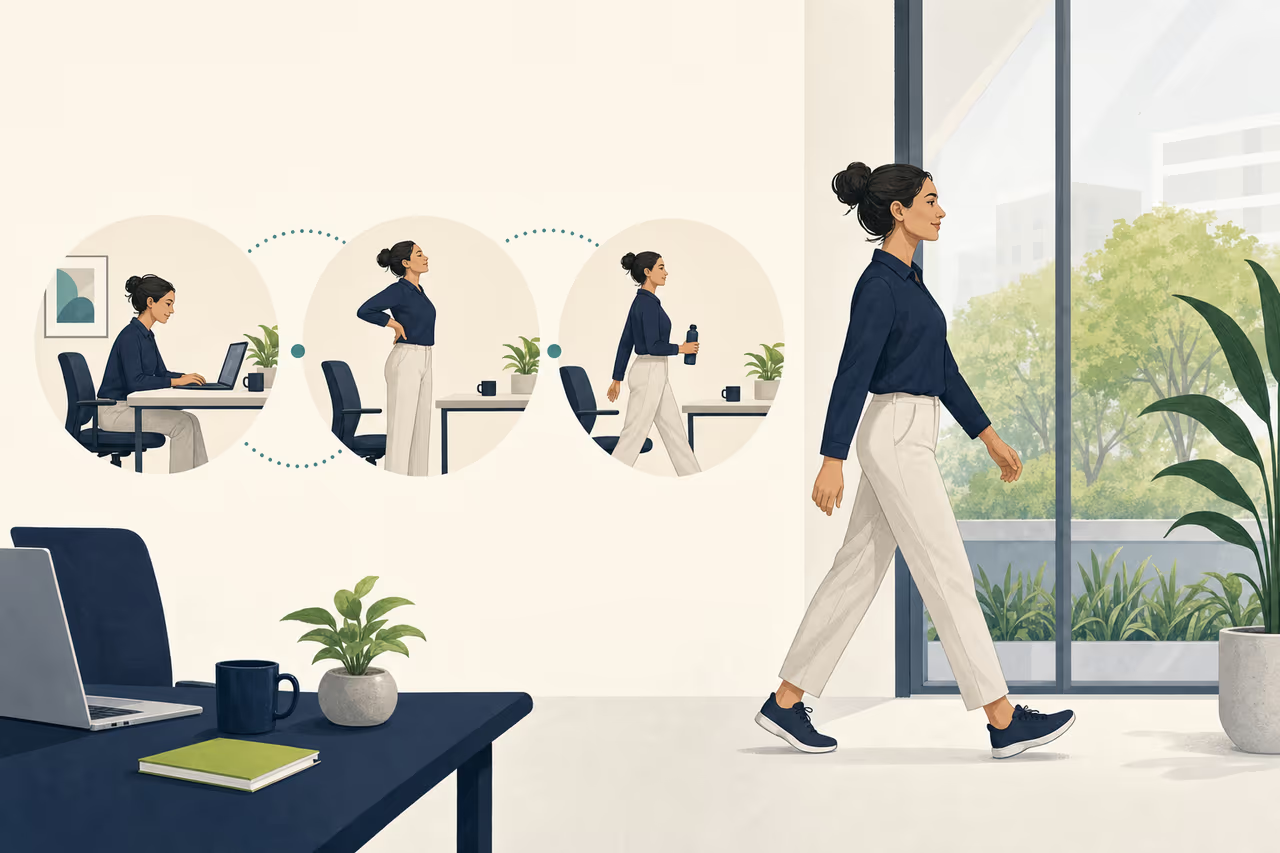
The primary value of a workday walk is not to replace your main workout, but to act as a "movement snack." These short breaks help alleviate the stiffness caused by prolonged sitting and provide a necessary mental buffer between tasks. The goal is to move enough to feel the benefit without adding the pressure of another "to-do" item that requires recovery time.
Finding your rhythm
Integrating movement into a busy schedule requires flexibility. If you try to force a 30-minute walk into a day that doesn't support it, you will likely view the practice as a failure when it inevitably gets sidelined.
Instead, consider these low-pressure approaches:
- The Transition Walk: Use the time between meetings or after completing a specific project as a trigger for a 5-minute walk. This acts as a physical boundary, signaling to your brain that one task is finished and the next is beginning.
- The "Talk Test" Pace: If you are unsure how fast to walk, use the talk test. You should be able to hold a conversation comfortably while walking. If you are gasping for air, you are likely moving at an intensity that requires more recovery than a workday break should demand.
- The Micro-Break: If you truly cannot leave your desk for long, even a 2-minute walk to the kitchen or around the office floor counts. All activity counts toward your wellbeing, and these small increments add up over the course of a week.
Failure modes to avoid
- The "Workout" Trap: Treating a walk as a high-intensity workout can lead to burnout. If you are already tired, a gentle walk is often more restorative than a brisk one.
- Ignoring Discomfort: If you feel pain or significant fatigue, stop. Pushing through physical discomfort to hit a step count is counterproductive and increases the risk of injury.
- The All-or-Nothing Mentality: If you miss your planned walk, do not view it as a failure. It is a neutral event. Simply adjust your approach for the next day.
Balancing your movement
While walking is excellent for mobility and mental relief, it does not replace the need for dedicated muscle-strengthening activities. A truly balanced practice involves a mix of aerobic movement, mobility work, and strength training.
If you find that your workday walks are becoming your only source of movement, you may be missing out on the benefits of targeted strength work. This is where a more structured approach becomes valuable. Prime Tempr helps readers connect broad activity guidance with trainers and yoga businesses that can provide a balanced, repeatable programme and human accountability. A trainer can help you integrate your walking habits into a larger, more comprehensive movement strategy that includes the strength-building exercises necessary for long-term health.
Your Workday Movement Micro-Plan
Use this simple plan to get started without the overwhelm:
- Identify one 5-10 minute window in your schedule for a "transition walk."
- Use the "talk test" to ensure your pace remains sustainable and non-stressful.
- Pair your walk with a simple breathwork focus to reset your nervous system.
- Review your weekly movement balance and consider connecting with a trainer for personalized guidance.
When to seek professional support
There is a limit to how much self-guided movement can achieve. If you find yourself struggling to maintain consistency, or if you are unsure how to balance your walking with other forms of exercise, it may be time to seek external support.
Working with a professional allows you to move beyond generic advice. A trainer or yoga teacher can assess your specific needs, help you build a routine that fits your lifestyle, and provide the human accountability that keeps you engaged over the long term. If you are ready to move past the "how-to" phase and into a sustainable, repeatable practice, you can find a yoga teacher or build a balanced practice through our network.
FAQ
How much walking is actually beneficial? Any amount is beneficial. There is no minimum threshold for a "break" to be useful. Even 5 minutes of movement can help reduce stiffness and improve focus.
What if I don't have time for a long walk? Focus on frequency rather than duration. Several 3-minute walks throughout the day are often more effective for managing stiffness than one long, stressful walk that you have to rush to complete.
Does walking replace my gym time? No. Walking is a great aerobic activity, but it does not provide the muscle-strengthening benefits recommended in current guidelines. It should be part of a broader, balanced practice.
Sources
- Physical activity (opens in a new tab), World Health Organization.
- Top 10 Things to Know About the Physical Activity Guidelines (opens in a new tab), Office of Disease Prevention and Health Promotion.
Watch alongside this guide
Just walk
This short walking overview reinforces the guide's focus on accessible, repeatable movement rather than elaborate equipment. Source: American Heart Association. This optional video is context, not evidence or personal instruction.
The YouTube player stays unloaded until you choose to watch. Loading it connects to YouTube and may allow that service to process usage data.