Loaded Carries Explained: A Practical Guide
Master safe loaded carries to build core stability and grip strength while learning when professional coaching helps.
https://primetempr.com/blog/loaded-carries-explained-a-practical-guide
At its simplest, a loaded carry involves walking while holding a weight. While straightforward, this exercise challenges core stability and grip strength simultaneously. Unlike static exercises, loaded carries require your body to manage an external load while moving, forcing muscles to stabilize your spine and limbs with every step.
Because muscle-strengthening activities provide health benefits for adults, and any amount of activity is better than none, incorporating simple movements like loaded carries can be productive. However, that simplicity is deceptive. Assuming that because you can lift a weight you can carry it overlooks the fact that moving under load is significantly more demanding.
Why They Matter for Functional Strength
Loaded carries are often labeled "functional" because they mirror real-world tasks, such as carrying heavy groceries, luggage, or children. By training your body to maintain an upright posture while managing an offset or heavy load, you are essentially training your core to resist unwanted movement.
This stability is vital for long-term physical health. When you walk with weight, your obliques, deep abdominal muscles, and back stabilizers fire continuously to keep you balanced. The grip strength required to hold the weight improves forearm and hand health, which standard gym routines often neglect.
According to current physical activity guidelines, adults should aim for muscle-strengthening activities on at least two days a week. Loaded carries function as an efficient component of these sessions, provided you prioritize form over intensity.
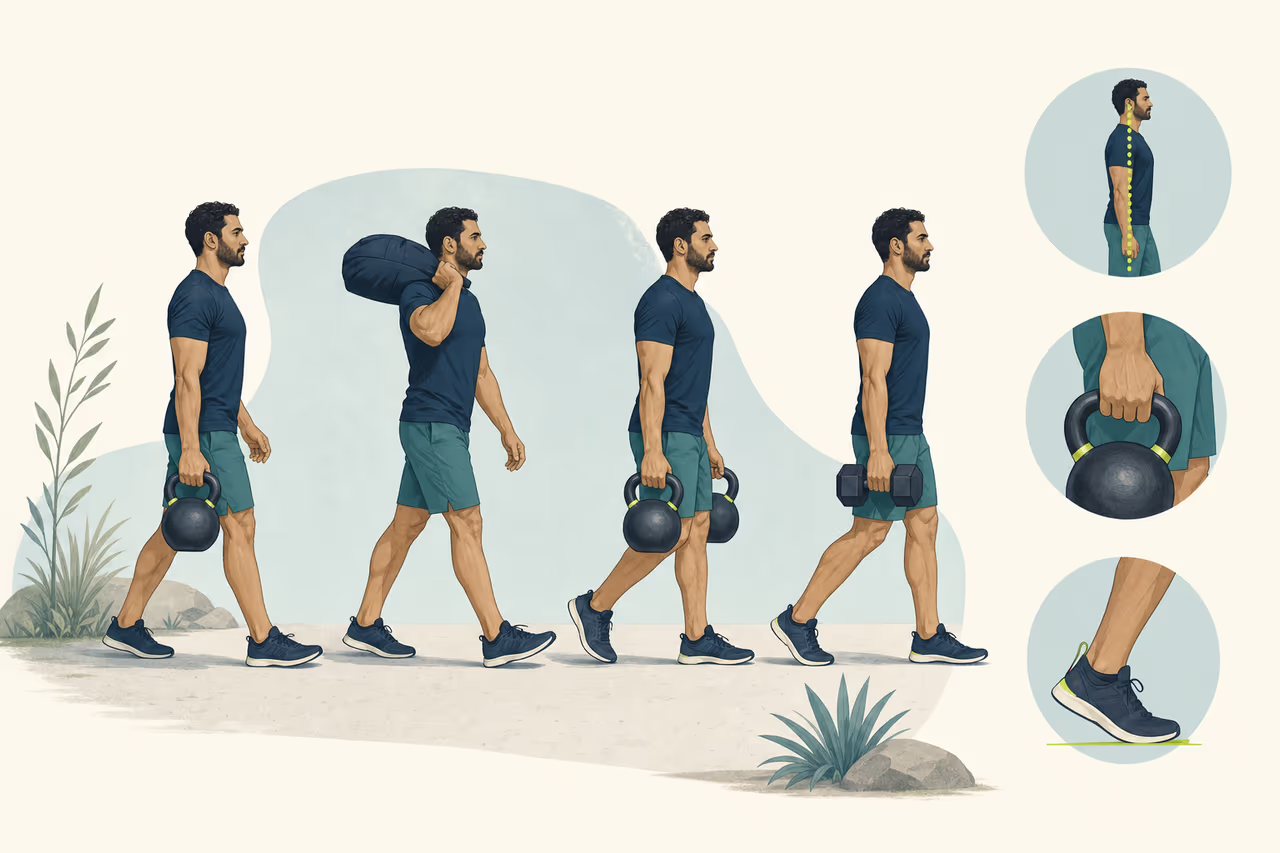
How to Start Safely
The most common mistake for beginners is attempting too much weight too soon. This leads to poor form, such as leaning excessively or rounding shoulders, which negates stability benefits and increases strain risk.
To start safely, follow these principles:
- Prioritize Form Over Load: If you cannot maintain an upright, neutral spine while walking, the weight is too heavy.
- Control Your Breath: Do not hold your breath while carrying. Consistent, steady breathing helps maintain core pressure and prevents unnecessary spikes in blood pressure.
- Monitor Your Grip: Your grip is often the first thing to fatigue. If your fingers start to slip or your hand begins to cramp, stop the set.
- Volume Management: Start with short, manageable distances or time durations. Treat this as a stability exercise, not a race.
Your First Loaded Carry Session
Use this simple plan to introduce the movement to your routine without overdoing it:
- Select a Weight: Choose a weight you can carry comfortably for 30 seconds. This should feel challenging but manageable.
- Posture Check: Stand tall, shoulders back and down, with your core gently engaged.
- Execution: Walk at a steady, controlled pace. Keep the weight close to your body or held firmly at your sides.
- Duration: Aim for 30 seconds of walking. Stop immediately if your form breaks or your grip fails.
- Recovery: Rest for 60 to 90 seconds between sets.
- Tracking: Record your effort in a journal to track progress over time. If 30 seconds feels easy and your form remains perfect, you can incrementally increase the weight or the duration in future sessions.
The Trade-offs of Loaded Carries
While effective, loaded carries require equipment, typically dumbbells, kettlebells, or trap bars, which may not be available at home. Additionally, they are taxing on the nervous system if performed with excessive volume.
Listen to your body. If you notice persistent pain or instability during the movement, stop immediately. Reduce the load significantly or take a break from the exercise entirely to allow recovery.
When to Seek Professional Support
General guides are helpful for getting started, but they cannot account for your physical history, mobility limitations, or specific goals. When general strength guides are no longer enough, working with a qualified trainer provides the personalized progression you need.
A trainer observes your movement patterns in real time, helping identify subtle alignment issues you might miss. They also help determine when to increase the load versus when to refine technique.
Prime Tempr helps readers compare trainer approaches and ongoing programmes, making it easier to add qualified progression when a general strength guide is no longer enough. Whether you want a local studio or an online coach specializing in functional movement, our platform helps you find the right support to keep training safe and effective.
FAQ
Can loaded carries fix my back pain? Loaded carries are not a cure for back pain. If you have existing pain or injuries, consult a medical professional or qualified trainer before adding new movements to your routine.
How heavy should the weight be? There is no universal recommendation. Start with a weight that allows you to maintain perfect posture throughout the carry. If you feel yourself leaning or struggling to breathe, the weight is too heavy.
How often should I do them? Because they are a form of muscle-strengthening activity, you can include them in your routine two to three times per week, provided you allow for adequate recovery between sessions.
Sources
- Physical activity (opens in a new tab), World Health Organization.
- Top 10 Things to Know About the Physical Activity Guidelines (opens in a new tab), Office of Disease Prevention and Health Promotion.
Watch alongside this guide
High-intensity functional training explained
This ACE overview shows how functional training is framed so you can compare it with the article's safer progression advice. Source: ACE Fitness. This optional video is context, not evidence or personal instruction.
The YouTube player stays unloaded until you choose to watch. Loading it connects to YouTube and may allow that service to process usage data.