Iyengar Yoga: Structure, Alignment, and Practical Trade-Offs
Master alignment, props, and structural precision in Iyengar yoga to decide if this disciplined practice matches your physical needs.
https://primetempr.com/blog/iyengar-yoga-structure-alignment-and-practical-trade-offs
Iyengar yoga is a form of Hatha yoga that prioritizes precise physical alignment and the use of specialized props,such as blocks, straps, and chairs,to help students perform postures correctly and safely. Unlike "flow" styles that move quickly between shapes, Iyengar yoga typically involves holding individual poses for longer periods to focus on the technical details of the movement.
While many associate yoga with high-intensity exercise or deep meditation, Iyengar yoga occupies a middle ground centered on the precise execution of postures. It is a structured, academic approach to movement that adapts to various fitness levels, though it carries distinct physical demands and logistical requirements.
What makes Iyengar yoga different?
The primary distinction of Iyengar yoga is its systematic approach to the body. Developed by B.K.S. Iyengar, this style combines postures, breathing, and meditation. In a typical Iyengar class, however, the primary focus remains the physical alignment of the body within each posture.
Three main pillars define the Iyengar experience:
- Alignment: Teachers provide very specific instructions on the placement of feet, the rotation of thighs, and the engagement of the core. The goal is to achieve a balance in the body that may help reduce the risk of strain.
- Sequencing: Poses are taught in a specific order designed to prepare the body for more complex movements or to achieve a specific physiological effect.
- Timing: Unlike Vinyasa yoga, where you might stay in a pose for only one breath, Iyengar practitioners often hold poses for several minutes. This builds isometric strength and allows time for the student to refine their alignment.
Keep in mind that while styles vary, all forms of yoga carry some risk. Injuries can occur in any practice, particularly if alignment cues are misunderstood or if a student pushes past current physical limits.
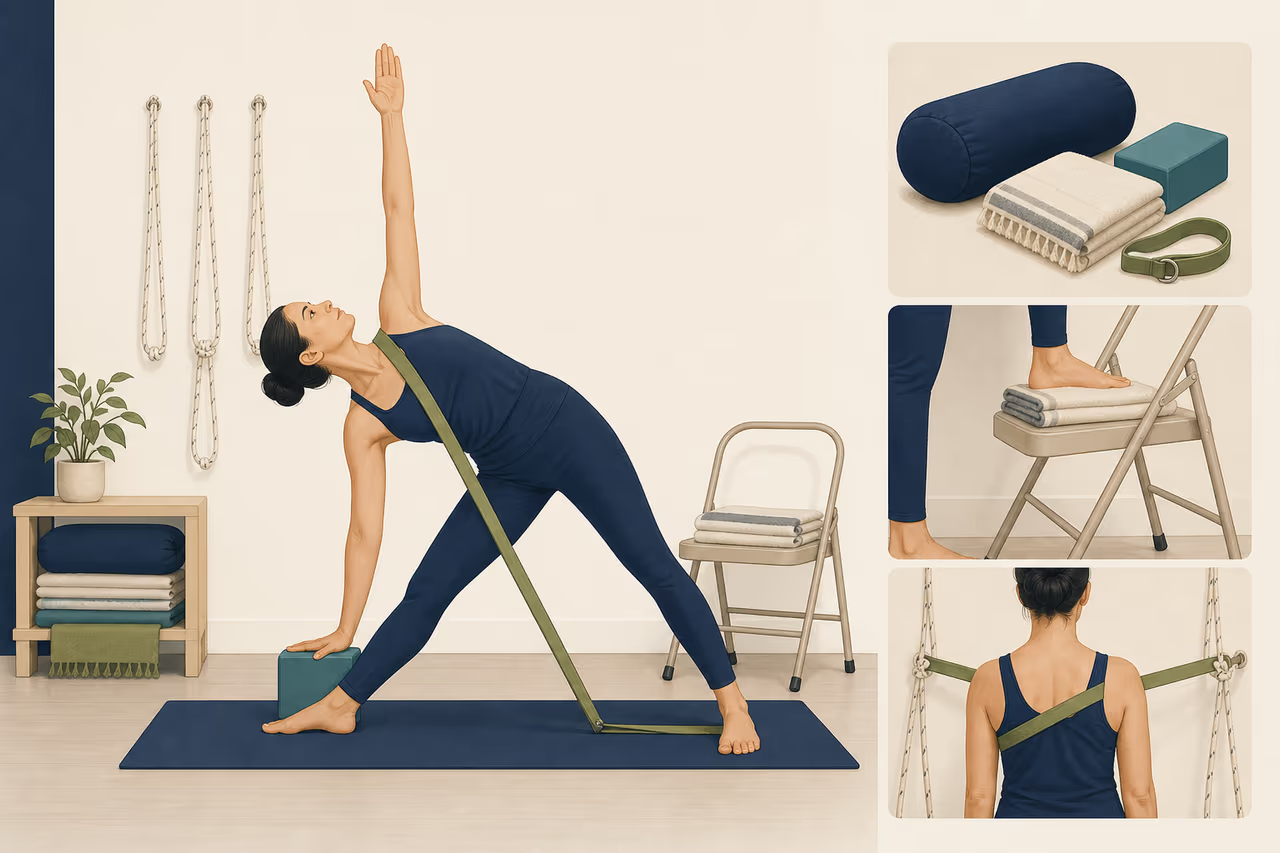
The role of props and precision
A common misconception is that the use of props makes a yoga class "easy" or "gentle." In Iyengar yoga, props are tools used to achieve precision. They act as extensions of the body, allowing a student to experience the intended benefit of a pose even if they do not yet have the flexibility or strength to perform the "final" version of the shape.
Common props used in Iyengar yoga
| Prop | Purpose |
|---|---|
| Blocks | Bring the floor closer to the hands in standing poses to maintain a straight spine. |
| Straps | Extend the reach of the arms to help with shoulder mobility or hamstring stretches. |
| Bolsters | Provide firm support for the torso in restorative or seated poses. |
| Chairs | Assist with balance or provide a stable base for deep twists and backbend variations. |
| Blankets | Cushion the joints or provide height for the hips in seated positions. |
By using these tools, instructors can adapt a single pose for students with vastly different physical needs. This focus on adaptation makes Iyengar yoga a popular choice for those managing specific physical limitations or beginners to physical activity. According to the World Health Organization, any physical activity is better than none, and finding a style that accommodates your current mobility helps limit sedentary time.
Practical trade-offs and considerations
Choosing Iyengar yoga involves several trade-offs compared to more rhythmic or "flow-based" styles. Understanding these can help you decide if it aligns with your personal preferences.
The pace is often "stop-and-start"
If you are looking for a "workout" that keeps your heart rate elevated through continuous movement, Iyengar may feel frustrating. Classes often involve the teacher demonstrating a pose, then the students attempting it while receiving individual corrections. This academic environment is excellent for learning, but it lacks the fluid, dance-like quality of other styles.
High physical intensity
Do not mistake the slow pace for a lack of effort. Holding a standing pose for two minutes while focusing on five different alignment points can be more physically taxing than moving through ten poses quickly. The intensity is internal and structural rather than cardiovascular.
Reliance on equipment
While you can practice many styles of yoga with just a mat, Iyengar yoga is difficult to do effectively at home without a significant investment in props. Most dedicated Iyengar studios are well-equipped, but if you are transitioning to a home practice, you will need space to store blocks, straps, bolsters, and potentially a yoga chair.
The "Academic" feel
Iyengar teachers undergo rigorous training, often lasting several years. As a result, the instruction is highly technical. Some students find this level of detail empowering and clear, while others may find it overwhelming or feel it detracts from the "meditative" aspect of yoga.
Is Iyengar Yoga a Good Fit for You?
Before booking a class, evaluate how your current goals match the structure of this practice. Use these questions to decide whether this style fits your needs.
- Do you prefer detailed, step-by-step instructions over a fast-paced flow? If you like to know exactly where every part of your body should be, you will likely appreciate the Iyengar method.
- Are you interested in using props (blocks, straps, chairs) to improve your alignment? If you view props as helpful tools rather than "crutches," you will find the practice very rewarding.
- Are you comfortable with a teacher providing hands-on or verbal corrections? Iyengar instruction is very active; teachers will often call out corrections or physically adjust your posture to ensure safety and alignment.
- Are you looking for a practice that can be adapted to specific physical limitations? Because of the emphasis on props, this style is often more accessible for those with limited mobility than a standard "all-levels" flow class.
Finding the right class for your body
Because Iyengar yoga is so focused on the individual's alignment, the quality of the teacher is paramount. A "one-size-fits-all" approach does not exist in a true Iyengar environment. Instead, a qualified instructor should be able to look at your specific proportions and limitations and suggest a prop configuration that works for you.
Prime Tempr lets readers compare trainers and yoga businesses by profile, location, and offering, turning style research into a well-matched class rather than a generic pick. When choosing a teacher, verify their certification level and confirm they have experience working with students who share your goals or physical concerns.
If you find that a specific Iyengar class feels too rigid or demanding, you don't necessarily have to abandon the style. You might look for a teacher who emphasizes "restorative" variations or consult with a trainer about modifying poses to fit your current mobility. You can learn more about different approaches in our guide on how to choose a yoga style that actually fits your life.
Frequently Asked Questions
Do I need to be flexible to start Iyengar yoga?
No. In fact, Iyengar yoga is often recommended for those who feel "stiff." The use of props is specifically designed to bridge the gap between your current range of motion and the requirements of the pose.
Is Iyengar yoga safe for every person?
While the focus on alignment is intended to improve safety, no physical activity is without risk. Yoga combines postures, breathing, and meditation, and while it can offer various benefits, injuries can occur. It is always best to inform your instructor of any pre-existing conditions or injuries before class starts.
How often should I practice?
Any amount of physical activity is beneficial. Some people find that one structured Iyengar class per week provides enough technical guidance to inform their other daily movements, while others prefer a more frequent practice to build strength and familiarity with the poses.
Can I do Iyengar yoga if I have an injury?
Many people turn to Iyengar yoga because of its reputation for precision and prop use. However, you should consult with a healthcare provider before starting any new exercise program if you have an active injury. A qualified yoga teacher can then help you modify the practice based on professional medical advice.
Sources
Watch alongside this guide
A beginner Yin yoga practice
This slower practice gives you a concrete style example to compare with the goals and class formats in the guide. Source: Yoga with Kassandra. This optional video is context, not evidence or personal instruction.
The YouTube player stays unloaded until you choose to watch. Loading it connects to YouTube and may allow that service to process usage data.