Is Your Weakness Normal? When to Seek Medical Help
Learn to distinguish between manageable physical deconditioning and medical symptoms to begin your strength journey safely.
https://primetempr.com/blog/is-your-weakness-normal-when-to-seek-medical-help
If everyday weakness involves sharp pain, sudden loss of function, or persistent, unexplained fatigue, consult a doctor. If your weakness is a gradual decline in capacity over months or years, it is likely a signal that your body needs a structured, progressive strength practice.
Distinguishing between these states is essential for long-term independence. Pushing through pain or ignoring sudden physical changes leads to injury, whereas addressing manageable deconditioning with guided movement restores your ability to perform daily tasks with ease.
The difference between deconditioning and medical concern
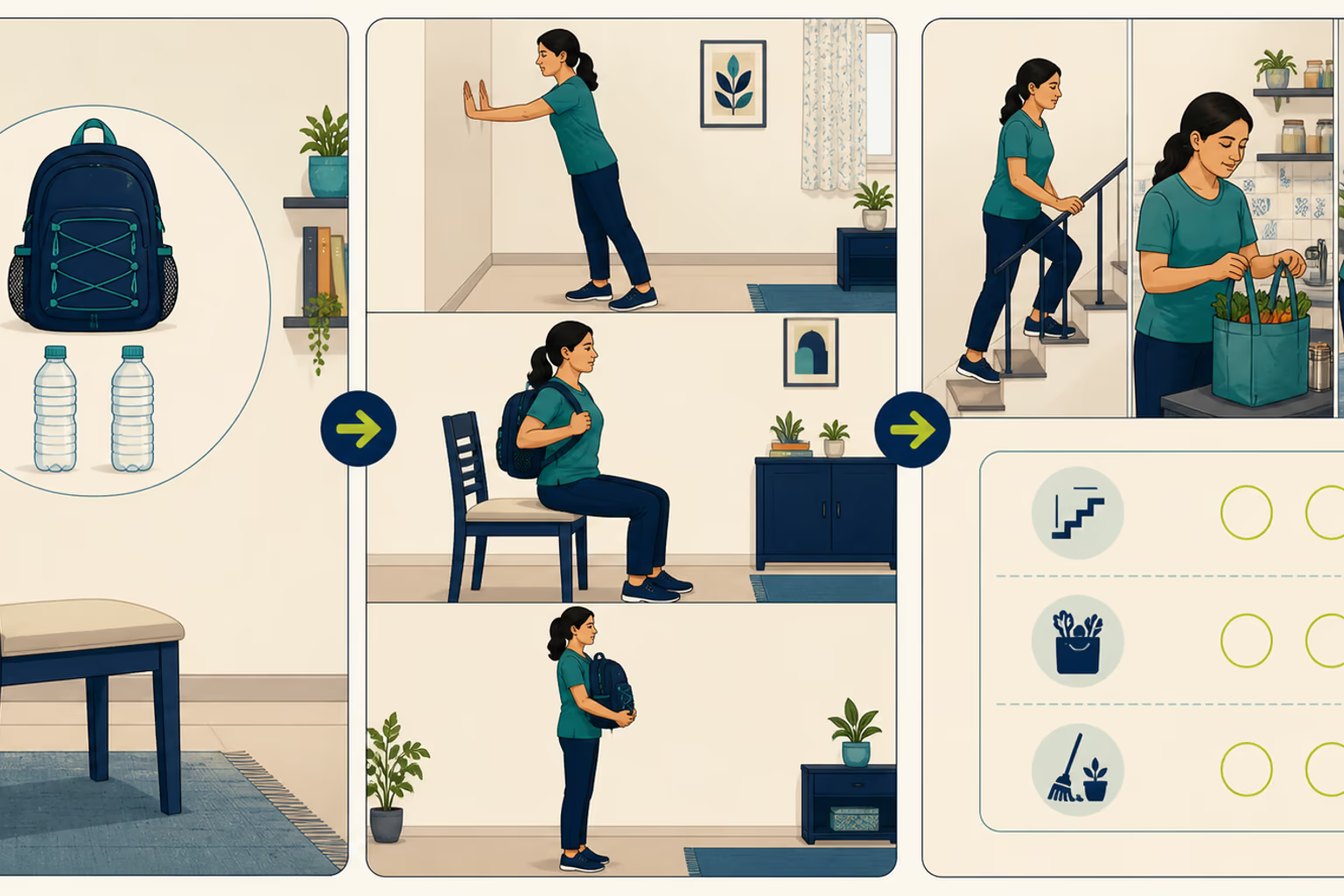
Deconditioning is a loss of baseline strength or endurance due to inactivity. It is common for adults who have spent years in sedentary jobs, experienced long periods of rest, or fallen out of a routine. You might feel winded climbing stairs or notice that carrying groceries feels heavier than before.
Medical concerns involve symptoms suggesting an underlying health issue. While deconditioning is a gradual process, medical issues often present with acute or alarming signals. If your physical capacity drops rapidly over days or weeks, or if weakness is paired with dizziness, chest pressure, or shooting pain, you are dealing with a medical situation rather than a fitness goal.
Any amount of physical activity is better than none, and muscle strengthening benefits everyone, but it must be approached from a baseline of safety. If you are unsure, consult a medical professional to rule out conditions that exercise alone cannot address.
Red flags that require a doctor first
Before you begin a new movement routine, screen your body for red flags. These indicators suggest your body is not ready for the stress of exercise and requires a clinical evaluation first.
- Sudden loss of function: If you were able to stand from a chair easily last week but find it impossible today, this is a sudden change that warrants a medical visit.
- Sharp or shooting pain: Muscle soreness is a normal part of building strength, but sharp, stabbing, or radiating pain during movement is a warning sign.
- Persistent, unexplained fatigue: If you feel exhausted even after a full night of sleep and are not recovering from daily activities, you should investigate this with your GP.
- Dizziness or lightheadedness: If movement triggers a loss of balance or a spinning sensation, stop immediately and seek professional advice.
- Known health conditions: If you have a history of heart, lung, or joint issues, you should always clear a new exercise plan with your doctor.
Ignoring these signs to "push through" a workout is a common failure mode. It often leads to injury or the worsening of a condition that might have been easily managed if caught early.
The 'stop and assess' checklist
Use this guide to determine whether you are ready for a guided practice or if you need to schedule a doctor’s appointment first.
- Check for sharp, shooting, or persistent pain during movement.
- Note if weakness appeared suddenly (over days) versus gradually (over months).
- Observe if you have lost the ability to perform basic tasks like standing from a chair.
- If any of the above are true, schedule a visit with your GP before starting a new routine.
- If you are cleared for activity, start with a low-intensity, guided session to build baseline capacity.
How a trainer fits into your recovery
Once a medical professional clears you for activity, a trainer helps you build capacity safely. A common mistake is attempting high-intensity routines when your body requires a gentle, restorative approach.
Prime Tempr helps readers compare strength, yoga, and mobility trainers who turn general goals into an appropriately progressed practice. A qualified trainer does not diagnose medical conditions; they take the information provided by your doctor and translate it into a sustainable plan. They understand that for many adults, the goal is the ability to navigate a household, manage a commute, or stay independent as they age.
A trainer provides the structure that prevents the guesswork of self-led exercise. They help you scale movements to your current level, ensuring that you are not doing too much, too soon. This partnership,medical clearance followed by guided training,is the most reliable way to turn weakness into functional strength.
Starting your strength journey safely
If you have been cleared for activity, the goal is to work toward the recommended 150 to 300 minutes of moderate aerobic activity and muscle strengthening on at least two days a week. However, you do not need to hit these numbers on day one.
Start with a minimum version of movement:
- The 5-minute baseline: Choose one simple movement, such as standing up from a chair without using your hands, and repeat it five times. Do this twice a day.
- The normal version: Once the 5-minute baseline feels routine, add a 15-minute guided session focusing on basic mobility and light resistance, such as bodyweight squats or wall presses.
- The next step: Find a yoga teacher or a mobility specialist who understands your specific constraints. Look for someone who prioritizes functional movement over intense athletic performance.
Progress is not about intensity or a perfect streak. It is about consistency and listening to your body. If a movement causes pain or unexpected fatigue, stop immediately, record the sensation, and consult a medical professional before adjusting the routine. This is not a sign of failure; it is a sign that you are taking your long-term health seriously.
For more information on building strength that supports your daily life, visit our Strength for Everyday Life resource hub.
Sources
Watch alongside this guide
Functional training explained
This ACE Fitness overview adds visual context for linking strength practice to everyday tasks while the article provides the more specific home progression.
The YouTube player stays unloaded until you choose to watch. Loading it connects to YouTube and may allow that service to process usage data.