Is Your Household Object Safe for Exercise?
Use this safety checklist to determine if your household items provide a stable foundation for strength training.
https://primetempr.com/blog/is-your-household-object-safe-for-exercise
A household object is unsafe for exercise if it lacks stability, has unpredictable weight distribution, or prevents a secure, ergonomic grip. While water bottles or bags offer a convenient start, they are not designed for repetitive movement. If an object feels awkward, leaks, or forces your joints into unnatural positions, stop using it and reassess your approach.
Any amount of physical activity is better than none, and muscle strengthening benefits everyone. The goal is to work toward 150 to 300 weekly minutes of moderate aerobic activity and muscle strengthening on at least two days. However, your equipment choice should support this goal rather than introduce unnecessary risk.
The reality of improvised weights
Many people use household tools to build strength for daily tasks and independence. Using a heavy book or a jug of water can feel like a practical way to avoid gym costs or intimidation.
The primary risk occurs when you mistake the familiarity of a household item for its suitability as a tool. A plastic jug may hold weight, but a thin handle or sloshing liquid shifts the center of gravity mid-movement. This forces your muscles and joints to compensate for instability, which can lead to strain rather than strength gains. If you focus more on keeping the object from slipping than on your form, the object is not suitable for your practice.
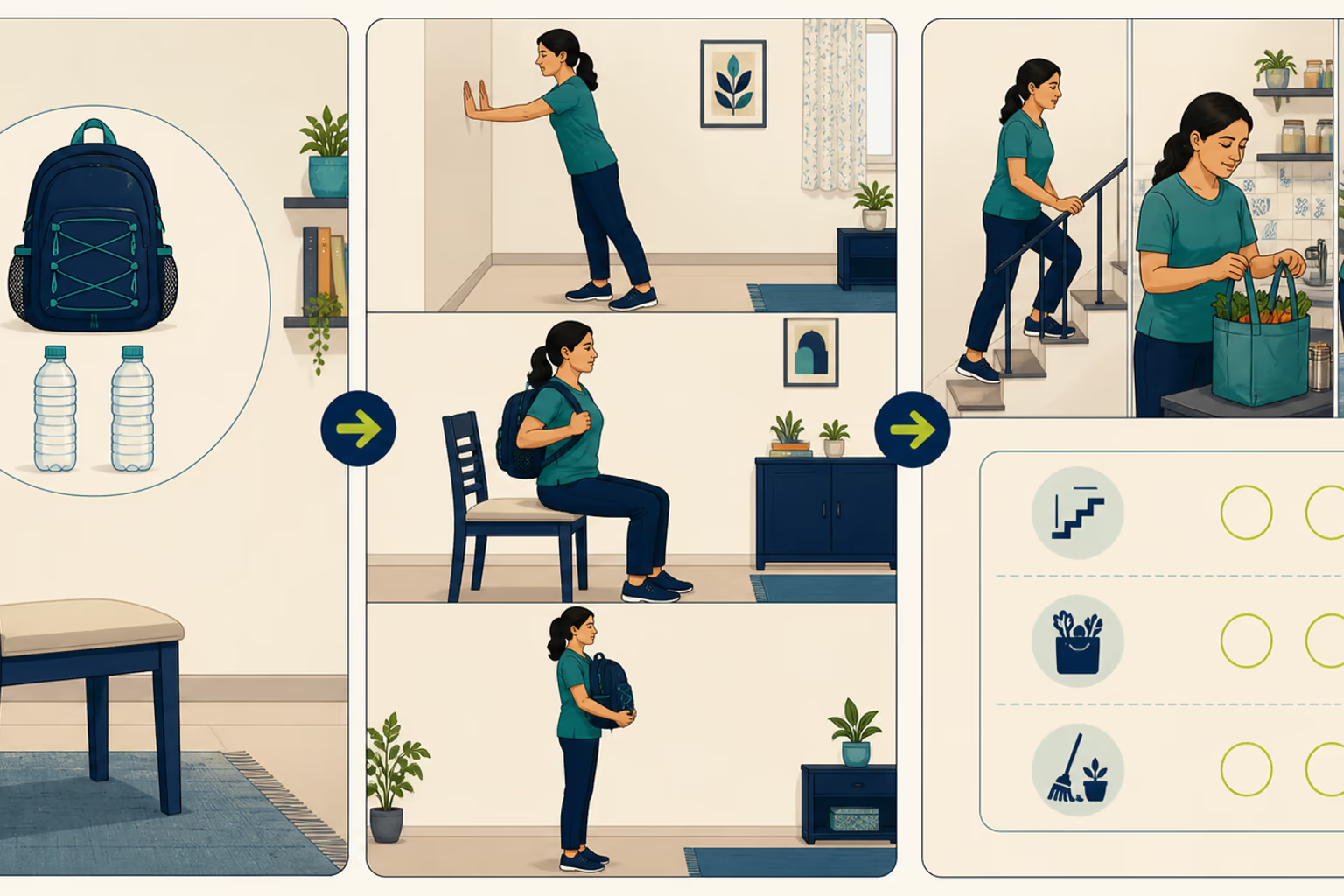
Three signs your equipment is unsafe
To keep your movement practice sustainable, evaluate your chosen objects against these three criteria before every session:
- Lack of stability: If the object shifts, leaks, or has loose parts, it is inherently unstable. An unstable object forces your body to react to the equipment rather than controlling the movement.
- Unpredictable weight: If the weight is not fixed,such as water moving inside a container or items shifting within a bag,it creates inconsistent resistance. This makes it difficult to track your progress and increases the risk of sudden, jerky movements.
- Poor ergonomic grip: If the object is too large, too slippery, or has sharp edges, it will compromise your grip. Overestimating your grip strength is a common failure mode that leads to dropped items and potential injury.
If you notice these signs, stop the movement immediately. Set the object down and try the exercise without weight or with a more stable, smaller alternative. If you still feel discomfort, prioritize your safety over the intensity of the workout.
Safety checklist for household weights
Use this guide before you begin any movement to ensure your environment and tools are ready for a safe session:
- Check for structural integrity: Ensure there are no cracks, leaks, or loose parts.
- Ensure a secure, non-slip grip: Test the object in your hands to confirm you can hold it firmly without strain.
- Verify weight distribution: Confirm the weight is evenly distributed and does not shift during movement.
- Confirm size appropriateness: Ensure the object size allows for a full, safe range of motion without hitting your body or furniture.
- Test with zero weight: Perform the movement without the object first to ensure your form is stable and your joints feel comfortable.
The trade-offs of home-based strength
While improvised weights are accessible, they have clear trade-offs. Household items lack the ergonomic design of professional equipment, which is engineered to distribute load safely across your joints. Improvised weights are harder to progress incrementally. Standard gym gear allows for small, measurable weight increases, whereas household items limit you to what is on hand, making it difficult to follow a consistent, progressive plan.
Safety is more important than the intensity of your workout. If your equipment limits your ability to perform a movement with proper form, you have outgrown the improvised approach.
When to seek professional guidance
If you frequently question the safety of your equipment or struggle to progress, consider external support. Prime Tempr helps readers compare strength, yoga, and mobility trainers who can turn general everyday goals into an appropriately progressed practice.
Working with a trainer allows you to move beyond the limitations of improvised tools. A professional can help you design a routine that fits your specific home environment, whether you are in a small apartment or a busy household. They provide the structure needed to build strength safely, ensuring your practice remains a tool for independence rather than a source of injury.
If you are ready to move toward a more structured, sustainable routine, you can build useful strength with guidance by exploring our directory of qualified professionals. For more on how to integrate these habits into your daily life, see our guide on Strength for Everyday Life.
Sources
Watch alongside this guide
Functional training explained
This ACE Fitness overview adds visual context for linking strength practice to everyday tasks while the article provides the more specific home progression.
The YouTube player stays unloaded until you choose to watch. Loading it connects to YouTube and may allow that service to process usage data.