Integrating Restaurant Meals into Your Normal Week
Learn how to enjoy restaurant meals without the cycle of guilt, restriction, or unnecessary compensation for your health.
https://primetempr.com/blog/integrating-restaurant-meals-into-your-normal-week
The pressure to "make up" for a restaurant meal often creates more stress than the meal itself. When you view a social outing as a disruption that requires "compensation",such as skipping your next meal or pushing yourself through an intense, unplanned workout,you disrupt the very rhythm that supports your long-term health. A restaurant meal is simply one event in your week; it does not require a corrective response.
Prime Tempr connects general food and hydration education to trainer-led practice while clearly separating it from individualized nutrition and medical care. By focusing on your overall pattern rather than a single plate, you can maintain a sustainable approach to eating that respects both your social life and your physical well-being.
The trap of compensation
The "guilt-restriction" cycle often begins when we label a restaurant meal as a "cheat" or a "mistake." This mindset triggers a reactive behavior where you might skip breakfast the next morning or attempt to "burn off" the calories with excessive movement.
This approach fails because it treats your body like a machine that needs constant recalibration, rather than a system that thrives on consistency. When you restrict intake after eating out, you are more likely to experience intense hunger later, which can lead to overeating. This cycle creates a rollercoaster of energy levels and mood, making it difficult to maintain a steady, healthy routine. Instead of viewing the meal as a deviation, recognize it as a normal part of a varied life.
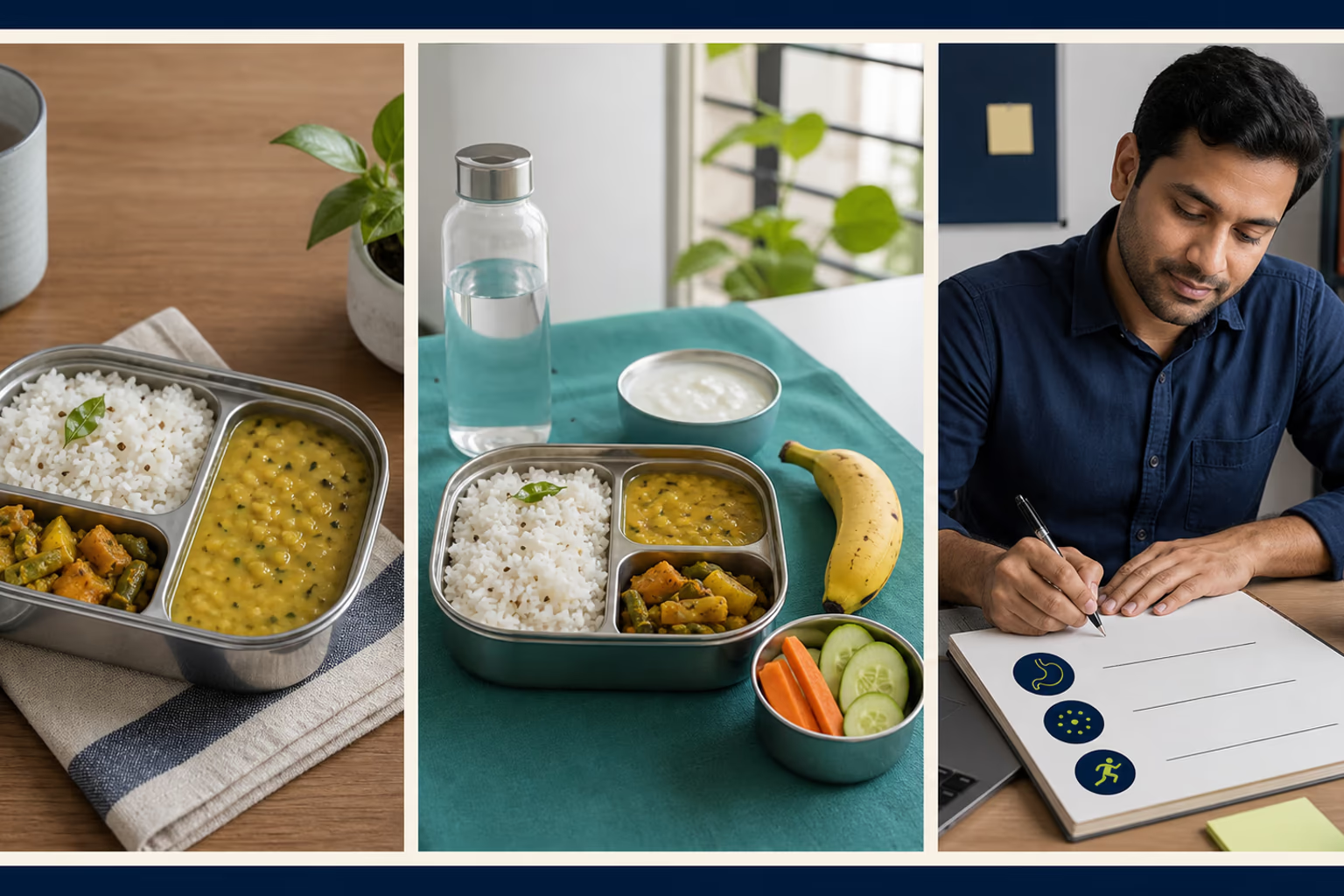
Focus on the pattern, not the plate
According to the Dietary Guidelines for Indians 2024, the ICMR-NIN recommends variety across familiar food groups, safe food and water, attention to labels, physical activity, and context-appropriate eating patterns. Your health is determined by the cumulative effect of your choices over weeks and months, not by the specific composition of one dinner or lunch.
Healthy diets vary by culture and available foods; adequacy, balance, moderation, and diversity matter more than one universal menu. If you eat a meal at a restaurant that is higher in salt, sugar, or fat than your usual home-cooked food, your body is equipped to process that variety. The key is to return to your standard eating rhythm as soon as the next meal. There is no need to "balance" the scales by depriving yourself.
Maintaining your rhythm
The most effective way to integrate restaurant meals into your life is to keep your non-negotiable habits consistent. This includes your hydration and your movement routine.
Hydration as a constant
Regardless of what you ate, your hydration needs remain a priority. Keep a water bottle nearby and continue your usual intake throughout the day. Often, we mistake thirst for hunger or feel lethargic after a heavy meal; proper hydration helps you feel more grounded and ready to return to your normal routine without needing to overthink your next meal.
Movement and yoga practice
If you have a scheduled yoga practice or a walk planned for the day after a restaurant meal, keep that appointment. Do not increase the intensity of your practice to "punish" yourself for the previous night. If you feel sluggish, scale the intensity down to a restorative session, but do not skip the movement entirely. Consistency in your practice,even when it is gentle,is far more beneficial than sporadic, high-intensity efforts driven by guilt.
The 'next meal' reset
When you find yourself overthinking a restaurant meal, use this reflection tool to guide your next steps. This is not a set of rules, but a way to return to your baseline.
- Acknowledge the meal as a social or personal choice, not a failure.
- Return to your standard hydration routine immediately.
- Plan your next meal based on your usual hunger, not on "making up" for the previous one.
- Keep your scheduled movement or yoga practice as planned, regardless of what you ate.
This process helps you shift your focus from "damage control" to long-term consistency. By trusting your body’s hunger signals rather than tracking every calorie, you remove the friction that often makes healthy living feel like a chore.
Your next step
Sustainable habits are built through practice and patience, not through perfection. If you are looking for more guidance on how to move your body in a way that feels supportive rather than punitive, you can explore practical wellness guidance through our network of trainers.
For those interested in how to balance traditional Indian home cooking with modern lifestyle demands, Beyond Calorie Counting: A Practical Guide to the Indian Plate offers a deeper look at how to approach your daily meals without the stress of counting. Remember, your goal is to find a rhythm that you can sustain for the long term, which includes enjoying meals with family and friends without the need for compensation.
Watch alongside this guide
A healthy diet, a healthier world
This World Health Organization overview complements the Indian meal examples with broad principles of variety, balance and context rather than a rigid menu.
The YouTube player stays unloaded until you choose to watch. Loading it connects to YouTube and may allow that service to process usage data.