How Yoga and Ayurveda Became Connected: History, Context, and Boundaries
Examine the historical ties between yoga and Ayurveda, their distinct aims, and how to navigate both traditions safely.
https://primetempr.com/blog/how-yoga-and-ayurveda-became-connected-history-context-and-b
Yoga and Ayurveda share historical roots in ancient Indian traditions and both view wellness holistically, but they function as distinct disciplines with different primary aims. One focuses on mental and physical practice, while the other centers on traditional medical care. Readers often hear yoga and Ayurveda spoken of as a single package, yet feel confused about how the two systems actually connect historically, philosophically, and practically without crossing into medical claims.
Appreciating historical connections requires holding nuance rather than looking for a single combined product or cure. Keeping cultural study separate from medical treatment means you must coordinate health decisions with licensed professionals rather than wellness guides. Prime Tempr helps readers discover teachers who can explain traditional context while the learning library keeps cultural education separate from diagnosis, treatment and product claims.
Shared Roots in Ancient Indian Traditions
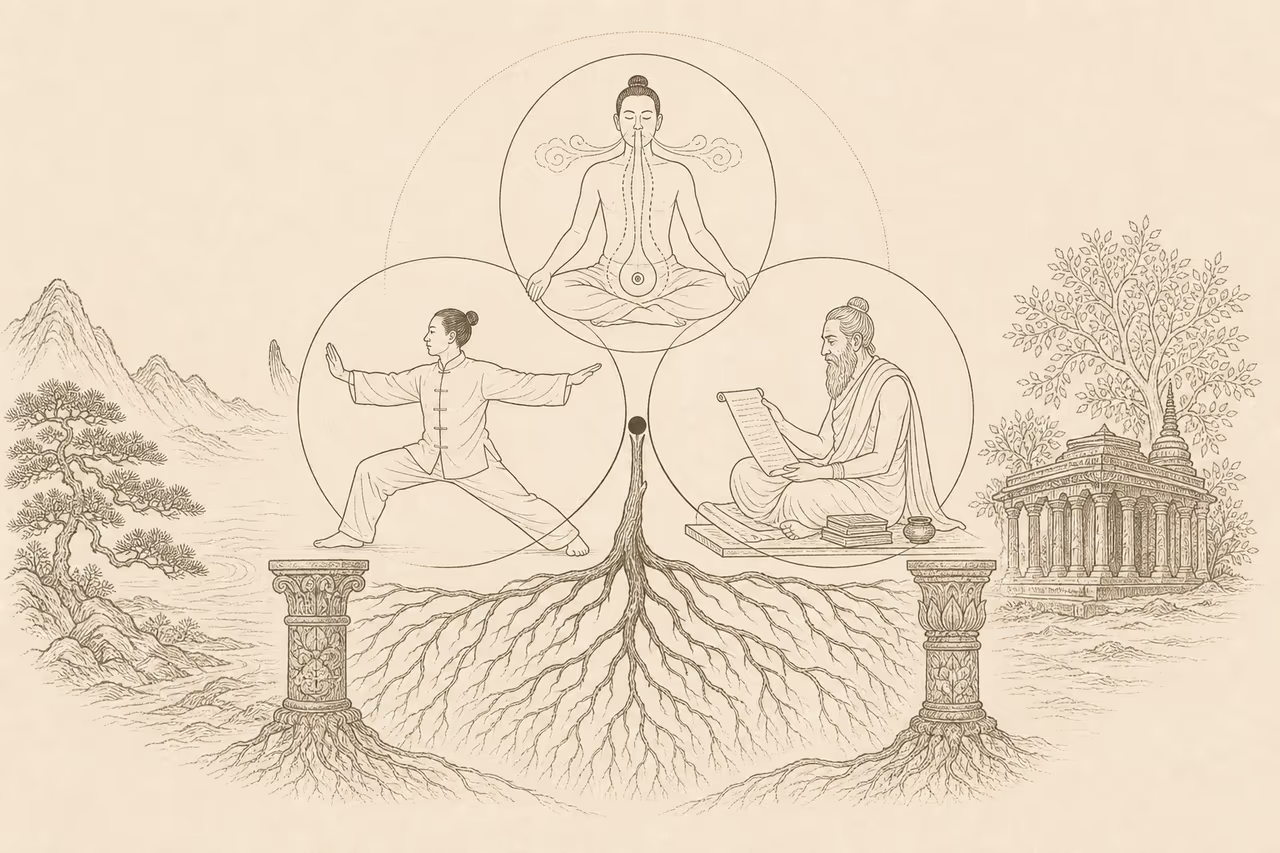
Yoga and Ayurveda emerged from overlapping philosophical soil in ancient India, sharing foundational concepts about the nature of the mind, body, and daily conduct. Both systems developed within traditions that viewed human well-being as interconnected with the surrounding environment, seasons, and daily habits. Historically, classical texts often referenced both disciplines as complementary paths for cultivating awareness and physical balance.
This shared heritage leads many modern wellness spaces to present them together. However, sharing historical origins does not mean the two practices are interchangeable or that one requires the other for daily physical movement.
Distinct Disciplines: Practice Versus Traditional Medicine
While yoga focuses on physical postures, breath control, and meditative inquiry, Ayurveda functions as a traditional Indian medical system that addresses diagnosis, dietary therapy, and herbal remedies. Yoga is primarily a disciplined method of self-inquiry and physical conditioning. Ayurveda, by contrast, is a comprehensive framework for managing health through individualized herbal regimens, seasonal routines, and internal remedies.
Understanding this division prevents confusion when navigating wellness content. Practicing yoga poses or breathwork does not constitute an Ayurvedic medical treatment, and studying traditional philosophy does not require adopting specific clinical therapies.
Safety Boundaries and Evidence Limits
Exploring traditional healing systems requires clear boundaries regarding scientific evidence and physical safety. Ayurveda is a traditional Indian medical system; evidence for many health uses is limited, some preparations may contain harmful metals, and care should be coordinated with a health professional. Self-care information should support informed choices and should not be used to delay appropriate professional care.
Failure modes often include assuming that practicing yoga automatically requires or includes formal Ayurvedic medical treatment, treating traditional wellness concepts as clinical diagnoses, or overlooking safety concerns regarding herbal preparations that may contain heavy metals. If traditional explanations feel overly abstract or confusing, separate your physical yoga practice from any lifestyle or health products, and consult a qualified healthcare professional for medical needs.
Choosing Proportionate Next Steps
Navigating traditional systems responsibly means appreciating cultural history while maintaining clear boundaries around medical care. You can explore philosophy and physical practice through knowledgeable instructors without conflating cultural education with clinical treatment.
Prime Tempr helps readers discover teachers who can explain traditional context while the learning library keeps cultural education separate from diagnosis, treatment and product claims. To help structure your exploration, consider the following reflective steps.
Ayurveda and Yoga Context Reflection
- Write down what you want to learn about traditional philosophy versus what requires physical fitness or medical guidance.
- Verify that any herbal or dietary product you consider is discussed with a qualified health professional.
- Explore teacher-led classes that respect cultural roots without making medical promises.
You can also read more about Ayurveda Foundations, explore What Is Ayurveda? Origins, Context, and Safety Boundaries, or Find a teacher and ask better questions.
Sources
- Ayurvedic Medicine: In Depth (opens in a new tab), National Center for Complementary and Integrative Health
- Self-care for health and well-being (opens in a new tab), World Health Organization
Watch alongside this guide
Herbs at a glance: how to check safety
This official safety resource supports the article's boundary between traditional context and medical or product claims. Source: National Center for Complementary and Integrative Health. This optional video is context, not evidence or personal instruction.
The YouTube player stays unloaded until you choose to watch. Loading it connects to YouTube and may allow that service to process usage data.