How Women Shaped the Modern Yoga Classroom
Discover how women adapted yoga into an accessible, living tradition that fits your daily life and modern needs.
https://primetempr.com/blog/how-women-shaped-the-modern-yoga-classroom
Modern yoga is a living, evolving tradition. Women have profoundly shaped it by adapting and teaching the practice to meet the needs of everyday students. If you feel disconnected by historical narratives that focus exclusively on male lineages, you are observing a shift in how yoga is transmitted today.
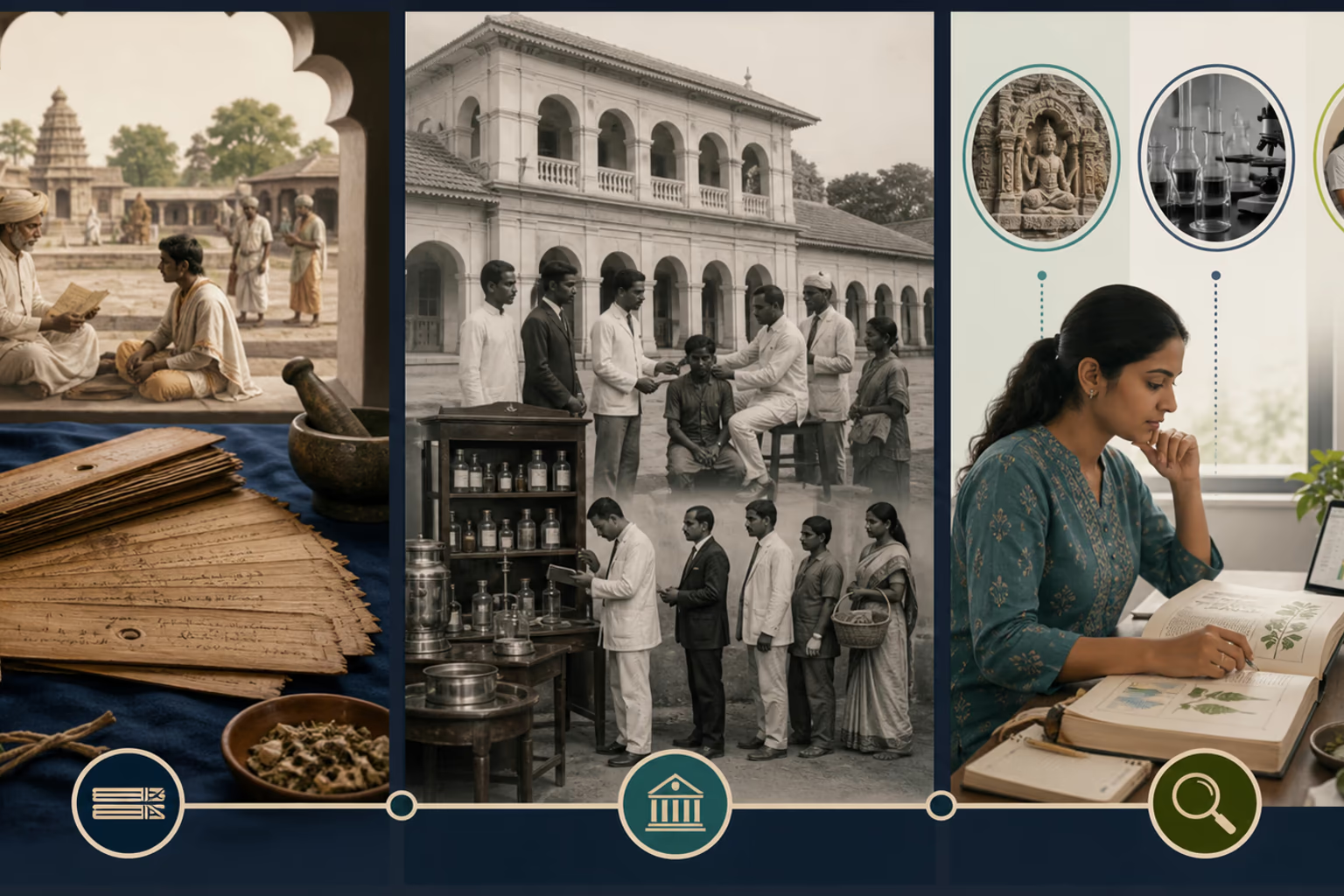
Yoga is a diverse living Indian tradition transmitted through teachers, communities, institutions, texts and modern media. By viewing it as a living tradition rather than a fixed set of ancient rules, you can understand why your local class differs from textbook illustrations. This evolution is a necessary adaptation that makes the practice sustainable for people managing desk jobs and busy schedules.
Yoga as a living tradition
The idea that yoga must remain unchanged to be valid is a misconception. Yoga has always adapted to its environment. The Ministry of Ayush protocol presents one contemporary public-practice sequence, general guidelines and a brief account of yoga traditions; it is not the only form of yoga.
When you enter a studio, you participate in a lineage filtered through generations of interpretation. Women were central to this process in the 20th and 21st centuries, transitioning yoga from specialized, secluded practices into the accessible formats seen today. They moved the focus from rigid, exclusionary frameworks to inclusive, health-oriented instruction that prioritizes the student's current physical reality.
The shift in participation and teaching
Historically, many yoga traditions were transmitted in contexts that excluded women. However, the modern yoga landscape is defined by the influence of female teachers who recognized that the benefits of yoga,such as stress relief and physical mobility,should be available to everyone, regardless of gender or social standing.
These teachers did not just replicate what they were taught; they innovated. They developed modifications for different body types, integrated yoga into community settings, and emphasized the importance of the student-teacher relationship over the strict adherence to historical dogma. This shift is why you can now find classes that fit into a lunch break or a quiet corner of a multigenerational household. The "modern" yoga you practice is the result of this ongoing, collaborative effort to keep the tradition relevant.
Practical steps for the modern student
Reconciling historical narratives with your local class experience can be challenging. You might wonder if your practice is "real" because it doesn't match a specific historical image. The answer lies in the quality of instruction. Yoga styles and physical demands vary; qualified instruction and appropriate modification can reduce avoidable risk.
When you look for a teacher, focus on their ability to adapt the practice to your needs. A good teacher understands that their role is to guide you through a living tradition, not to enforce a rigid, unchanging script.
Prime Tempr helps readers continue from a concise history lesson to teacher and school profiles where lineage, training and contemporary interpretation can be examined more closely. You can explore teachers and schools to find someone whose approach aligns with your goals.
Evaluating your yoga path
To move from historical curiosity to a sustainable practice, use this reflection guide to assess your current path.
- Identify one goal for your practice, such as stress relief, physical mobility, or building community.
- Observe if your current class allows for modifications that fit your body, your energy levels, and your schedule.
- Research one local teacher or school to understand their specific training background and their philosophy on teaching.
- Commit to a minimum version of practice,perhaps ten minutes of movement or breathing,that you can maintain during busy weeks.
If you struggle to find a class that fits, remember that the most "authentic" practice is one you can actually sustain. If a particular style feels disconnected from your daily life, it is perfectly acceptable to look for a teacher who prioritizes accessibility and safety over performance.
For more on how to navigate these choices, see our Yoga as a Living Tradition: A Student’s Guide.
Trade-offs and recovery
Historical accounts are often fragmented. We must balance traditional narratives with documented modern shifts. Not every teacher has a direct, unbroken lineage to ancient texts, and that is acceptable for a sustainable modern practice.
If you feel overwhelmed by the complexity of yoga history, return to the basics:
- The Stop Rule: If a pose or breathing technique causes sharp pain or significant distress, stop immediately. A qualified teacher will always encourage you to prioritize your safety over completing a sequence.
- The Scaling Rule: If you have limited time, focus on the most essential movements or breathing exercises that provide you with the most benefit. A 15-minute practice performed consistently is more effective than a 90-minute practice that you only attend once a month.
- The Reality Check: If your local class ignores your physical limitations or pressures you to perform beyond your capacity, it may not be the right environment for you. Seek out instructors who emphasize individual modification.
By focusing on these practicalities, you honor the living nature of yoga. You are a participant in a tradition that continues to grow and change with every person who steps onto the mat.
Sources
Watch alongside this guide
What is yoga?
This Oxford Centre for Hindu Studies introduction offers historical and philosophical context that readers can compare with the article's specific period or question.
The YouTube player stays unloaded until you choose to watch. Loading it connects to YouTube and may allow that service to process usage data.