How to Wind Down in a Noisy Home
Build a sensory buffer using scalable movement and breathing to signal rest, even in a busy household.
https://primetempr.com/blog/how-to-wind-down-in-a-noisy-home
If you live in a busy household, the advice to "create a quiet, dark sanctuary" for sleep can feel like a taunt. When your home is filled with the sounds of family, roommates, or street activity, the expectation of silence often becomes another source of stress. A wind-down routine in a noisy home is not about achieving external silence; it is about creating a sensory buffer that signals rest to your nervous system despite the environment.
Prime Tempr helps readers compare trainers who respect recovery, offer scalable sessions, and provide continuity when rigid routines fail. By focusing on what is possible within your constraints, you build a sustainable practice that fits your life rather than demanding an impossible environment.
Why your wind-down needs to be scalable
Adult sleep needs vary, and while consistent schedules and a quiet, dark room are ideal, they are not always accessible. When your environment is loud, trying to force a "perfect" routine often leads to frustration. If you feel like a failure because you cannot achieve total stillness, you are likely adding to the very stress you are trying to resolve.
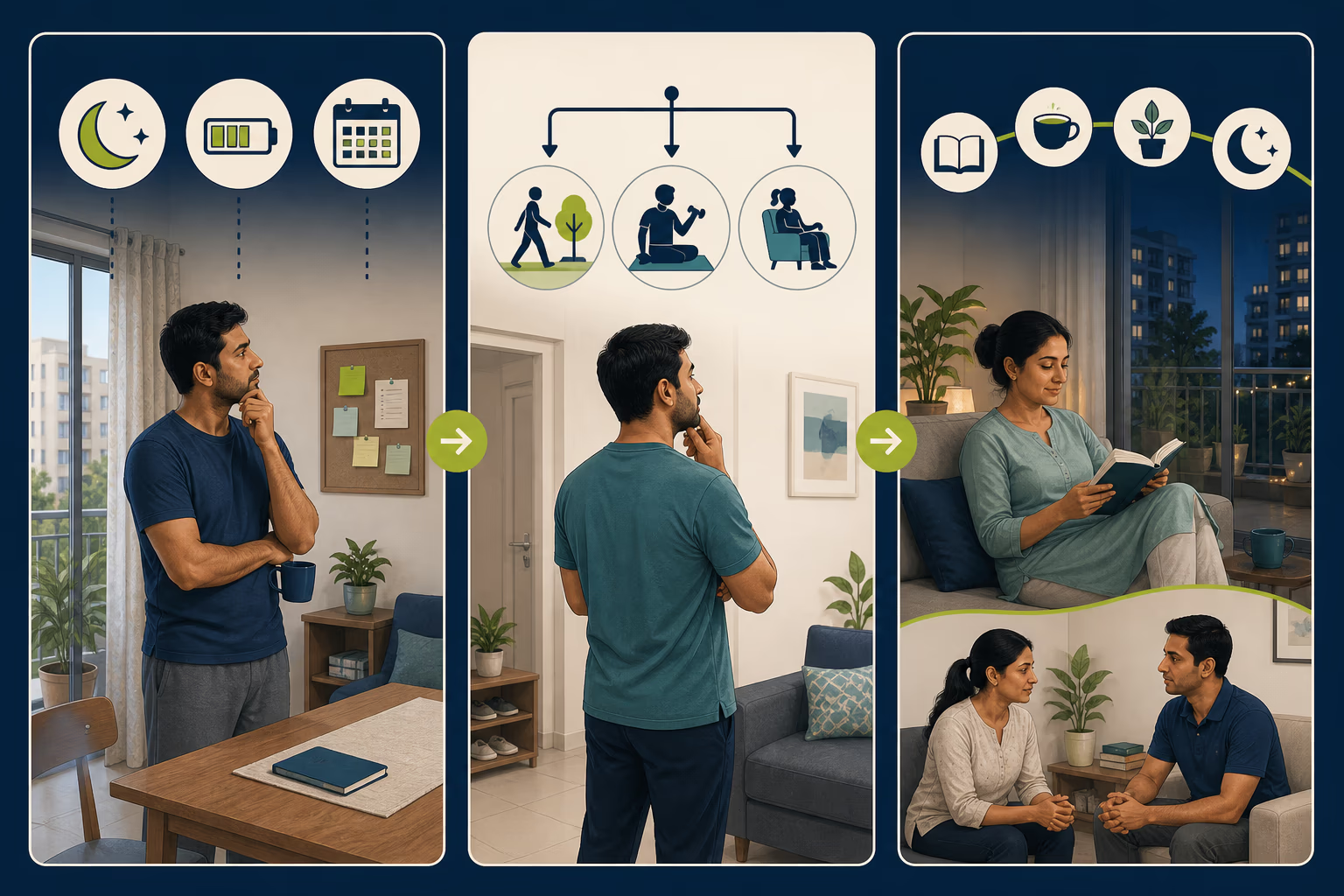
Scaling your routine means having a version for every energy level and time constraint. On a quiet night, you might have twenty minutes. On a chaotic night, you might have two. The goal is consistency in the signal you send to your body, not the duration of the practice.
The minimum viable wind-down
When noise levels are high, your nervous system may stay on alert. You can interrupt this cycle with a simple, seated breathing practice. This requires no yoga mat, quiet room, or special equipment.
- Find a chair where you can sit with your feet flat on the floor.
- Allow your spine to be upright but not rigid.
- Close your eyes or soften your gaze toward the floor.
- Focus entirely on the rhythm of your breath. As you inhale and exhale, notice the sensation of air moving through your nostrils.
This practice anchors your attention. By focusing on your breath, you create a mental buffer between your internal state and the external noise.
Building a sensory buffer
You cannot control the volume of your home, but you can control your sensory input. If external noise is distracting, use tools to focus inward. This might include earplugs, noise-canceling headphones with ambient sounds, or choosing a corner of the room that feels private.
Relaxation approaches include breathing, guided imagery, and progressive relaxation. These techniques help you shift focus away from external stressors. However, these techniques should not replace conventional care. If you experience persistent sleep issues or high stress that interferes with daily life, consult a healthcare professional.
Your scalable wind-down menu
Use this menu to choose a practice that fits your current environment and energy level. If a routine feels too demanding, scale back to the minimum version. Consistency is more effective for long-term recovery than occasional, high-intensity efforts.
| Level | Time | Practice |
|---|---|---|
| Minimum | 2 mins | Sit in a chair, focus on slow, rhythmic breathing to anchor your attention. |
| Moderate | 10 mins | Add gentle, seated neck and shoulder stretches to release physical tension. |
| Full | 20 mins | Combine breathing and stretching with a brain dump by writing down tomorrow's tasks. |
Next step: Find recovery-aware support to help you adapt these practices to your specific space and needs.
Safety and trade-offs
Be realistic about what these techniques can achieve. This routine does not guarantee sleep, as sleep is complex and influenced by factors like daytime activity and overall health. These techniques are not a replacement for conventional medical care for persistent sleep or stress disorders.
If you find yourself struggling to wind down despite consistent practice, or if your stress feels unmanageable, speak with a doctor. You can learn more about how to integrate movement and recovery into your life at Sleep, Stress and Real Workweeks.
When to seek professional support
While self-care routines are powerful, they have limits. If you notice symptoms such as persistent insomnia, chronic fatigue, or an inability to function during the day, these may be signs that you require more than a change in your evening routine.
Do not ignore persistent sleep issues. A medical professional can help determine if your sleep difficulties relate to underlying health conditions that require evidence-based treatment. Using these yoga-based techniques is a supportive measure, but it should never delay or replace necessary medical or psychological care.
Sources
Watch alongside this guide
Stress management
This short Mayo Clinic explainer gives the recovery discussion a practical health context. It does not promise sleep or replace care for persistent symptoms.
The YouTube player stays unloaded until you choose to watch. Loading it connects to YouTube and may allow that service to process usage data.