How to Welcome Beginners Into an Established Yoga Class
Welcome absolute beginners into ongoing yoga classes safely while protecting your class flow and professional scope.
https://primetempr.com/blog/how-to-welcome-beginners-into-an-established-yoga-class
Introducing an absolute beginner to an ongoing class can disrupt the flow, overwhelm the newcomer, and strain the teacher. When a new student joins a class with an established rhythm, teachers often instinctively stop the session to provide hands-on assistance. This approach isolates the beginner and frustrates regular attendees who lose their pacing.
Welcoming beginners into an established class requires clear pre-class communication, safe modification boundaries, and realistic scope. This approach avoids slowing down the entire room or forcing one class format to serve every physical limitation simultaneously. Effectively managing this dynamic preserves the experience for every person on the mat.
Setting Expectations Before the Mat
Clear communication before class begins prevents beginner overwhelm and stops minor confusions from turning into mid-session disruptions. Many beginners arrive without knowing what to expect from specific styles or pacing.
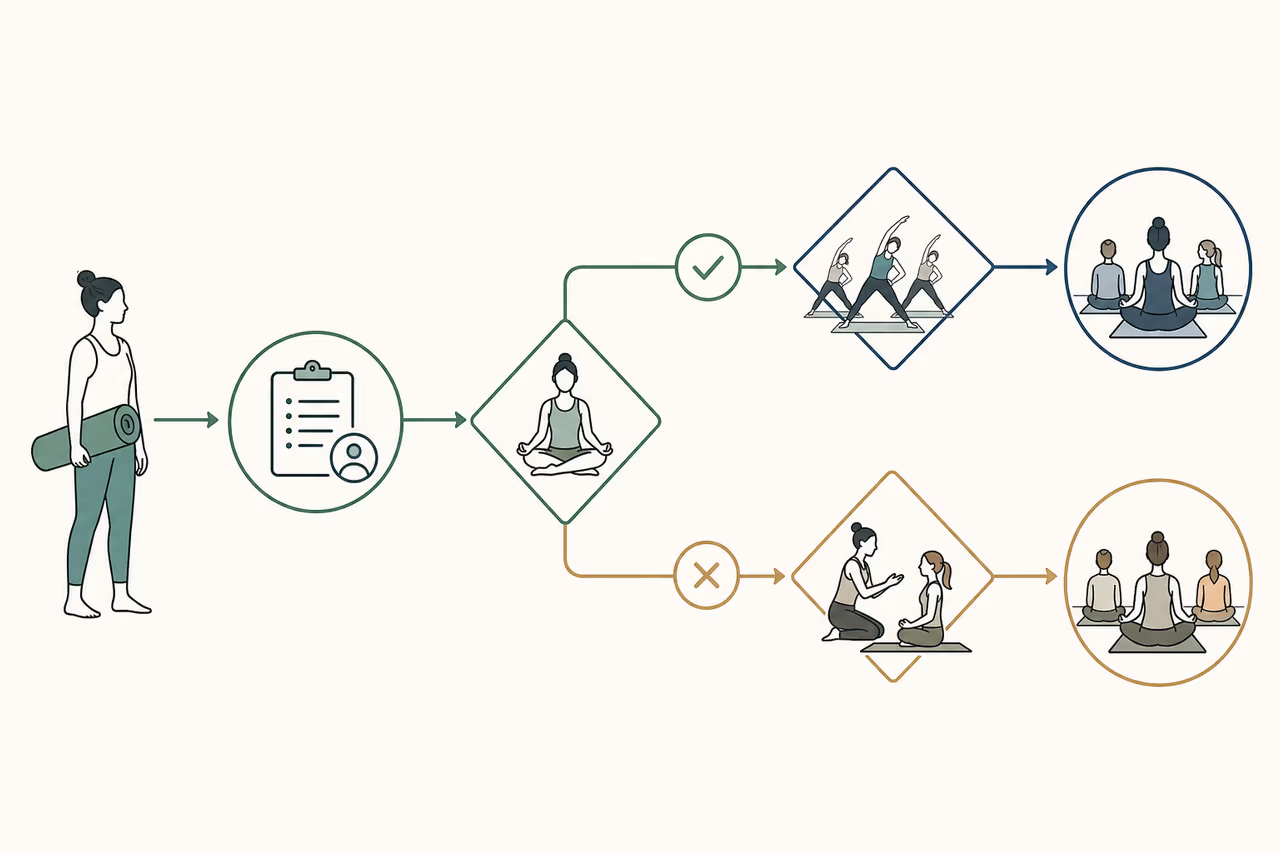
Instead of waiting for the first complex pose to discover a student lacks foundational experience, use a brief pre-class check-in. Ask arriving students about recent injuries, previous movement experience, and comfort levels with basic floor shapes. This private conversation establishes a welcoming tone without singling anyone out in front of the room. Clear class descriptions on your schedule also help set expectations, letting participants know whether an ongoing session assumes prior familiarity with basic postures and transitions.
Establishing Scope and Safety Boundaries
Every teacher operates within a specific training background, and recognizing the limits of mixed-level teaching is essential for professional safety. Yoga styles and demands vary widely, and qualified teaching combined with suitable modifications matters for safety.
Yoga teachers should teach within their training, experience and competence and refer students to qualified professionals when needs fall outside that scope. If an absolute beginner arrives with acute limitations or complex rehabilitation needs that exceed the capacity of a fast-paced or advanced group class, attempting to manage them on the fly creates unnecessary risk.
| Student Presentation | Recommended Teacher Response | Professional Boundary |
|---|---|---|
| Brand new to movement, mild stiffness | Offer foundational options and neutral rest positions | Keep instructions plain and avoid complex variations |
| Acute injury or severe mobility limit | Recommend a private session or suitable beginner series | Refer out when needs fall outside group teaching competence |
| Experienced practitioner visiting from another style | Give brief orientation to room pace and standard flows | Monitor integration without altering the main class flow |
If a beginner is clearly overwhelmed by the class pace, quietly guide them toward foundational options, use your professional scope to recommend a more suitable beginner series, and follow up privately after class. Accommodating absolute beginners in an advanced or fast-paced class inevitably dilutes the depth for regular attendees, and setting strict boundaries may mean turning away a drop-in student who needs one-on-one attention.
Offering Sustainable Options Without Stopping Flow
Instead of halting the entire room to fix a single alignment issue, integrate modifications smoothly into your verbal cues from the start. Designate one or two neutral foundational options for key peak poses before the sequence begins.
Keep your language plain and avoid assuming familiarity with Sanskrit anatomical terms or esoteric alignment cues. When you offer resting variations as a normal part of the sequence rather than a punishment for struggling, beginners feel empowered to take breaks without feeling inadequate, and regular students maintain their focus and internal rhythm.
Beginner Integration Checklist for Established Classes
Applying these strategies helps plan classes, manage room pacing, and maintain clear professional boundaries when new students attend an ongoing session.
- Review pre-class intake notes or ask about recent injuries before students enter the room.
- Designate one or two neutral foundational options for key peak poses.
- Set clear verbal boundaries at the start of class regarding resting and pacing.
- Keep language plain and avoid assuming familiarity with Sanskrit anatomical terms.
- Provide a clear referral or alternative recommendation if the class demands exceed the student's current experience.
Grow Your Teaching With Prime Tempr
Building a sustainable teaching practice relies on setting clear expectations before students ever step onto a mat. Prime Tempr gives teachers a storefront, free practice library and discovery profile where clear offers and responsible teaching information can become a coherent student journey. By directing prospective students to classes that match their actual experience level, you can spend less time managing mid-class disruptions and more time delivering focused, high-quality instruction. Explore our resources on Teaching Yoga Well and learn How to Offer Yoga Options Without Overwhelming a Class to refine your group teaching methods. Ready to establish your professional presence?
Sources
- Scope of Practice (opens in a new tab), Yoga Alliance
- Yoga: Effectiveness and Safety (opens in a new tab), National Center for Complementary and Integrative Health
Watch alongside this guide
An inclusive guide to yoga and meditation
This inclusive introduction gives teachers a concrete example of choice, clarity, and sensory-aware presentation. Source: Autism BC. This optional video is context, not evidence or personal instruction.
The YouTube player stays unloaded until you choose to watch. Loading it connects to YouTube and may allow that service to process usage data.