How to Use Water Containers as Adjustable Home Weights
Build foundational strength safely at home using adjustable water containers instead of buying expensive gym equipment.
https://primetempr.com/blog/how-to-use-water-containers-as-adjustable-home-weights
Water containers offer an accessible, adjustable way to build foundational home strength for daily tasks when paired with sensible handling and realistic load limits. Any amount of physical activity is better than none, all activity counts, and muscle strengthening benefits everyone. When you want to improve your functional independence, carry groceries easily, or maintain joint support without investing in dumbbells or visiting a crowded gym, everyday containers can fill the gap. Adults can work toward 150 to 300 weekly minutes of moderate aerobic activity and muscle strengthening on at least two days. Using household items provides a low friction entry point, provided you understand how to manage the fluid shift and avoid common handling errors.
Why water containers make practical home weights
Building strength at home does not require specialized metal weights. Many adults face barriers to gym access, including time pressure, travel constraints, or intimidation by heavy bodybuilding equipment. Household water jugs, jerry cans, or large bottles offer an immediate alternative. Muscle strengthening supports long-term physical resilience, helping with everyday movements like lifting, reaching, and standing up from a chair. Because you can empty or refill these containers at will, you can adjust the resistance to match your current capacity rather than committing to a fixed, heavy load.
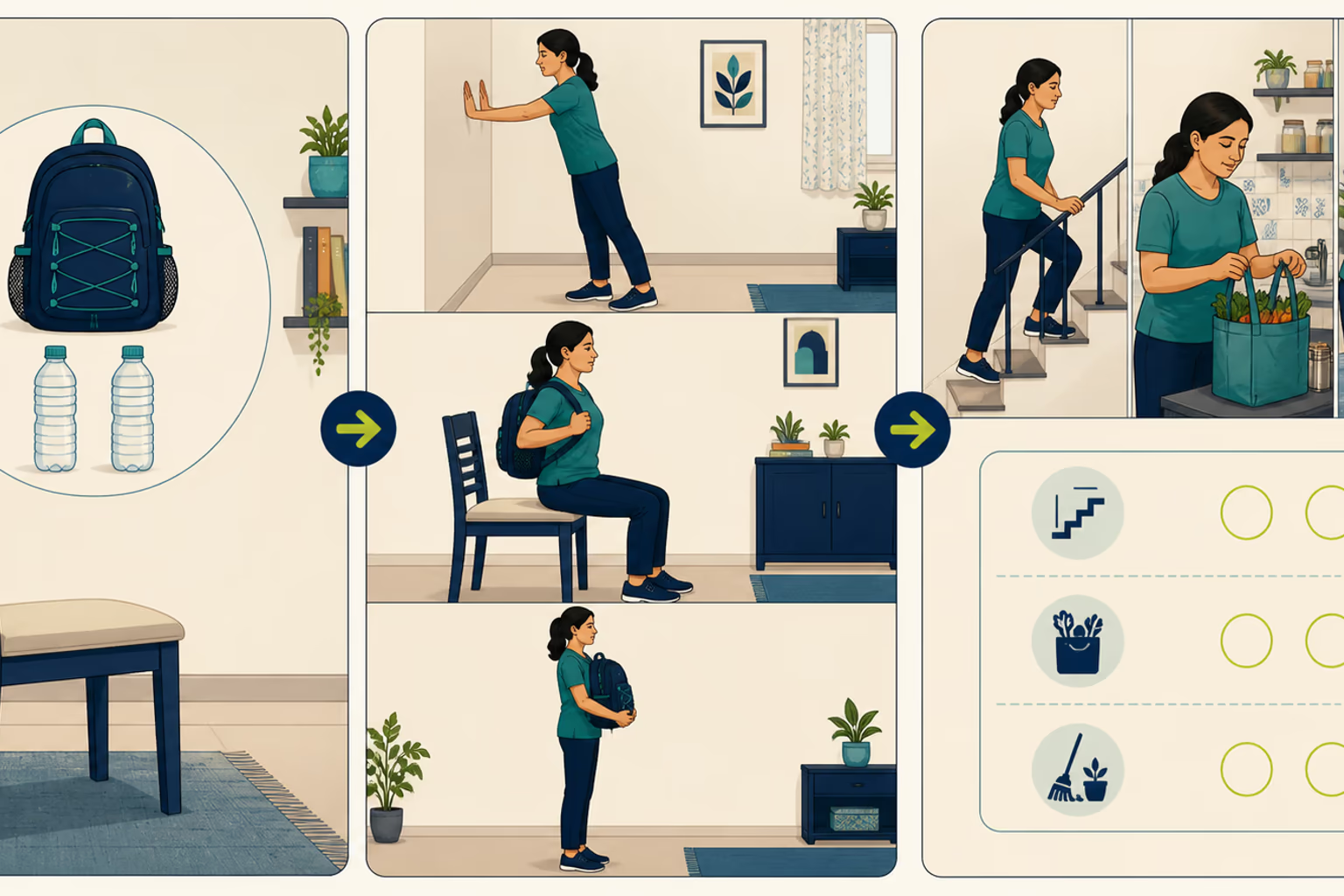
Choosing and adjusting your containers
Selecting the right container prevents awkward grips and unexpected spills during movement. Look for sturdy plastic jugs that feature molded, integrated handles rather than thin plastic necks or fragile screw-on loops. The handle should allow your entire hand to wrap securely without pinching your fingers or straining your wrist.
Filling containers partially lets you customize the weight. Start by filling a jug halfway rather than to the brim. This leaves room for the water to settle and keeps the total weight manageable while you learn the movement pattern. Always test the cap seal tightly before you lift, and wipe down the exterior so your grip does not slip mid-exercise.
Water container strength safety and setup checklist
- Select containers with sturdy, integrated handles rather than thin plastic necks.
- Test cap seals tightly before lifting to prevent sudden leaks or spills.
- Fill containers to a manageable level, such as half to three-quarters full, to control shifting water movement.
- Perform slow, deliberate repetitions to accommodate the fluid shift.
- Store filled containers safely out of foot traffic areas in your home.
Understanding trade-offs and fluid shift
While household water containers are convenient, they come with distinct physical trade-offs. Water shifts continuously during movement. This dynamic instability creates a moving center of gravity, which means a five-liter water jug often feels harder to control than a five-liter solid iron dumbbell. This shifting load requires you to use lighter starting weights than you might expect, focusing entirely on slow, controlled repetitions rather than speed.
Volume limits also restrict heavy progressive overload. Once you fill a standard jug completely, you cannot easily add more weight without switching to a larger container, which may become too bulky to hold comfortably. This makes water containers ideal for beginner general strength, endurance, and everyday movement preparation rather than advanced muscle building or heavy lifting.
If you fill containers too full, they become unstable and splash during movement, disrupting your balance. Choosing oversized jugs with awkward handles can strain your wrist or grip. Treat these makeshift weights as a practical starting point, but do not treat them as a replacement for professional coaching when managing chronic pain or recovering from an injury. If your grip or form slips, reduce the water volume immediately.
Next steps for guided strength practice
Independent home practice offers a great way to begin, but moving from general household routines to a structured regimen often benefits from personalized oversight. Prime Tempr helps readers compare strength, yoga and mobility trainers who can turn general everyday goals into an appropriately progressed practice. A qualified trainer can observe your movement patterns, suggest appropriate container sizes, and ensure your home routine aligns with your physical background and daily schedule.
Follow-along reflection
Use the prompts below to review the idea in context, without turning it into a diagnosis or a fixed rule.
Water container strength safety & setup checklist
- Fill containers to a manageable level (half to three-quarters full) to control shifting water movement.
Trade-offs to keep in view
- Water shifts during movement, creating dynamic instability that requires lighter starting weights than solid iron.
- Volume limits restrict heavy progressive overload, making this approach ideal for beginner general strength rather than advanced lifting.
If this approach does not fit
Start with smaller, half-filled bottles with secure caps, focus on controlled repetitions, and reduce the water volume immediately if your grip or form slips.
Questions to carry forward
- How do I adjust the weight of water containers safely?
- Which household water containers work best for strength exercises?
- What are the main limitations of using water weights compared to dumbbells?
- How can I incorporate water containers into a simple home routine?
- When should I consider seeking professional guidance from a trainer?
Keep learning
Ready for the next step? Strength for Everyday Life.
Sources
- Physical activity. World Health Organization. https://www.who.int/news-room/fact-sheets/detail/physical-activity (opens in a new tab)
- Top 10 Things to Know About the Physical Activity Guidelines. Office of Disease Prevention and Health Promotion. https://odphp.health.gov/our-work/nutrition-physical-activity/physical-activity-guidelines/current-guidelines/top-10-things-know (opens in a new tab)
- Physical activity (opens in a new tab)
- Top 10 Things to Know About the Physical Activity Guidelines (opens in a new tab)
Watch alongside this guide
Functional training explained
This ACE Fitness overview adds visual context for linking strength practice to everyday tasks while the article provides the more specific home progression.
The YouTube player stays unloaded until you choose to watch. Loading it connects to YouTube and may allow that service to process usage data.