How to Use One Yoga Mat of Floor Space for a Full Session
Complete a full strength and mobility session using only a single yoga mat in a small living space without leaving your perimeter.
https://primetempr.com/blog/how-to-use-one-yoga-mat-of-floor-space-for-a-full-session
A complete, effective movement session does not require an open room or expensive equipment. Staying within the boundary of a single yoga mat is enough to build strength and mobility when you sequence stationary transitions intelligently. If you want to move and build strength at home, your living space may feel limited to a single yoga mat footprint. Standard exercise advice often assumes an empty room or a dedicated studio, which leaves adults living in small or shared homes searching for realistic alternatives.
Any amount of physical activity is better than none, all activity counts, and muscle strengthening benefits everyone. This foundational principle means your square footage does not dictate the value of your practice. Adults can work toward 150 to 300 weekly minutes of moderate aerobic activity and muscle strengthening on at least two days, even if those minutes happen entirely within the borders of a standard rubber mat.
Why one Yoga mat is enough for a full session
You can complete a full movement session within a single yoga mat area by focusing on stationary loading, isometric holds, and vertical movement patterns instead of wide lateral travel. Small living spaces and shared apartments often present real obstacles, but floor space is rarely the primary constraint on your physical progress.
When you remove the expectation of an open perimeter, your attention shifts to alignment and control. A single mat provides an immediate tactile boundary. Within that rectangle, you can cycle through joint mobilizations, standing strength postures, balance challenges, and floor work without ever stepping onto the surrounding floor.
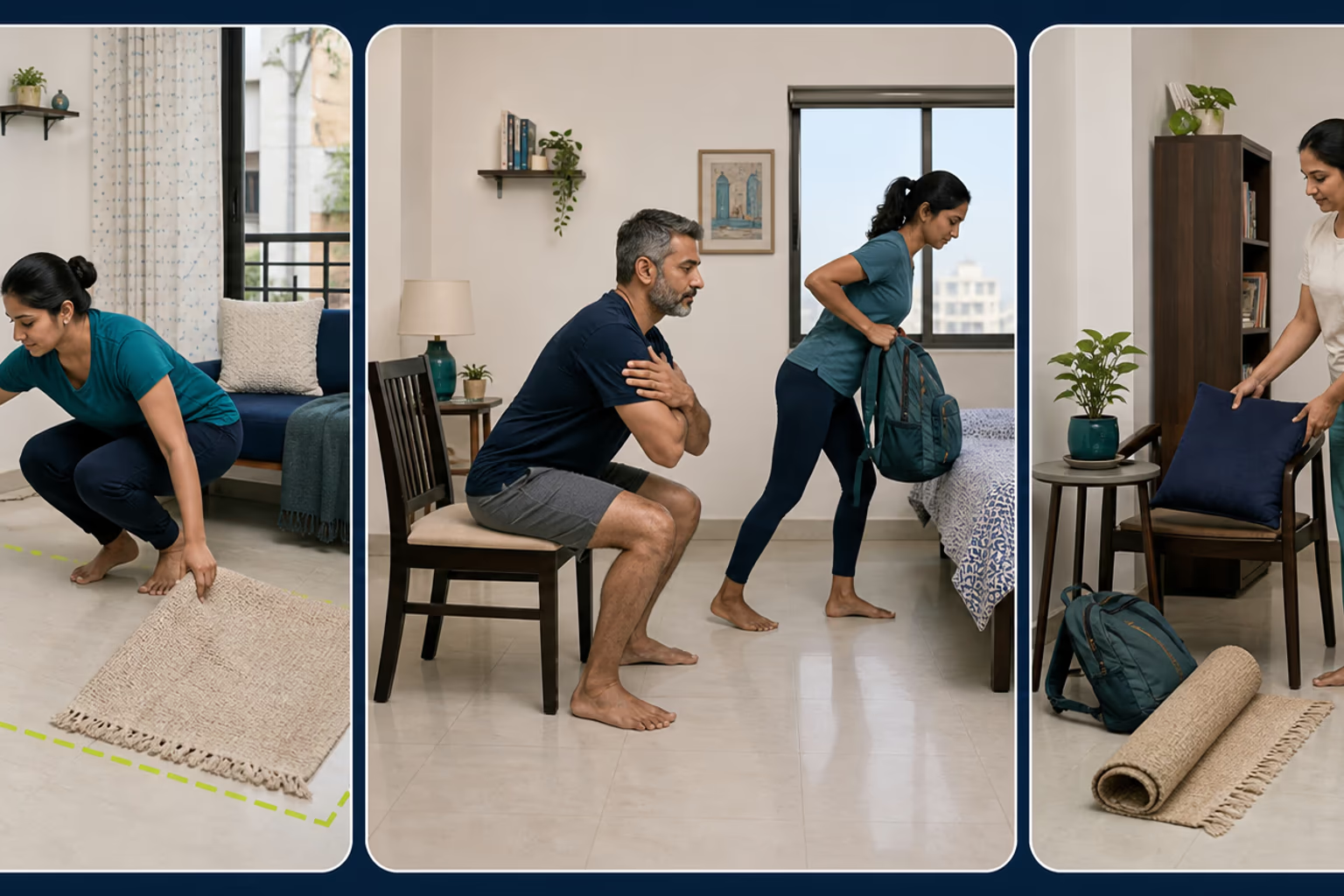
Structuring your practice within mat boundaries
To build a complete session on one mat, sequence your postures so that high-effort movements alternate with controlled recoveries. Start near the top edge of the mat for standing integration, move to the center for balance holds, and lower yourself directly down for floor strengthening.
Restricted lateral mobility means you must substitute wide lunges or jumps with stationary, controlled holds and vertical loading. Instead of jumping feet wide apart, step one foot back into a high lunge while keeping your torso upright. A single mat requires careful placement of limbs so you do not collide with nearby furniture or walls.
| Movement Category | Standard Approach Requiring Space | Single-Mat Modification |
|---|---|---|
| Lateral Travel | Side shuffles and wide jumps across the room | Stationary squats and controlled isometric holds |
| Lunging | Traveling forward and backward lunges spanning several feet | High lunge and warrior stances contained within mat length |
| Floor Transitions | Rolling or sprawling across uncarpeted floors | Straight vertical lowering from standing to kneeling or seated |
Managing transitions and staying quiet for neighbours
Attempting wide, jumping movements that require an open perimeter risks tripping and creates downstairs noise that disturbs neighbours. To keep your practice quiet and seamless, eliminate all jumping from your transitions.
Instead of jumping your feet forward from a plank position, step forward in stages or use a steady heel-to-toe walk. Lower your body using upper body strength and core engagement rather than dropping heavily onto your knees or heels. Keeping your movements grounded protects your joints, maintains your balance within the mat perimeter, and keeps your practice entirely silent.
One-Mat practice safety & setup checklist
Before you begin your session, run through this concise checklist to ensure your space remains safe and practical:
- Clear a hard perimeter of six inches around your yoga mat for safety.
- Check that your flooring or mat provides stable, non-slip traction.
- Choose stationary, low-impact postures that stay inside the mat boundaries.
- Keep a wall or sturdy piece of furniture within arm's reach for balance support if needed.
- Stop immediately if movement causes sharp joint pain or instability.
Recognizing limits and choosing your next step
Every home environment comes with distinct physical trade-offs. Working on a single mat limits your ability to practice sprawling or fast-paced locomotive patterns. Confusing the lack of floor space with an inability to build muscle strength is a common trap, but stationary resistance and bodyweight holds provide ample loading for most practitioners.
If a posture or transition feels cramped or unsteady, pause, reduce your range of motion, use stable household support such as a wall or chair edge, or skip the movement entirely. When static guidance is not enough and you need tailored adjustments for your specific room layout, Prime Tempr helps home exercisers find trainers who offer online sessions, prop-light programmes and realistic modifications for the space they actually have. Explore your options by connecting with a professional through our Find a home-practice trainer directory, or review additional movement strategies in our guide to Small-Space Home Exercise.
Sources
- Physical Activity (opens in a new tab) - World Health Organization
- Top 10 Things to Know About the Physical Activity Guidelines (opens in a new tab) - Office of Disease Prevention and Health Promotion
Watch alongside this guide
Yoga for complete beginners
This complete beginner session shows how a guided practice can fit into one mat-sized area. Pause freely, use stable support and skip movements that do not suit the room or body.
The YouTube player stays unloaded until you choose to watch. Loading it connects to YouTube and may allow that service to process usage data.