How to Use a Sturdy Chair in a Small Space Routine
Build a quiet, prop-light home movement routine in tight spaces using a sturdy chair without disturbing neighbours.
https://primetempr.com/blog/how-to-use-a-sturdy-chair-in-a-small-space-routine
A sturdy, non-rolling chair turns a single square meter of floor space into a stable foundation for strength and mobility work without disturbing neighbours. If you want to build consistency at home but your floor space is limited and jumping disturbs downstairs residents, you do not need expensive equipment or a dedicated fitness room. Ordinary household furniture provides muscle-strengthening benefits when used with proper safety habits.
Any amount of physical activity is better than none, all activity counts, and muscle strengthening benefits everyone. Adults can work toward 150 to 300 weekly minutes of moderate aerobic activity and muscle strengthening on at least two days. A chair-supported routine offers a practical way to meet these goals in modest or shared homes.
Why a sturdy chair solves small-space constraints
Small homes and shared apartments often lack the clearance required for sprawling movement or high-impact exercise. Jumping, floor mats that slide on tile, and bulky weights create noise conflicts and require storage space you may lack. A stationary chair provides vertical support that replaces bulky gym equipment.
Using furniture for stability allows you to focus on controlled muscle engagement rather than balancing on slippery floors. Because physical activity guidelines emphasize that all movement counts and muscle strengthening benefits everyone, even short, seated or standing support sessions contribute directly to your weekly physical activity goals.
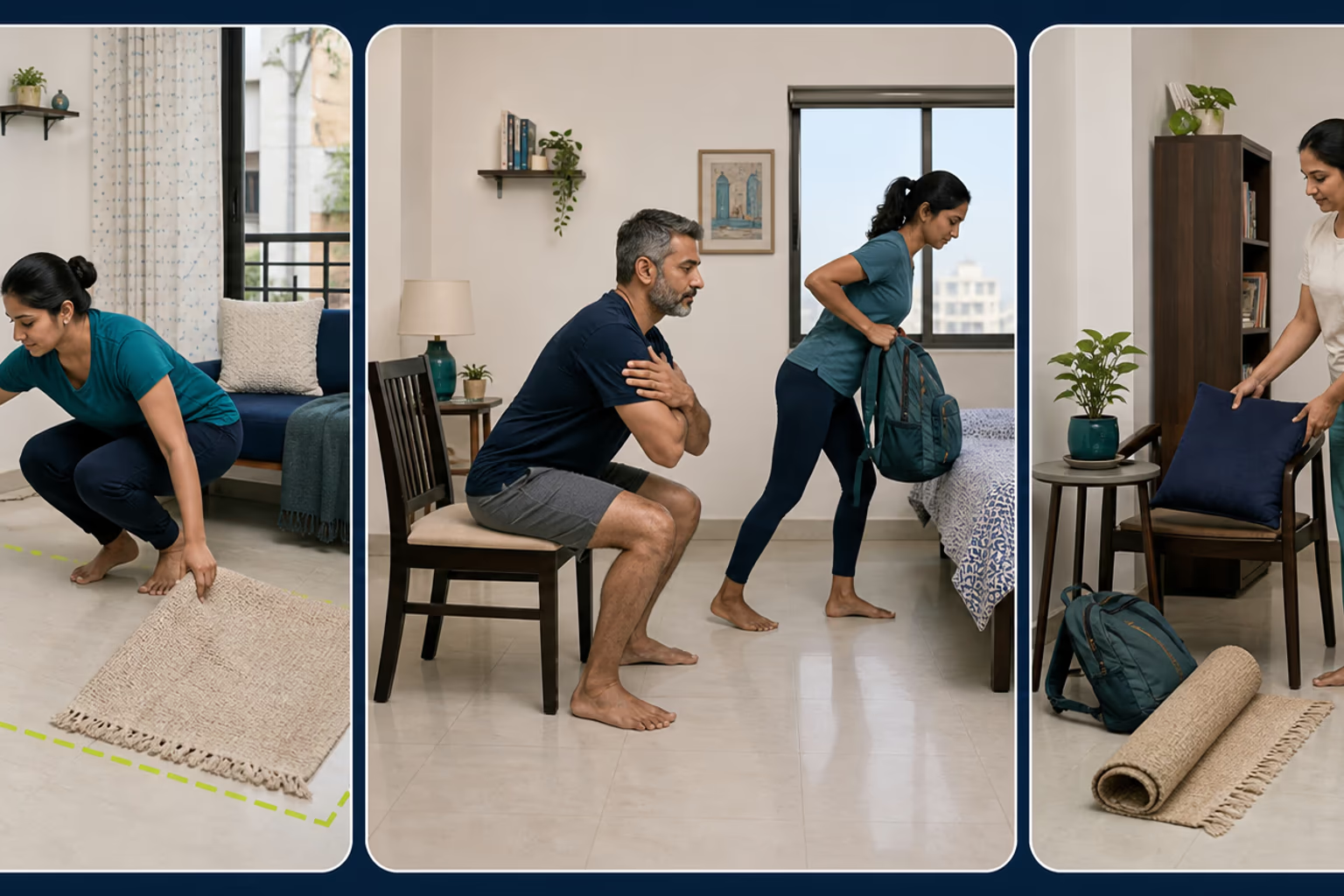
Choosing and positioning your equipment safely
The primary failure mode in home chair routines is using unstable furniture. A rolling office chair, a lightweight plastic folding stool, or a chair with uneven legs can slip or tip under body weight.
To set up safely, select a heavy, four-legged wooden or metal chair with a flat seat and a solid back. Position the chair against a wall to prevent backward sliding, or place it on a non-slip rug. Clear a single square meter around the furniture so your arms and legs move freely without striking walls, tables, or sharp corners.
| Equipment Type | Suitability | Safety Risk |
|---|---|---|
| Heavy wooden dining chair | High | Low if placed on a flat, non-slip surface |
| Rolling office chair | Unsuitable | High risk of unexpected shifting or rolling |
| Lightweight plastic stool | Unsuitable | High risk of tipping or cracking under lateral pressure |
| Sturdy armchair with firm arms | Moderate | May limit arm clearance during certain movements |
A simple three-step chair movement plan
You can scale your practice depending on your available time and daily energy levels. The following progression offers a minimum version and a normal version that keep movements quiet and controlled.
- The Minimum Version (5 Minutes): Sit toward the front edge of your chair with both feet flat on the floor. Perform slow, supported sit-to-stand transitions without using your hands if possible, or use the chair arms for gentle assistance. Focus on steady breathing and slow descent.
- The Normal Version (10 to 15 Minutes): Combine seated posture resets with standing support movements. Stand behind the chair, holding the backrest lightly for balance, and perform slow heel raises or gentle standing leg extensions. Keep movements smooth and low-impact to protect your joints and keep floors quiet.
- The Progressive Check: Work toward incorporating muscle-strengthening movements on at least two days per week, aligning with broader adult physical activity guidelines.
Small-Space chair routine checklist
Use this checklist to prepare for your session and maintain safe habits in tight quarters:
- Verify your chair is heavy, stationary, and placed against a wall or on a non-slip rug.
- Clear a single square meter around the chair so your arms and legs move freely.
- Perform a minimum version of 5 minutes of seated and standing support movements.
- Check in with your breathing and joint comfort before increasing repetitions.
Knowing when to stop and next steps
If a chair movement feels unsteady, sharp, or uncomfortable, pause immediately. Switch to a lower variation, use wall support for extra stability, or rest. Do not sacrifice form for speed or intensity.
While chair routines offer excellent support and muscle-strengthening benefits, they cannot completely replace full-range floor mobility or heavy resistance training without additional progression. If you want tailored guidance for your specific living situation, Prime Tempr helps home exercisers find trainers who offer online sessions, prop-light programmes, and realistic modifications for the space they actually have.
Keep learning
Ready for the next step? Small-Space Home Exercise.
Sources
- Physical activity (opens in a new tab), World Health Organization
- Top 10 Things to Know About the Physical Activity Guidelines (opens in a new tab), Office of Disease Prevention and Health Promotion
Watch alongside this guide
Yoga for complete beginners
This complete beginner session shows how a guided practice can fit into one mat-sized area. Pause freely, use stable support and skip movements that do not suit the room or body.
The YouTube player stays unloaded until you choose to watch. Loading it connects to YouTube and may allow that service to process usage data.