How to Train for Getting Down to and Up From the Floor
Master safe, beginner-friendly household progressions to build the strength and confidence required for getting down to and up from the floor.
https://primetempr.com/blog/how-to-train-for-getting-down-to-and-up-from-the-floor
Getting down to the floor and rising back up is a fundamental movement pattern that supports daily independence, playing with children, and performing household tasks without stiffness or fear of falling. Many adults find these transitions stiff, unstable, or intimidating over time, but floor mobility is a trainable skill that improves through gradual, supported practice rather than sudden strain. Any amount of physical activity is better than none, all activity counts, and muscle strengthening benefits everyone. Adults can work toward 150 to 300 weekly minutes of moderate aerobic activity and muscle strengthening on at least two days.
Floor transitions require active lower body strength and joint mobility that take consistent, gentle practice to maintain. Adapting the movement for knee or hip sensitivity means you may progress more slowly, but you will build lasting confidence. If unsupported floor transitions feel unstable today, use sturdy household furniture like a chair, wall, or yoga blocks to reduce depth and distribute weight safely.
Why floor transitions matter for everyday independence
Maintaining the ability to lower yourself to the ground and stand back up is essential for functional autonomy around the home. When people avoid the floor because of knee stiffness or poor balance, they often lose key ranges of motion over time. Any amount of physical activity is better than none, all activity counts, and muscle strengthening benefits everyone. Rather than treating floor transitions as a test of ego or flexibility, approaching them as a steady, daily coordination task helps preserve independence.
A common failure mode is rushing straight to unassisted floor drops without support, which can lead to sudden loss of balance or unnecessary joint stress. Another mistake is assuming that temporary knee or hip stiffness means you should avoid the movement entirely. Consistency and appropriate scaling matter far more than aggressive depth. Adults can work toward 150 to 300 weekly minutes of moderate aerobic activity and muscle strengthening on at least two days as part of a balanced routine.
The minimum version: supported practice at home
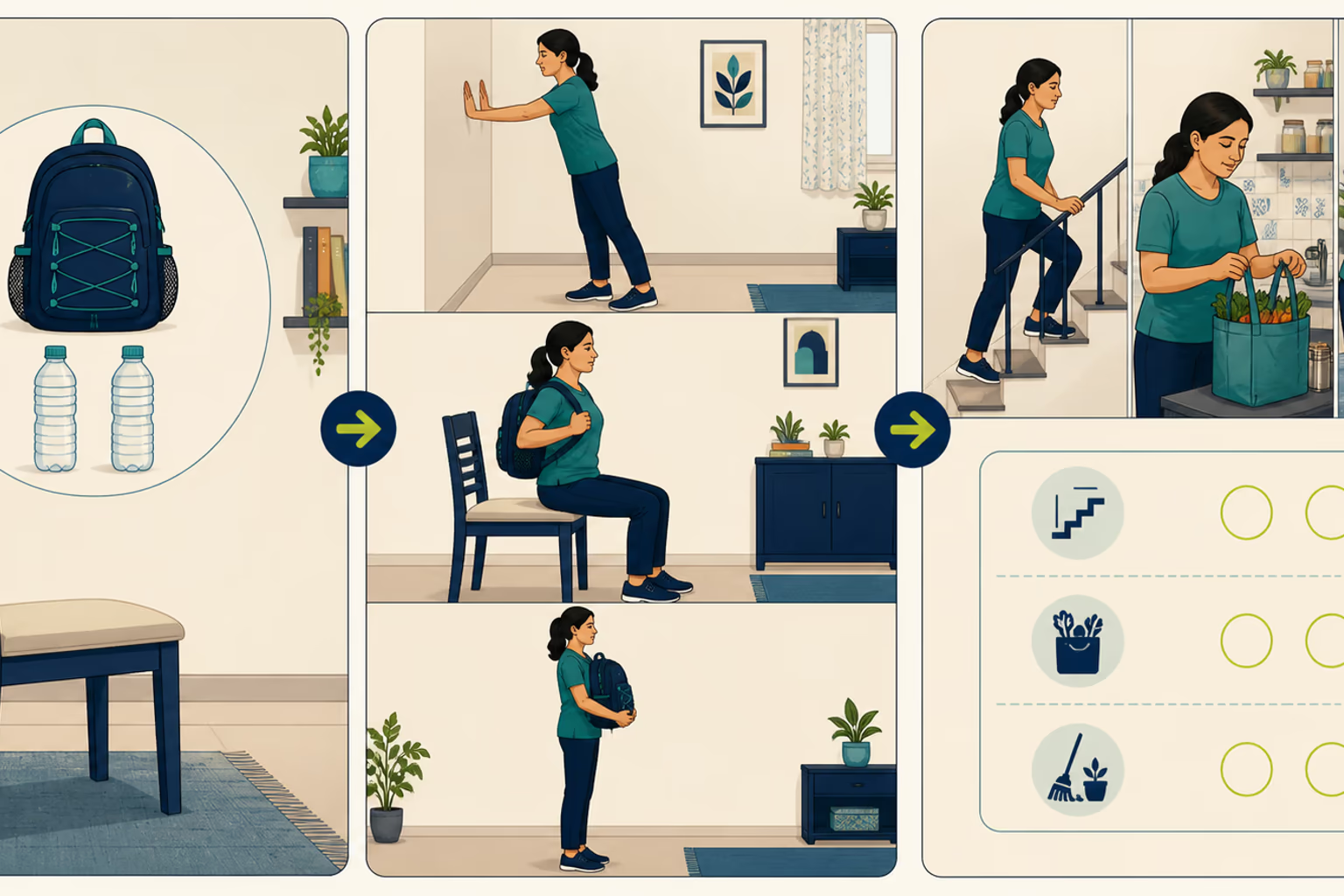
If getting down to the floor feels daunting or stiff, start with a supported minimum version that limits depth and uses stable props. Stand near a sturdy wall or place a heavy, non-slip dining chair beside you. Hold onto the back of the chair, step one foot back, and gently lower a single knee toward the floor while keeping your torso upright. Use your arms to share the load.
This approach lets you practice the descent without overwhelming your knees or hips. Any amount of physical activity is better than none, all activity counts, and muscle strengthening benefits everyone. Practising this supported variation for just a few minutes during regular daily breaks builds the necessary neuromuscular control for unassisted movement later.
Your floor transition safety checklist
Use this checklist to ensure your home practice remains controlled, safe, and appropriately scaled for your current mobility level.
- Clear a stable, non-slip surface with enough surrounding space.
- Keep a sturdy chair or wall nearby for hand support.
- Choose a supported descent method, such as bringing one knee down first or holding a chair.
- Move at an even, controlled pace without holding your breath.
- Stop immediately if you feel sharp pain or sudden joint discomfort.
The normal version: progressive control for daily life
Once supported descents feel steady and comfortable, you can progress to the normal version of the movement. This involves transitioning from a standing position to a half-kneeling stance, lowering your seat completely to the floor, and reversing the process using minimal hand support.
Adults can work toward 150 to 300 weekly minutes of moderate aerobic activity and muscle strengthening on at least two days. By integrating muscle strengthening into your weekly routine, your legs and core gradually adapt to the demands of floor work. Move slowly, pause between phases of the movement, and treat each repetition as a practice in balance rather than an endurance test.
Next steps: finding personalised guidance
While home practice builds a strong foundation, general advice cannot account for individual joint histories or specific physical limitations. Prime Tempr helps readers compare strength, yoga and mobility trainers who can turn general everyday goals into an appropriately progressed practice. If you experience persistent joint discomfort or want a tailored routine that matches your home environment, working with a qualified professional ensures your progression remains safe and effective. Any amount of physical activity is better than none, all activity counts, and muscle strengthening benefits everyone.
Keep learning
Ready for the next step? Find a yoga teacher.
Sources
- Physical activity (opens in a new tab), World Health Organization
- Top 10 Things to Know About the Physical Activity Guidelines (opens in a new tab), U.S. Department of Health and Human Services
Watch alongside this guide
Functional training explained
This ACE Fitness overview adds visual context for linking strength practice to everyday tasks while the article provides the more specific home progression.
The YouTube player stays unloaded until you choose to watch. Loading it connects to YouTube and may allow that service to process usage data.