How to start yoga when you cannot touch your toes and do not need to
Begin with a class that offers bent knees, props, smaller ranges and enough time to learn how effort feels.
https://primetempr.com/blog/how-to-start-yoga-when-you-cannot-touch-your-toes-and-do-not
Touching your toes is not an entrance test for yoga. The useful question is not whether there is one perfect answer. It is whether the choice fits a normal day, leaves room to adjust and keeps the next decision clear.
Begin with a class that offers bent knees, props, smaller ranges and enough time to learn how effort feels. Start with the smallest commitment that gives you real information. A calm trial, one conversation or a reduced practice usually teaches more than a promise made in the abstract.
Start with the situation you actually have
Write down where how to start yoga when you cannot touch your toes and do not need to meets daily life. Include the time available, travel or room constraints, who else is involved and what would make the plan hard to repeat. This keeps the decision connected to Tuesday evening, not an ideal week.
Choose a normal version and a minimum version. The normal version is what you expect to do when the day is steady. The minimum version is what remains useful when energy, time or conditions change. Neither version has to prove commitment.
Put a time boundary around the first attempt. Fifteen minutes for research, one trial visit or one modest practice is enough to learn something. A boundary protects the rest of the day and makes it easier to notice whether the plan works without turning it into a performance.
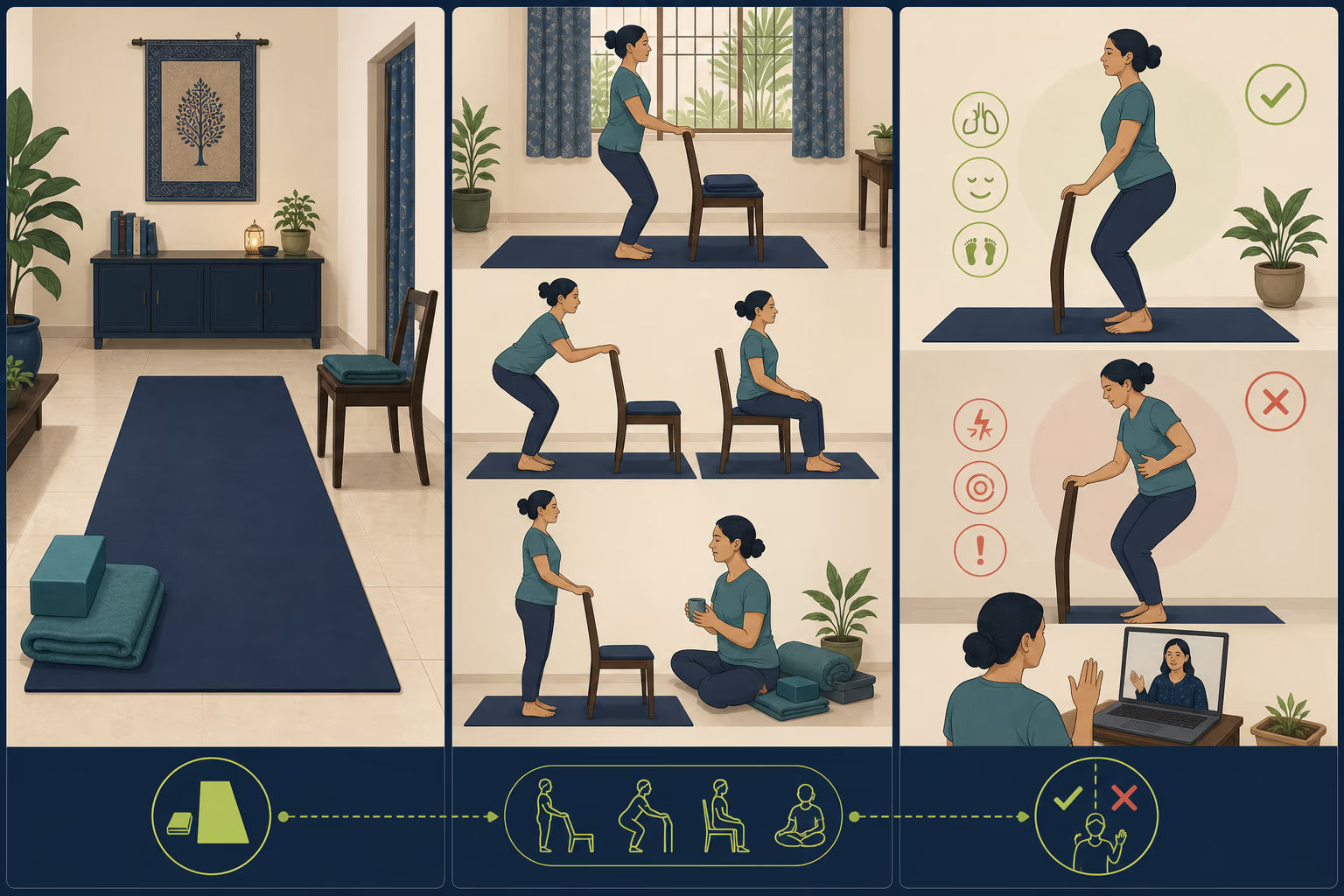
Follow this practical sequence
- Choose a clearly labelled beginner class.
- Tell the teacher you are new.
- Keep the knees comfortably bent.
- Use blocks or stable support when offered.
- Leave each shape before strain becomes sharp or alarming.
Move through the list in order. Stop once you have enough information for one proportionate next step. Collecting more options can feel productive while making the real choice harder.
Notice the details that change the answer
Look for these concrete signals:
- whether choices are taught as normal.
- whether you can breathe without bracing.
- whether the pace leaves time to decide.
One difficult moment does not settle the question. Look for a pattern across the session, visit or week. Record a short note soon afterward: what worked, what felt unclear and what you would change next time.
Use ordinary signs rather than dramatic ones. Being able to understand the next instruction, return home without avoidable stress or continue normal tasks later can matter more than excitement during the first attempt. The aim is a workable fit, not a memorable test.
Ask before you commit
Useful questions include:
- What can I do instead of reaching the floor?.
- May I pause while the class continues?.
- Which props are available?.
Clear answers should sound specific enough to act on. You do not need a polished sales explanation. You need current information about the class, practice, product or support you are considering.
Ask the question in the form you would use on a busy day. A short message often produces a clearer answer than a long personal history. Share private health information only when it is relevant, with a person whose role calls for it and in a setting you trust.
Keep the boundary visible
Pause when you notice:
- forcing range to match a demonstration.
- bouncing into a stretch.
- treating flexibility as the only progress measure.
Practise a shorter standing or chair-supported version and ask for individual guidance if the class remains unclear. New pain, faintness, confusion, sudden weakness or another concerning change is not a cue to push through a routine. Stop and seek suitable professional help when symptoms call for it.
Review the choice after real use
After the first attempt, answer three lines: Did I understand what to do? Could I make a comfortable choice? Would this fit an ordinary week? Keep, change or drop the plan based on those answers.
Set the review date before enthusiasm or frustration takes over. For a class, three ordinary visits may reveal more than one special event. For a home routine, try the minimum version on a busy day. For a purchase or course, wait until the written terms and total cost are clear.
If guided practice would answer the remaining question, compare trainer profiles and local options. Treat a profile as a starting point for direct questions, not as a guarantee of fit.
Sources
Watch alongside this guide
Yoga for complete beginners
This optional beginner session lets readers observe pacing and rest choices in a complete practice. Pause, adapt or stop rather than matching every shape.
The YouTube player stays unloaded until you choose to watch. Loading it connects to YouTube and may allow that service to process usage data.