How to Start Yoga at Home: A Practical Guide for Beginners
Start yoga at home safely, without prior flexibility or expensive gear, using simple movements and short daily sessions.
https://primetempr.com/blog/how-to-start-yoga-at-home-a-beginner-s-practical-guide
Starting a yoga practice at home does not require advanced flexibility, expensive equipment, or extensive daily time commitments. You can build a sustainable, safe home practice through simple, breath-led movements and consistent, short sessions.
This guide offers practical steps for beginning yoga at home. It explains what to expect and how to approach initial practice stages, minimizing injury risk and ensuring support.
Dispelling Common Beginner Myths
A common challenge for new practitioners is the misconception that yoga demands advanced flexibility or a significant financial investment. This is not true.
Flexibility is not a prerequisite for starting yoga at home. Yoga explores and can enhance range of motion over time. Your current flexibility level is a starting point, not an impediment. Focus on the sensation within each pose instead of maximum depth.
Expensive equipment is unnecessary. To begin, you do not need high-end mats, blocks, or straps. You can start with minimal items likely already in your home. This approach reduces financial barriers, though it may involve substituting household items for traditional props. For example, a firm cushion or a stack of books can be a block, and a towel or belt can be a strap.
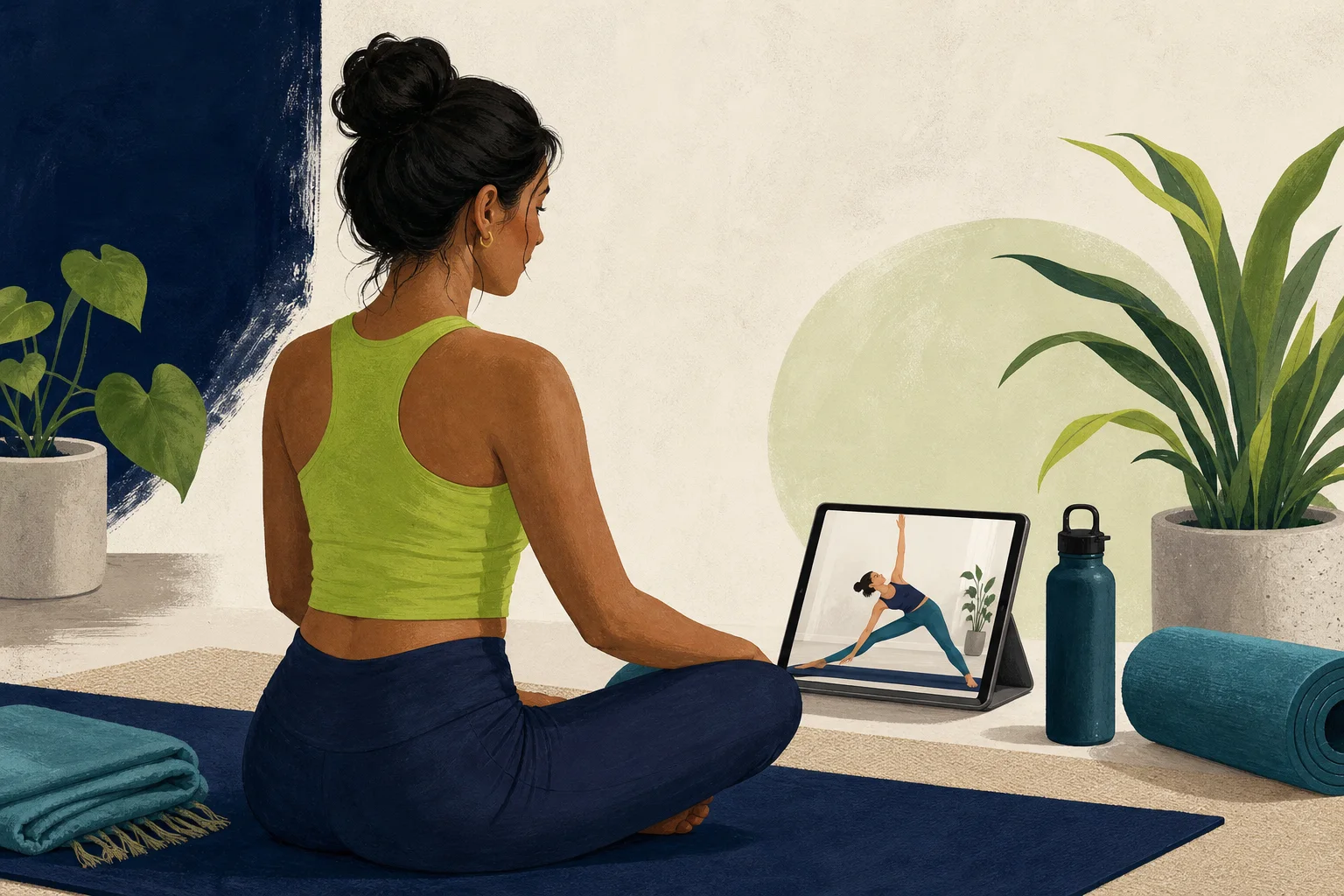
Setting Up Your Home Practice Space
Establishing a simple, dedicated space influences the consistency and enjoyment of your home practice. A separate yoga room is unnecessary; a corner of a living room or bedroom is entirely suitable.
A safe home practice space requires a clear, non-slip surface and sufficient room to extend your limbs fully without encountering furniture or walls.
To prepare your space:
- Clear the Area: Remove any furniture or objects that might obstruct movement. You should be able to lie down with your arms and legs extended in all directions without bumping into anything.
- Ensure a Non-Slip Surface: On hardwood or tile floors, a yoga mat provides grip and some cushioning. If a mat is not yet available, a carpeted area can work, or a large towel can be placed on a non-slip rug.
- Minimize Distractions: If possible, choose a quiet time of day. Silence phone notifications and inform family members that you will be practicing.
- Wear Comfortable Clothing: Select clothing that permits a full range of motion without restricting breath or causing discomfort.
Building a Sustainable Routine
A common pitfall for beginners is attempting advanced poses immediately or committing to an hour-long daily practice. This often causes strain, discouragement, and early cessation of practice. Instead, focus on developing a sustainable routine.
Begin with short, consistent sessions. Shorter, consistent sessions of 10 to 15 minutes are often more effective for beginners than sporadic, exhaustive hour-long practices. Regular, brief exposure allows the body and mind to adapt gradually, making the practice feel less daunting and more integrated into daily life.
Consider these guidelines for establishing your routine:
- Schedule Practice: Treat your yoga time as a scheduled appointment. Even 10 minutes at the same time each day can help build a habit.
- Prioritize Breath: In every pose, concentrate on steady, even breathing rather than pushing for greater depth. Your breath is a guide; if you are holding your breath or straining, you have likely gone too far.
- Listen to Your Body: Yoga, like any physical activity, carries some risk of injury. Stop immediately if you experience sharp, shooting, or persistent pain. Distinguish between discomfort and pain.
- Explore Guided Practices: Numerous free and paid online resources offer beginner-friendly yoga classes. These resources can provide structure and guidance, assisting in learning basic postures and sequences.
Navigating Home Practice Without an In-Person Teacher
Practicing at home offers convenience and flexibility but lacks the real-time physical adjustments and immediate feedback from an in-person teacher. This requires greater personal self-awareness and a proactive approach to learning.
While practicing independently, you do not need to isolate yourself entirely from teacher guidance.
To address the trade-offs of home practice:
- Cultivate Self-Awareness: Pay close attention to how your body feels in each pose. Use mirrors to check alignment if uncertain, or record a short practice session for later review of your form.
- Seek Guidance When Needed: If you are unsure about a pose or experiencing persistent discomfort, consider seeking guidance. Platforms like Prime Tempr can help you move from general education to guided practice by comparing trainer profiles, local studio listings, and trainer-shared practice content in one place. This allows you to find qualified trainers who can offer personalized advice or check your alignment, whether through an online session or an occasional in-person class.
- Focus on Foundational Poses: Initially, adhere to basic, well-understood poses. Avoid attempting advanced or complex postures without guidance, as this increases the risk of strain or injury.
Your First Week At-Home Yoga Checklist
Here is a simple checklist for your first week of at-home yoga. Progress is individual; consistency is more impactful than intensity.
- Clear a quiet space large enough to lie down with arms extended.
- Wear comfortable clothing that allows easy movement.
- Commit to three 15-minute sessions this week.
- Focus on steady breathing rather than attempting to touch your toes.
- Stop immediately if you feel sharp or shooting pain.
Starting yoga at home is accessible and beneficial. By addressing common misconceptions, preparing a simple space, establishing a sustainable routine, and understanding when to seek guidance, you can confidently begin your practice and realize its benefits.
Continue with guidance
Use this article as orientation, then Find a beginner-friendly trainer when you want responsive guidance or a practice format matched to you.
Sources
- National Center for Complementary and Integrative Health. (2023). Yoga: Effectiveness and Safety. https://www.nccih.nih.gov/health/yoga-effectiveness-and-safety (opens in a new tab)
- World Health Organization. (2022). Physical activity. https://www.who.int/news-room/fact-sheets/detail/physical-activity (opens in a new tab)
Watch alongside this guide
Yoga for complete beginners
Use this optional beginner session to see pacing, transitions, and rest choices in a complete home practice. Source: Yoga With Adriene. This optional video is context, not evidence or personal instruction.
The YouTube player stays unloaded until you choose to watch. Loading it connects to YouTube and may allow that service to process usage data.