How to Share Movement Reminders Without Annoying Your Team
Share low-friction movement cues with colleagues without causing workplace friction, sounding preachy, or mandating wellness rules on your team.
https://primetempr.com/blog/how-to-share-movement-reminders-without-annoying-your-team
Sharing movement reminders successfully with colleagues requires reducing friction and keeping choices optional, rather than broadcasting wellness rules or policing team habits. When you spend long hours at a screen, noticing your own stiffness is natural. The challenge arises when you want to encourage your team to stretch or change positions without coming across as preachy, annoying, or disruptive during a demanding workday.
Team movement reminders often backfire when they create notification fatigue or impose fitness standards on colleagues who have different schedules and workloads. If you send frequent pings to a main chat channel, you risk interrupting deep work. Using overly prescriptive fitness jargon or guilt-inducing language can also make people defensive. A workstation should support neutral, comfortable positions, but even a good setup should allow regular changes of position. When suggestions feel like mandatory homework rather than helpful peer tips, team goodwill evaporates.
Why team movement reminders go wrong
The primary failure mode of workplace wellness sharing is treating everyone day as identical. Colleagues face different task pressures, back-to-back meetings, and physical capacities. Sending loud notifications or demanding synchronized participation ignores these realities. All physical activity counts, any amount is better than none, and adults should limit sedentary time, but forcing these concepts onto an unwilling team usually creates resistance rather than healthy habits.
To avoid these pitfalls, you need a proportionate approach that respects autonomy. Here is a practical framework, starting from a quiet baseline and moving toward comfortable integration.
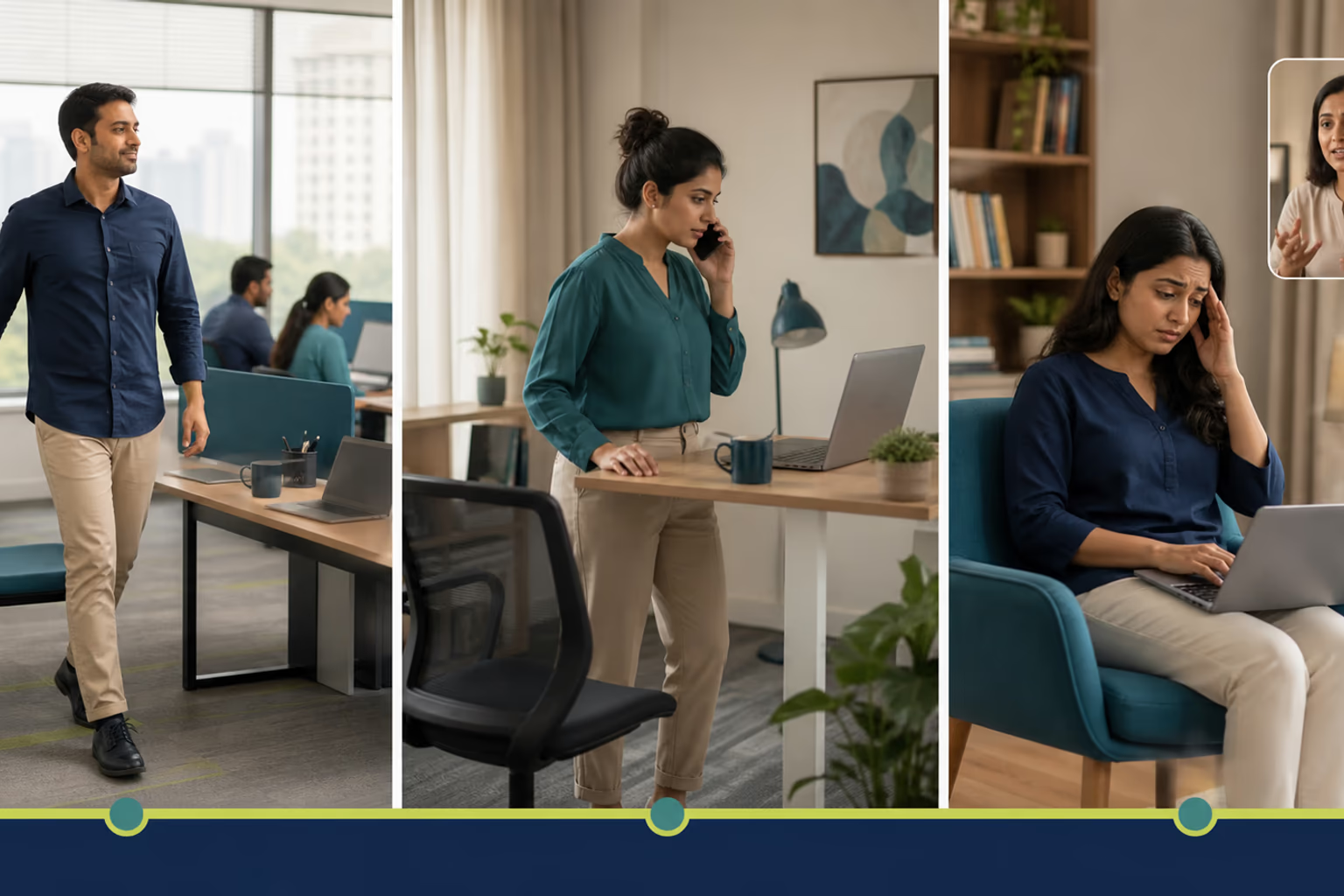
The minimum version: opt-in and low-noise
The minimum version of sharing movement habits involves zero group chat notifications. Instead of broadcasting reminders, you quietly adjust your own posture, stand up during a call where your camera is off, or use a personal timer. If a colleague asks about your routine, you can share what you do without prescribing it for them. This approach lets you benefit from regular position changes without imposing anything on the wider team.
Prime Tempr helps desk-based readers compare trainers, short practices and nearby classes when self-directed movement breaks need more structure or personal observation. If your personal adjustments reveal that you need more guided support, exploring external resources keeps the focus on your own well-being rather than policing others.
The normal version: integrating cues into existing workflows
If your team is receptive and you want to share gentle prompts, the normal version integrates cues naturally into existing workflows.
- Keep messages opt-in: Never use mandatory group pings. Use an asynchronous channel or post a polite, optional note in a break-out thread.
- Focus on comfort over fitness: Frame messages around relieving physical stiffness or resting tired eyes, avoiding calorie tracking or intense workout language.
- Align with natural lulls: Share quick stretch ideas right before a lunch break or immediately following a long strategy meeting, when people are already transitioning tasks.
- Keep it equipment-free: Suggest movements that require no special gear and can be done discreetly near a desk.
The low-friction team movement check
Use this practical checklist to evaluate how you share movement cues with colleagues.
- Keep reminders opt-in rather than broadcasting mandatory pings to the whole channel.
- Focus messages on physical comfort and changing position rather than fitness goals or calories.
- Align cues naturally with existing lulls like meeting transitions or document reviews.
- Provide a quiet minimum version that requires no special equipment or loud movement.
Honest limits and what to do when it fails
Even with careful framing, team dynamics vary. If your colleagues ignore the prompts or if team-wide reminders create friction, dial back immediately. Stop trying to coordinate group movement and focus entirely on your own routine. Opt-in reminders get less engagement than mandatory ones, but they preserve team goodwill and autonomy. Keeping messages informal prevents annoyance, but it also means fewer people will adopt the habit, and that is an acceptable trade-off for a harmonious workplace.
Follow-along reflection
Use the prompts below to review the idea in context, without turning it into a diagnosis or a fixed rule.
Trade-offs to keep in view
- Keeping messages informal prevents annoyance, but it also means fewer people will adopt the habit.
If this approach does not fit
If team-wide reminders create friction, dial back to silent personal cues or opt-in asynchronous channels where colleagues can engage only if they choose.
Questions to carry forward
- Why do team movement reminders often backfire and annoy colleagues?
- How can I suggest position changes without sounding like a fitness coach?
- What is the minimum version of sharing movement habits with a team?
- How do I scale this into a normal team routine without mandating participation?
- When should I stop trying to coordinate team movement and focus on my own routine?
Keep learning
Ready for the next step? Movement for Desk-Job Days.
Sources
- Computer Workstations (opens in a new tab), Occupational Safety and Health Administration
- Physical Activity (opens in a new tab), World Health Organization
Watch alongside this guide
Five movements you can do at your desk
This concise Mayo Clinic demonstration gives readers a visual menu for changing position during a workday. Use only comfortable options and stop for pain, dizziness, numbness or unusual symptoms.
The YouTube player stays unloaded until you choose to watch. Loading it connects to YouTube and may allow that service to process usage data.