How to Review Your Yoga Routine Each Month Without Guilt
Review your monthly yoga routine to spot burnout, adjust your practice, and know when to seek support.
https://primetempr.com/blog/how-to-review-your-yoga-routine-each-month-without-guilt
Reviewing your yoga routine each month is not about grading discipline or chasing a perfect streak. It is about checking whether your current rhythm supports overall wellbeing, muscle strengthening, and sustainable movement.
Many practitioners track daily streaks, viewing every skipped day as a failure. Daily tracking often amplifies guilt, discouraging consistency. A monthly review allows you to see broad patterns, not isolated days. Any amount of physical activity is better than none, all activity counts, and muscle strengthening benefits everyone. This wider view means a missed morning or shortened session is not a reason to quit.
Why a Monthly Routine Review Beats Daily Streak Tracking
Daily habit trackers create a false sense of urgency. If you miss three days in a row, breaking a streak can cause you to abandon the entire routine. A monthly review shifts focus from rigid perfection to adaptable, long-term movement patterns.
Instead of asking, "Did I do my exact sequence every single day?" a monthly check-in asks broader questions about your energy, your physical capacity, and your schedule realities. This perspective aligns closely with public health frameworks, which note that adults can work toward 150 to 300 weekly minutes of moderate aerobic activity and muscle strengthening on at least two days. A monthly review helps you check if your yoga practice genuinely contributes to these movement goals or if it has devolved into an empty checklist item.
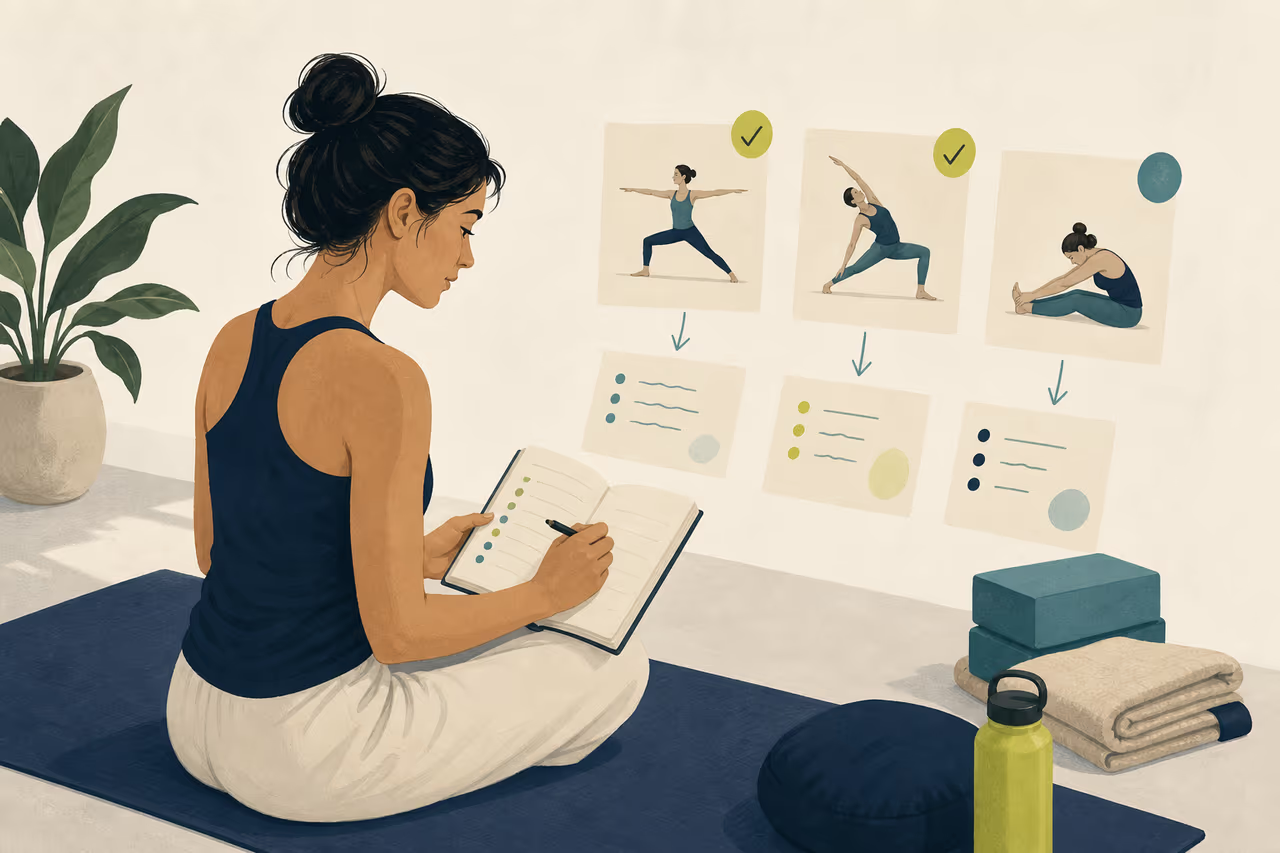
The Three Things to Inspect in Your Monthly Practice
When reviewing your month, keep your assessment practical and non-judgmental. Focus on three core indicators, rather than micro-analyzing every pose transition.
- Consistency and Frequency: Look back at your actual weeks rather than your ideal calendar. Did you maintain a steady rhythm, or did your practice bunch up into exhausting weekend marathons followed by total inactivity?
- Strength and Movement Variety: Check whether your routine incorporates elements that challenge your muscles. Muscle strengthening benefits everyone, and a well-rounded yoga practice should do more than stretch tight shoulders; it should build stable, resilient load-bearing strength across your joints.
- Energy and Recovery: Did your practice leave you feeling restored, or did it consistently drain your energy? If your movement routine feels like a punishing chore, it is time to recalibrate your intensity or duration.
| Evaluation Area | What to Look For | What It Tells You |
|---|---|---|
| Frequency | Spread out sessions vs. All-or-nothing bursts | Whether your schedule matches your actual energy levels. |
| Strength | Inclusion of load-bearing poses, holds, or cross-training | Whether your practice supports long-term physical resilience. |
| Recovery | Post-practice fatigue vs. Restorative calm | Whether your intensity needs dialing back or ramping up. |
If your monthly review reveals a stalled routine or dropout, reduce your practice to a minimum viable version for a week before seeking external guidance. Doing ten minutes of intentional movement twice a week is far better than abandoning the mat entirely because you cannot manage a daily hour-long session.
Recognizing When Self-Direction Is No Longer Enough
Self-directed home practices offer flexibility, but they have distinct limits. Over time, many practitioners experience predictable challenges:
- Treating the monthly review as a guilt test: Using missed days to beat yourself up instead of adjusting your approach.
- Focusing exclusively on intensity or flexibility: Chasing deeper stretches while ignoring foundational strength and joint stability.
- Overhauling the entire routine at once: Trying to rewrite your schedule, wake-up time, and movement style simultaneously, leading to quick burnout.
When you notice these patterns repeating month after month, self-direction has reached its limit. You might find yourself wandering through the same familiar sequences without making progress, losing your intrinsic motivation, or skipping practice entirely because nobody else is expecting you on the mat.
Your Next Step: Adjusting Solo or Finding Support
Self-directed monthly reviews offer flexibility but lack external accountability. Adding a trainer or studio provides structure, but requires scheduling and financial commitment. The path you choose depends entirely on where your practice is right now.
If your monthly review shows minor friction,such as practicing at the wrong time of day or trying to do too much,you can easily make one small adjustment to your home habit. You might explore How to Build a Consistent Home Yoga Practice Without Starting Over or look at How to Build a Weekly Yoga Schedule That Actually Lasts for realistic layout strategies.
If you have tried adjusting your solo routine several times and continue to stall, it may be time for outside input. A trainer, studio, or trainer-shared program can add structure and accountability when a self-directed routine is no longer enough. A qualified teacher or local studio can offer personalized feedback, introduce fresh movement patterns, and provide the steady rhythm you need to move past a plateau.
Your Monthly Yoga Routine Review Checklist
Use this quick checklist monthly to inspect your movement practice without judgment:
- Check frequency: Did you maintain a steady rhythm without burning out?
- Assess strength and movement: Did you incorporate muscle strengthening on at least two days?
- Evaluate energy: Did your practice leave you feeling restored or depleted?
- Identify friction points: What time of day or obstacle repeatedly disrupted your plan?
- Choose one next step: Adjust your home routine or explore ongoing practice support.
Sources
- Physical activity (opens in a new tab), World Health Organization
- Top 10 Things to Know About the Physical Activity Guidelines (opens in a new tab), U.S. Department of Health and Human Services
Watch alongside this guide
A 22-minute home yoga practice
Use the session as a realistic practice option while testing the article's advice on consistency and manageable scope. Source: Yoga With Adriene. This optional video is context, not evidence or personal instruction.
The YouTube player stays unloaded until you choose to watch. Loading it connects to YouTube and may allow that service to process usage data.