How to Return to a Routine After Guests or Family Events
Ease back into your daily routine after hosting visitors by scaling down to a manageable minimum version instead of risking burnout.
https://primetempr.com/blog/how-to-return-to-a-routine-after-guests-or-family-events
Returning to a daily routine after a houseful of guests or busy family events requires scaling down to a minimum version rather than forcing an immediate return to a rigid pre-event schedule. When visitors leave or major household gatherings wrap up, energy is often depleted and the household schedule remains disrupted. Trying to jump straight back into a full-length, unyielding routine usually leads quickly to burnout or complete abandonment of the habit.
Instead of treating missed days as a failure, you can use a graduated restart plan that respects your current energy levels and time constraints. This guide covers why rigid restarts fail, how to establish a minimum viable practice, ways to stabilize sleep and relaxation, and how to use flexible tools like saved short practices or trainer schedules when your days remain unpredictable.
The post-event reality check
Energy depletion and schedule friction are normal after hosting guests or managing family obligations. Desk jobs, small living spaces, multigenerational household duties, and public transport already place heavy demands on your time. Adding late nights, social events, and extra cooking to the mix leaves little room for an ideal, uninterrupted morning workout or an extensive evening wind-down.
Recognizing that your energy is finite helps you drop the expectation of perfection. Missing workouts or delaying your usual habit restart does not ruin long-term health progress. Accepting slower progress initially is a practical trade-off that protects your overall well-being and prevents the frustration that comes from setting unrealistic expectations.
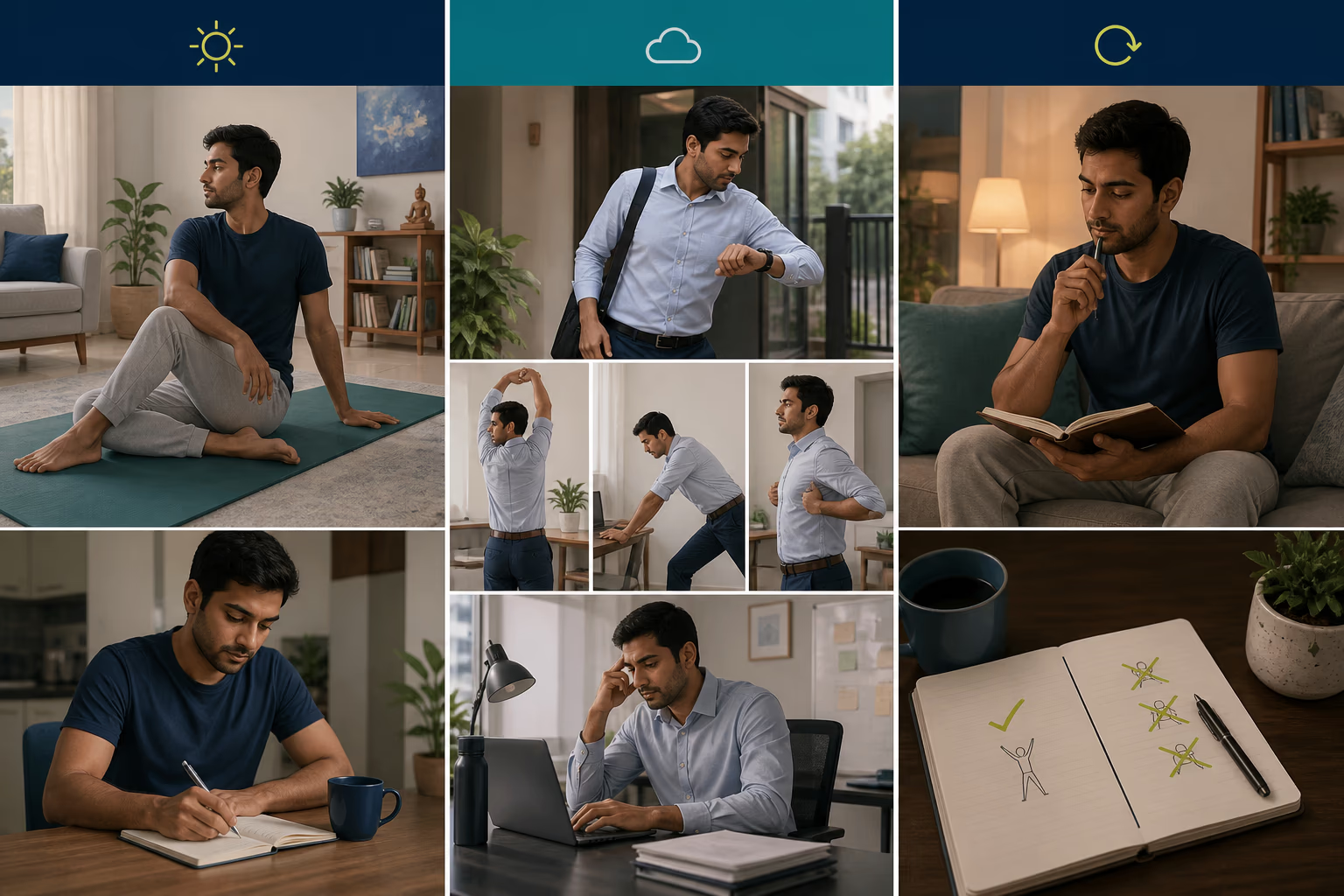
Why immediate perfection fails
Attempting to wake up earlier than usual on day one to complete a full, pre-event workout or practice almost always backfires. Motivation is a poor substitute for a stable, repeatable anchor when your circadian rhythm is out of sync and your to-do list is full of post-event chores like laundry and cleaning.
When you set the bar too high, a single interrupted morning causes the entire plan to collapse. Lowering workout intensity for the first few days preserves your remaining physical and mental energy. Sustainable habit retention depends on lowering the barrier to entry rather than relying on sheer willpower.
The minimum version: starting small
To restart momentum safely, begin with a minimum version of your practice that takes only three to five minutes. This might mean a single breathing exercise, a few gentle stretches beside your desk, or a brief moment of quiet seated focus.
+-------------------------------------------------------+
| PRACTICE SCALING LEVELS |
+-------------------------------------------------------+
| Level 1: Minimum (3-5 mins) |
| - Simple breathing or short desk stretches |
| - Used when time and energy are heavily constrained |
+-------------------------------------------------------+
| Level 2: Normal (15-20 mins) |
| - Standard practice sequence |
| - Used on typical, balanced work days |
+-------------------------------------------------------+
| Level 3: Expanded (30+ mins) |
| - Full class or extended trainer-led session |
| - Used when time, sleep, and energy align |
+-------------------------------------------------------+
When your planned morning or evening routine collapses due to lingering household tasks, drop immediately to this three-minute version or shift your anchor to a calmer pre-bed window. This flexibility ensures you maintain the habit loop without demanding an hour of free time that simply does not exist.
Stabilizing sleep and rest
Late nights with visitors disrupt your natural rest cycles, making fatigue a primary obstacle to restarting daily habits. Adult sleep needs vary, and there is no universal number of hours that suits everyone. However, consistent schedules, a quiet dark room, daytime activity, and calmer pre-bed routines can support sleep.
Focus on setting a consistent wind-down time rather than stressing over a rigid bedtime. Dimming household lights early, reducing screen exposure, and allowing your nervous system time to transition out of social host mode will naturally improve sleep quality over a few days.
Using relaxation without overreliance
As you navigate the post-event transition, incorporating intentional relaxation approaches can help soothe an overstimulated mind. Relaxation approaches include breathing, guided imagery, and progressive relaxation, though they should not replace conventional care for chronic health conditions or medical stress.
Practice these techniques for just a few minutes in a quiet corner of your home. They function as supportive habits that fit neatly into small gaps in your day, helping you reset your focus without requiring an elaborate setup or specialized equipment.
Post-Event transition checklist
To put these principles into practice, use this structured checklist to guide your first week back:
- Select one single anchor time for your day instead of planning a full schedule overhaul.
- Set up a quiet, dark room and a consistent wind-down time to support varied adult sleep needs.
- Perform a minimum three-minute version of your practice rather than waiting for an hour of free time.
- Incorporate simple relaxation approaches like breathing exercises without treating them as medical cures.
Choosing your next step
Rigid schedules rarely survive real life. Prime Tempr lets readers save short practices and compare trainer schedules so a routine can flex around real days instead of depending on one perfect time slot. When you are ready to explore guided options that adapt to your schedule rather than demanding perfection, you can build a realistic routine to support your ongoing habit journey.
Sources
- Heart-Healthy Living: Get Enough Good-Quality Sleep (opens in a new tab) - National Heart, Lung, and Blood Institute
- Relaxation Techniques: What You Need To Know (opens in a new tab) - National Center for Complementary and Integrative Health
Watch alongside this guide
A flexible home yoga practice
This optional home session helps readers see how a complete practice can be scaled to the time and energy available rather than treated as a compulsory daily target.
The YouTube player stays unloaded until you choose to watch. Loading it connects to YouTube and may allow that service to process usage data.